
DIY Car Maintenance vs. Taking It to a Mechanic

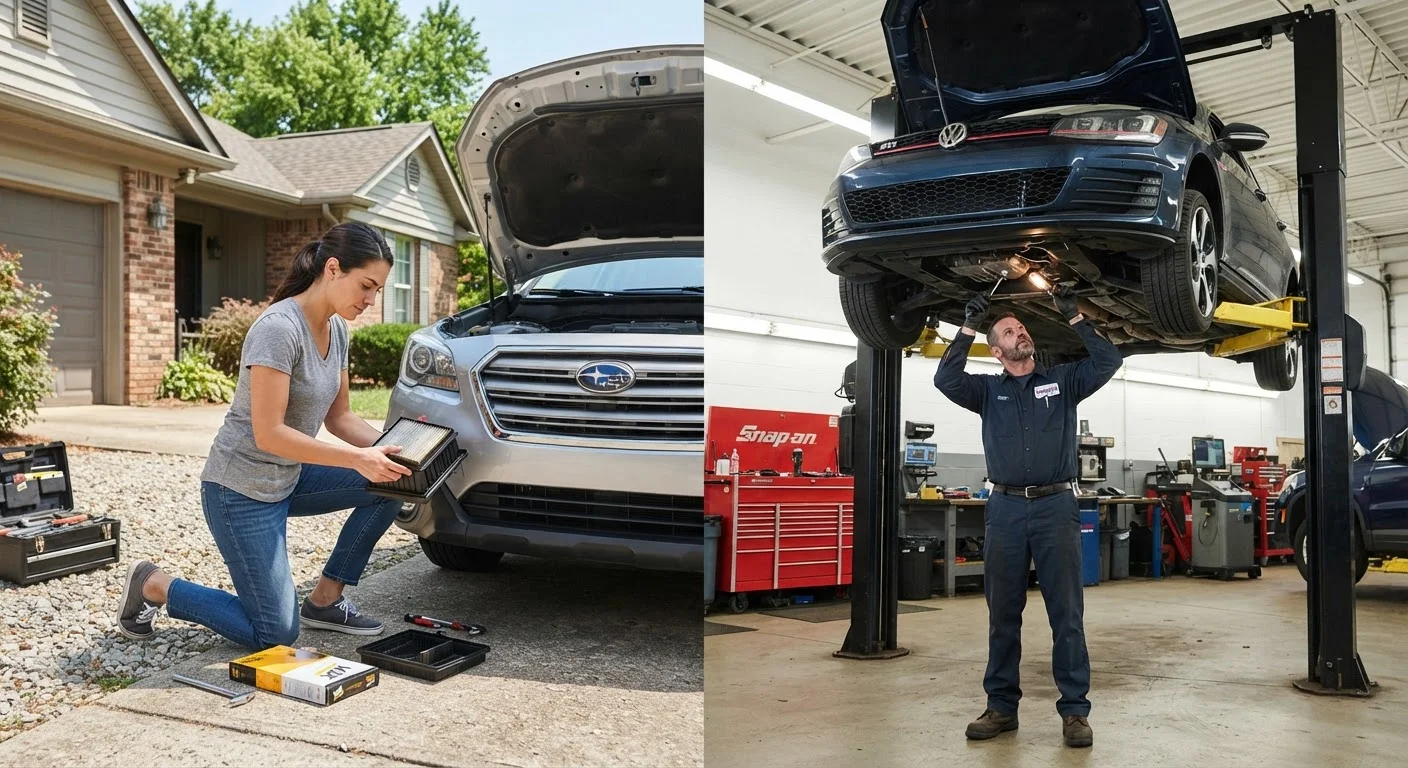
Photo: ConfiReads.com | Blogs For Inquisitive Minds editorial
Key Takeaways
- Simple tasks like air filter swaps, wiper replacements, and fluid top-offs are realistic DIY jobs for most drivers.
- Jobs involving brakes, suspension, airbags, or complex electrical systems should almost always go to a qualified mechanic.
- DIY maintenance saves money on labor but requires the right tools, time, and a realistic assessment of your skill level.
- Mistakes on safety-critical systems can cost far more to fix than a professional service call would have.
- Keeping a maintenance log - DIY or professional - protects your car's resale value and helps diagnose future issues faster.
The Case for Doing It Yourself
For straightforward maintenance tasks, DIY delivers real savings. Labor typically accounts for 50-70% of a shop bill, so handling the work yourself can cut that expense entirely. More importantly, routine DIY upkeep helps you stay in tune with your vehicle - you'll notice worn parts, leaks, or unusual wear before they escalate.
Tasks well-suited to the home driveway include:
- Engine and cabin air filter replacement - Usually requires no tools and takes under 10 minutes.
- Windshield wiper blades - Clip-on installation; manufacturer instructions are straightforward.
- Fluid top-offs - Coolant, washer fluid, and power steering fluid reservoirs are clearly labeled under the hood.
- Battery terminal cleaning - A wire brush and baking-soda solution handle minor corrosion safely.
- Tire pressure checks and inflation - A quality gauge and a compressor are the only tools needed.
If you're managing car upkeep on a tight budget, these are the tasks that offer the highest return for the least effort.
Start Simple, Build Confidence
When a Professional Mechanic Is the Right Call
Some jobs look approachable on a tutorial video but carry serious risk if executed incorrectly. The rule of thumb: if a mistake could compromise your safety or someone else's, the job belongs at a shop.
Always defer to a qualified mechanic for:
- Brake system work - Pad and rotor replacement involve precise torque specs and hydraulic components. Errors can cause brake failure.
- Suspension and steering components - Incorrect installation affects vehicle handling and tire wear in ways that aren't always immediately obvious.
- Airbag and SRS system repairs - Inadvertent deployment can cause serious injury. This is non-negotiable professional territory.
- Transmission service - Fluid type, fill level, and procedure vary widely by vehicle and are easy to get wrong.
- Advanced electrical and computer diagnostics - Modern vehicles require professional-grade scan tools and software knowledge beyond generic OBD-II readers.
- Timing belt or chain replacement - Incorrect installation can destroy an engine.
Mechanics are trained to spot cascading issues that a single-task repair might miss - an advantage worth the cost on complex jobs.
Don't Let a Video Tutorial Replace Expertise
Comparing DIY and Professional Service
The right choice depends on the specific task, your available tools, and your honest skill assessment. Use this breakdown to guide your decision:
| DIY Maintenance | Professional Mechanic | |
|---|---|---|
| Cost | Parts cost only; no labor charge | Parts plus labor; higher total bill |
| Skill required | Low to moderate for basic tasks | High; trained and certified |
| Tools needed | Basic hand tools for most tasks | Professional equipment provided |
| Time investment | Variable; may take longer without experience | Efficient; predictable turnaround |
| Safety assurance | Depends on correct execution | Professionally verified work |
| Best suited for | Filters, wipers, fluids, tire pressure | Brakes, suspension, electrical, transmission |
| Accountability | Self-reliant; no warranty | Work often warrantied by shop |
Note that tool investment is a one-time cost for DIY, but specialty tools for a single infrequent job can make professional service the more economical option overall.
Making the Decision: A Practical Framework
Before starting any job yourself, ask three questions:
- Is this task safety-critical? If a failure could cause an accident or injury, take it to a professional.
- Do I have the right tools? Improvising with the wrong equipment risks damaging components or injuring yourself.
- Can I verify the result? If you can't confirm the repair was done correctly - through a test drive, visual inspection, or torque verification - professional accountability matters.
New drivers especially should start with the simplest cosmetic and consumable tasks before progressing to anything mechanical. And regardless of who does the work, document it: keeping thorough maintenance records protects your investment and helps future diagnosis. Skipping maintenance entirely - DIY or otherwise - carries its own serious costs, as outlined in our look at the real cost of deferred car maintenance.
This article provides general vehicle maintenance information for educational purposes. Always consult a qualified mechanic before undertaking repairs you are unsure about, particularly those involving safety systems.
The content on this site is for informational purposes only and is not a substitute for professional advice. Always consult a qualified professional for guidance specific to your situation.