
Ten Things Mechanics Notice That Most Drivers Overlook

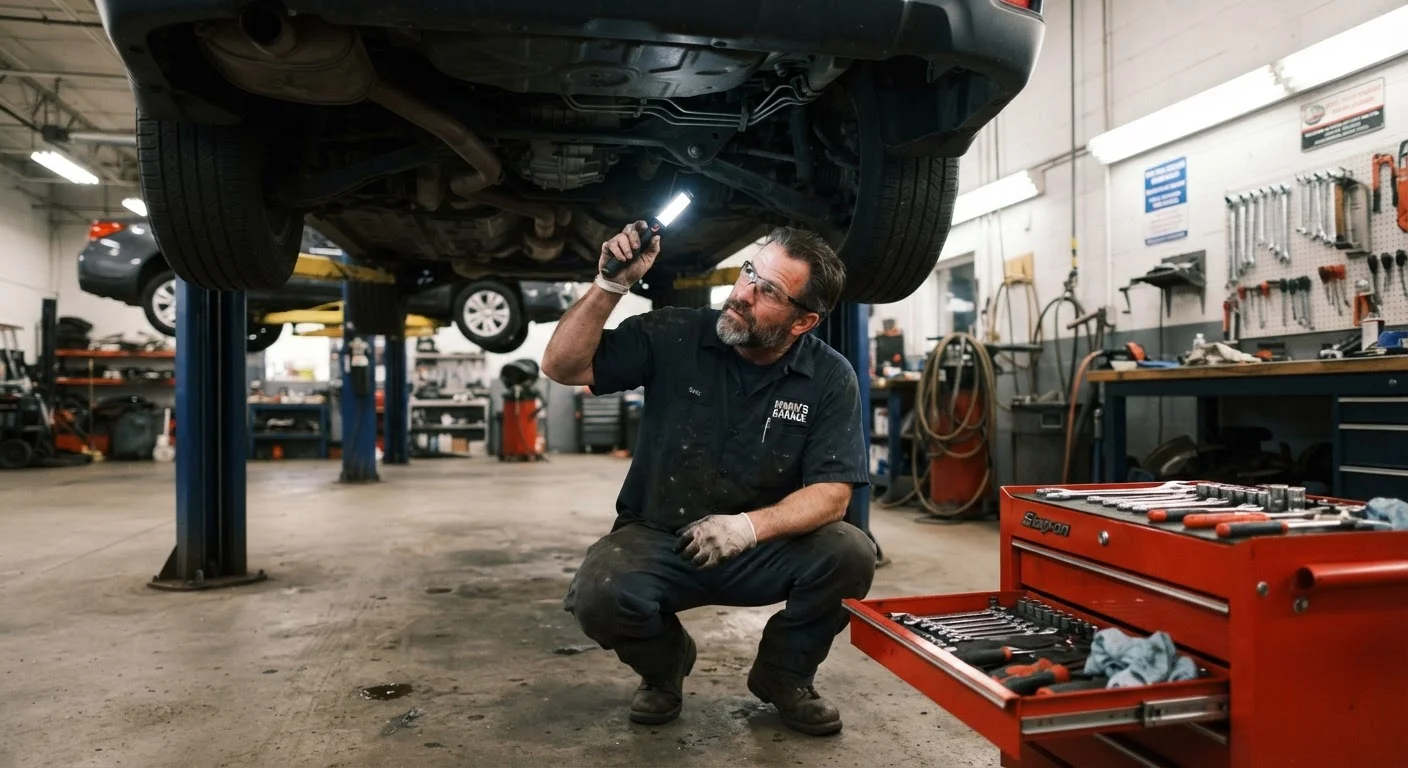
Photo: ConfiReads.com | Blogs For Inquisitive Minds editorial
Key Takeaways
- Many costly repairs begin as minor issues that are easy to spot with a quick visual check.
- Mechanics routinely flag worn wiper blades, cracked belts, and low or dirty fluids that drivers rarely notice.
- Tire wear patterns and brake noise together reveal far more than most drivers realize.
- Catching small problems early is almost always cheaper than addressing them after failure.
What a Trained Eye Sees That Yours Probably Doesn't
When your car goes in for a routine oil change, a skilled mechanic typically scans dozens of components in the time it takes you to pour your first cup of waiting-room coffee. They're not being thorough out of habit - they've learned, through repetition, exactly where vehicles fail and how early warning signs present themselves. The frustrating part for drivers is that many of these signals are visible without any tools or technical training. You just have to know what to look for.
The ten items below represent the most common findings that mechanics note - and that drivers consistently miss. Addressing them early keeps repair bills manageable and your vehicle safer on the road. For a broader maintenance framework, our seasonal car maintenance checklist walks through what to inspect at every time of year.
Worn or streaking wiper blades
Wiper blades degrade from UV exposure and temperature swings long before they stop moving entirely. Mechanics spot the telltale signs - rubber that's cracked along the edge, a blade that skips or chatters across the glass, or streaks left behind even after a fresh washer fluid spray. Most drivers only notice wiper problems during a rainstorm, which is exactly the wrong time to discover them. Inspect blades by running a finger along the rubber edge; if it feels brittle or ragged, replacement is overdue.
Most drivers only notice wiper problems during a rainstorm - exactly the wrong moment.
Cracked or glazed serpentine belt
The serpentine belt drives your alternator, power steering pump, and air conditioning compressor from a single loop around the engine. A cracked, frayed, or glazed belt can snap without warning, leaving you stranded and potentially damaging connected components. Mechanics check the belt's surface for small transverse cracks, shiny glazing (a sign of slipping), or visible fraying at the edges. Many vehicle manufacturers recommend inspection every 60,000-100,000 miles, but heat and age accelerate wear.
A cracked serpentine belt can snap without warning, leaving you stranded and causing further damage.
Uneven tire wear patterns
Tires don't just wear out - they wear in patterns that tell a story. Wear concentrated on the outer edges points to chronic underinflation. Wear only in the center suggests overinflation. Feathering (a sawtooth feel when you run your hand across the tread) usually indicates an alignment problem. Cupping or scalloping - high and low spots around the circumference - often signals worn shock absorbers. Catching these patterns early can save both your tires and the suspension components behind the problem. See our article on tire pressure and why it matters for related guidance.
Tire wear patterns are a map of your vehicle's alignment, inflation, and suspension health.
Low or contaminated brake fluid
Brake fluid is hygroscopic - it absorbs moisture from the air over time, which lowers its boiling point and reduces braking effectiveness. Mechanics check the fluid level in the reservoir under the hood and note its color; fresh fluid is pale yellow or clear, while dark brown or black fluid is heavily contaminated and due for a flush. A dropping fluid level can also indicate worn brake pads or a slow leak in the system. Our guide to car fluids covers this and other essential fluid checks in plain language.
Dark brown brake fluid isn't just old - it's less effective at stopping your vehicle safely.
Corroded or loose battery terminals
Battery terminal corrosion - the white, blue, or greenish crust that forms around the cable connections - increases electrical resistance and can prevent reliable starting. Mechanics also check that the terminals are tight, since vibration gradually loosens connections. This is a five-second visual check anyone can perform by opening the hood. A battery showing heavy corrosion or swelling in the case itself warrants professional testing. For more warning signs, our article on how to tell if your battery is about to fail covers what to watch for before it dies entirely.
Terminal corrosion is a five-second visual check that can prevent an unexpected no-start.
Cabin and engine air filter condition
A clogged engine air filter restricts airflow to the engine, reducing efficiency and, in severe cases, affecting performance. A clogged cabin air filter diminishes HVAC airflow and can worsen air quality inside the vehicle. Both are straightforward to inspect - the engine filter is typically housed in a rectangular plastic box near the top of the engine, and the cabin filter is usually behind the glove box. Mechanics note when filters have turned gray or black, or when debris is visibly packed into the folds. Most manufacturers recommend replacement every 15,000-30,000 miles, though driving in dusty conditions shortens that interval.
A visibly black or debris-packed air filter is easy to miss - and just as easy to replace.
Brake pad thickness
Brake pads have a minimum safe thickness - typically around 2-3 mm depending on the vehicle - below which stopping distance increases and rotor damage begins. Many pads include a wear indicator: a small metal tab that contacts the rotor and produces a high-pitched squeal when the pad is near its limit. However, not all worn pads squeal consistently, and some drivers tune out the sound or confuse it with road noise. Mechanics visually check pad thickness through the wheel spokes during routine inspections. Our article on brake maintenance myths addresses common misconceptions about relying solely on noise as a warning.
Not all worn brake pads squeal - visual thickness checks are the only reliable measure.
Leaking CV axle boots
Constant velocity (CV) axle boots are rubber covers that protect the CV joints - the flexible joints that transfer power from the transmission to the wheels. When a boot cracks or tears, the grease inside escapes and debris enters, accelerating joint wear. The classic sign is a dark grease splatter on the inside of the wheel well or on the axle shaft itself. Mechanics routinely check boots during undercarriage inspections. A torn boot caught early typically costs far less to address than a failed CV joint that goes undetected.
Grease splatter inside the wheel well is an early CV boot failure sign most drivers never notice.
Coolant level and condition
Engine coolant (antifreeze) prevents overheating in summer and freeze-up in winter, but it also degrades over time. Mechanics check both the level in the overflow reservoir and the color of the fluid. Healthy coolant is typically bright green, orange, pink, or blue depending on the formulation - murky, rusty, or oily coolant is a sign of contamination or a failing head gasket. The level should be between the MIN and MAX markings on the reservoir when the engine is cold. Never remove the radiator cap on a hot engine. Seasonal maintenance checks often include coolant condition as a core item.
Murky or rusty coolant signals contamination - and potentially a serious underlying engine problem.
Ignored dashboard warning lights
A warning light illuminated for weeks without action is one of the most consistent findings mechanics report. Drivers often assume that if the car is still running, the light can wait. In many cases it can - but some warnings, particularly those related to oil pressure, engine temperature, or brake system faults, signal conditions that can cause rapid and serious damage if ignored. Knowing what each symbol means is the first step toward making an informed decision about urgency. Our guide to warning lights, decoded explains what each common symbol means and when immediate action is warranted.
A warning light isn't background noise - some signal conditions that worsen quickly if ignored.
Make These Checks Part of Your Routine
None of the issues above require specialized tools or mechanical expertise to spot. A five-minute walk-around before a long trip, combined with a periodic look under the hood, puts you well ahead of most drivers. If you find something that looks wrong but aren't sure how serious it is, our guide on DIY car maintenance vs. taking it to a mechanic can help you decide whether to address it yourself or call a professional.
Build a Simple Monthly Walk-Around Habit
For drivers watching their budget, staying on top of these small checks is one of the highest-return habits you can build. Our article on keeping up with car maintenance on a tight budget offers practical strategies for doing exactly that without overspending.
The content on this site is for informational purposes only and is not a substitute for professional advice. Always consult a qualified professional for guidance specific to your situation.