
Thrift Store Shopping vs. Buying New: Real Trade-Offs to Consider

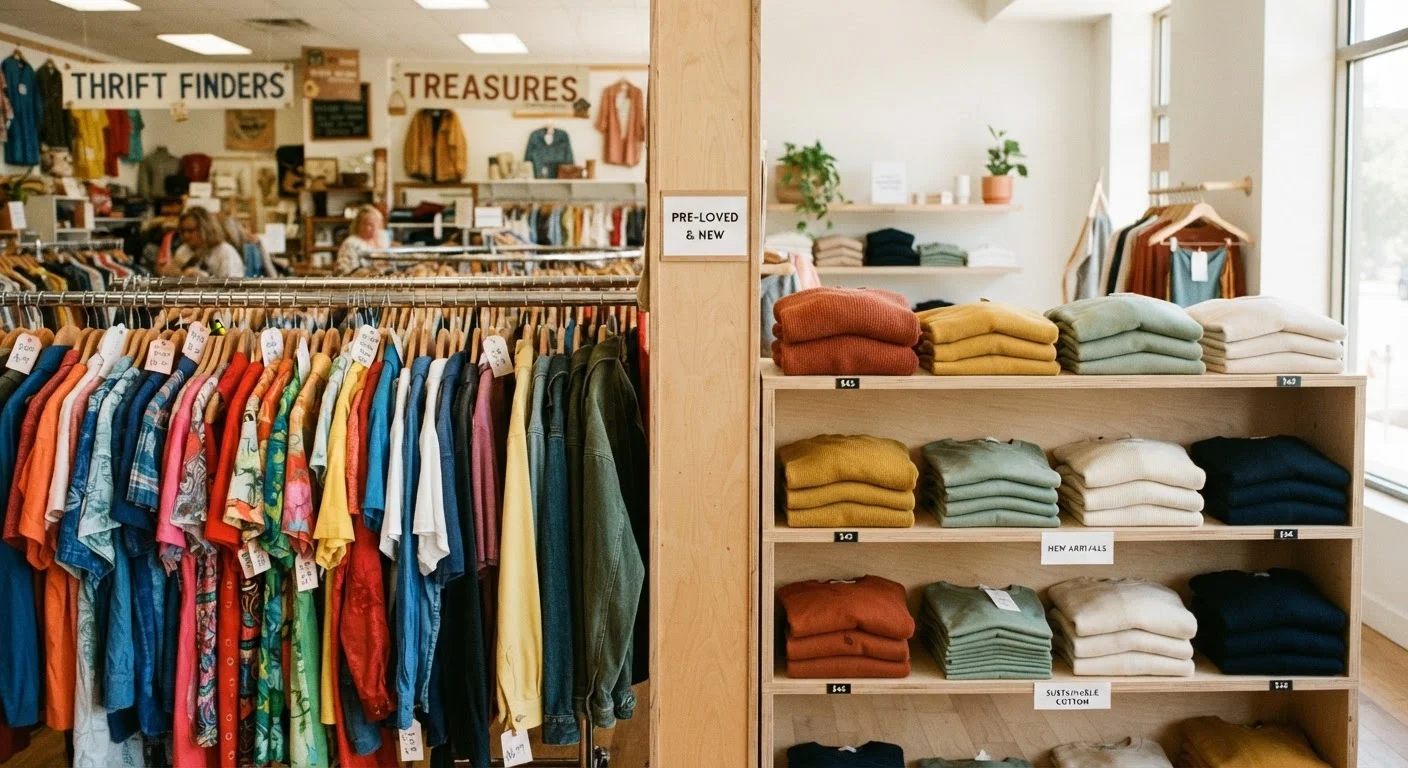
Photo: ConfiReads.com | Blogs For Inquisitive Minds editorial
Key Takeaways
- Thrift shopping can deliver significant savings, but requires more time and patience to find the right pieces.
- Buying new offers consistency, warranties, and hygiene assurance that secondhand rarely can match.
- Secondhand shopping has genuine sustainability benefits, though the picture is more nuanced than it first appears.
- The smartest shoppers often combine both approaches depending on the item category and budget.
- Certain items - like undergarments, shoes, and structured blazers - have different risk profiles when bought used.
Significant cost savings on quality clothing
Thrift prices are typically a fraction of retail, and quality older garments can outlast cheaper new alternatives. This makes thrifting especially valuable for budget-conscious shoppers.
Unique, one-of-a-kind finds
Vintage and secondhand pieces offer individuality that fast fashion can't replicate. Distinctive items can anchor an outfit and reflect genuine personal style.
Extended garment life reduces waste
Purchasing a pre-owned item keeps clothing in circulation longer, diverting it from landfill - an increasingly relevant consideration as textile waste draws public attention.
Access to higher-end brands at lower prices
Thrift stores and resale platforms frequently stock designer or premium labels donated or resold at accessible prices, giving shoppers quality they might not otherwise afford.
Time-intensive hunting process
Finding the right size, style, and condition in a thrift store takes patience and multiple visits. For shoppers with limited time, the effort cost can outweigh the savings.
Sizing and condition inconsistency
Vintage sizing differs significantly from modern standards, and garment condition varies widely. What looks good on the rack may have hidden wear, staining, or structural damage.
Hygiene concerns for certain item categories
Intimate apparel, some footwear, and items with difficult-to-clean materials carry hygiene considerations that make buying new the more cautious choice for many shoppers.
No returns or guarantees in most cases
Most thrift stores have limited or no return policies, meaning a purchase that doesn't work out is a sunk cost rather than a refundable one.
Why This Choice Matters More Than Ever
Secondhand shopping has moved well past niche status. According to ThredUp's annual resale reports, the U.S. secondhand apparel market has been growing significantly faster than the broader retail clothing market, driven by a combination of economic pressure, environmental awareness, and shifting attitudes about owning pre-loved items.
But mainstream doesn't mean universally right. Buying new still offers advantages that thrifting can't replicate for every purchase. Understanding the real trade-offs - not just the headline wins on either side - puts you in a much stronger position when you're standing at a checkout, virtual or otherwise. This is general consumer information, not personalized financial advice; your ideal approach will depend on your own budget and lifestyle. For broader budgeting strategies, the Budgeting Basics hub offers practical frameworks worth exploring.
The Case for Thrift Shopping
The appeal of thrifting starts with price, but it doesn't end there. Quality older garments - think 1990s denim, wool coats, or vintage silk blouses - were often constructed with heavier fabrics and stronger seams than many comparable items produced today. Finding those pieces at a fraction of their original cost is genuinely exciting.
Significant cost savings on quality clothing
Thrift prices are typically a fraction of retail, and quality older garments can outlast cheaper new alternatives. This makes thrifting especially valuable for budget-conscious shoppers.
Unique, one-of-a-kind finds
Vintage and secondhand pieces offer individuality that fast fashion can't replicate. Distinctive items can anchor an outfit and reflect genuine personal style.
Extended garment life reduces waste
Purchasing a pre-owned item keeps clothing in circulation longer, diverting it from landfill - an increasingly relevant consideration as textile waste draws public attention.
Access to higher-end brands at lower prices
Thrift stores and resale platforms frequently stock designer or premium labels donated or resold at accessible prices, giving shoppers quality they might not otherwise afford.
There's also a sustainability argument. Extending a garment's life by purchasing it secondhand keeps it out of the waste stream, at least temporarily. That said, the environmental calculus gets complicated quickly: transportation emissions, the energy used in thrift operations, and the psychological "license" to buy more because it's cheap can all dilute the green benefit. For a deeper look at how purchasing philosophy shapes your closet's footprint, see our piece on fast fashion vs. slow fashion.
The Case for Buying New
New clothing offers something thrifting rarely can: predictability. You know the exact sizing, the condition, the fabric content, and what care the item has received - none of it. Returns are typically straightforward, and many brands back their products with warranties or satisfaction guarantees.
Time-intensive hunting process
Finding the right size, style, and condition in a thrift store takes patience and multiple visits. For shoppers with limited time, the effort cost can outweigh the savings.
Sizing and condition inconsistency
Vintage sizing differs significantly from modern standards, and garment condition varies widely. What looks good on the rack may have hidden wear, staining, or structural damage.
Hygiene concerns for certain item categories
Intimate apparel, some footwear, and items with difficult-to-clean materials carry hygiene considerations that make buying new the more cautious choice for many shoppers.
No returns or guarantees in most cases
Most thrift stores have limited or no return policies, meaning a purchase that doesn't work out is a sunk cost rather than a refundable one.
Fit is another major factor. Garments made to current sizing standards (however imperfect those standards are) are calibrated to today's cuts and proportions in ways that vintage pieces often aren't. For foundational wardrobe pieces like tailored trousers or structured blazers, that consistency matters. If you're building a wardrobe from scratch, our guide to building a wardrobe on a realistic budget walks through which pieces are worth prioritizing new versus secondhand.
Where Each Approach Works Best
The smartest closet strategy isn't an either/or commitment - it's knowing which channel fits which purchase.
$70B+
Projected U.S. secondhand apparel market size
ThredUp's resale industry reports have projected the U.S. secondhand apparel market to surpass $70 billion within a few years, reflecting rapid mainstream adoption.
~33%
Shoppers who bought secondhand in the past year
Industry research consistently finds that roughly one in three American consumers made at least one secondhand clothing purchase in a recent 12-month period.
Thrift tends to shine for: casual tops and bottoms, denim, outerwear, vintage accessories, and statement pieces you'll wear occasionally. These categories offer the widest selection at thrift stores and carry the lowest risk if the item turns out to be slightly imperfect.
Buying new tends to make more sense for: intimate apparel, swimwear, athletic shoes (where midsole compression matters), and items you need in a specific size or color right now. Structured or tailored pieces - like a suit jacket - can also be tricky secondhand because alterations add cost that may close the price gap. This kind of item-level thinking mirrors the trade-off logic explored in pieces like our drugstore vs. department store beauty breakdown, where category matters as much as brand.
A Note on Thrift Store Pricing Trends
Seasonal shopping adds another layer. Thrift stores in transitional months often get flooded with donated seasonal items, making early fall or early spring great windows for outerwear and transitional pieces. Our article on seasonal wardrobe transitions covers how to time these purchases strategically.
The content on this site is for informational purposes only and is not a substitute for professional advice. Always consult a qualified professional for guidance specific to your situation.