
The Capsule Wardrobe: What It Actually Means and Whether It Works

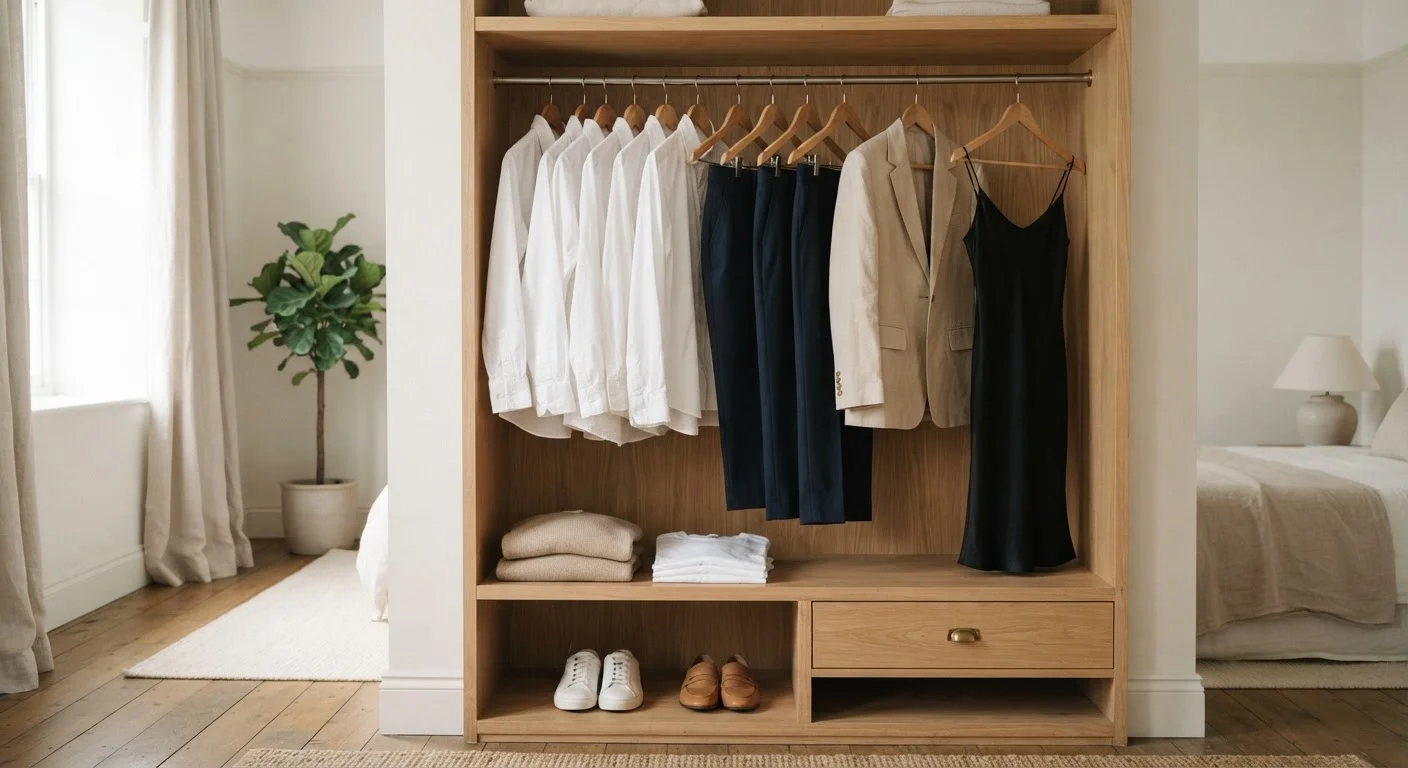
Photo: ConfiReads.com | Blogs For Inquisitive Minds editorial
Key Takeaways
- A capsule wardrobe prioritizes versatile, mix-and-match pieces over sheer quantity.
- The concept was coined in the 1970s and remains relevant for modern, intentional dressing.
- There is no universal number - capsule sizes vary by lifestyle, climate, and personal style.
- Accessories and layering dramatically expand what a small wardrobe can do.
- A capsule approach can reduce spending over time, but upfront investment in quality matters.
Where the Idea Comes From
The term "capsule wardrobe" was introduced by Susie Faux, owner of the London boutique Wardrobe, in the 1970s. Her original idea was straightforward: invest in a compact set of timeless, high-quality pieces that never go out of style, then refresh the look seasonally with a few trend-driven additions. American audiences got a version of this idea in 1985, when designer Donna Karan presented her "Seven Easy Pieces" collection - a system of interchangeable essentials designed to take a woman from boardroom to evening without a wardrobe overhaul.
The concept has been reinterpreted countless times since, from KonMari-influenced minimalism to social-media-driven "outfit formula" culture. At its core, though, the philosophy hasn't changed: own less, wear more, stress less.
What a Capsule Wardrobe Actually Includes
A capsule wardrobe isn't a fixed list - it's a framework. The pieces that belong in yours depend entirely on your actual life: your job, your climate, your social calendar, and your personal aesthetic. That said, most capsules share certain characteristics.
- Neutral anchor pieces: Items in white, black, navy, grey, or camel that serve as the backbone of multiple outfits.
- Versatile silhouettes: Cuts that work across contexts - a straight-leg trouser that reads equally well dressed up or down, for example.
- Intentional color cohesion: Pieces that genuinely coordinate with one another, so almost any combination produces a complete look.
- A few personality pieces: One or two items that express your specific style - a printed blouse, a statement coat - that still work within the overall palette.
Accessories do heavy lifting here. As our editors explore in how accessories transform an outfit, a belt, a scarf, or a watch can shift the entire tone of the same base look. Similarly, layering without bulk lets a small wardrobe stretch across seasons without redundancy.
~30%
Of wardrobe items typically worn regularly
Wardrobe usage research consistently suggests most people regularly wear only around 30% of what they own, leaving the majority idle.
60%
Increase in clothing production since 2000
According to the Ellen MacArthur Foundation's 2017 report on the fashion industry, global clothing production roughly doubled between 2000 and 2015.
Does It Actually Work?
The honest answer: it depends on how you define "works." A capsule wardrobe won't automatically make you feel more stylish, save you money overnight, or eliminate all wardrobe anxiety. What it can do is create a system - and systems reduce friction.
People who thrive with the capsule approach tend to share a few traits: they have a reasonably stable lifestyle (consistent dress code, predictable climate), they enjoy the problem-solving aspect of outfit building, and they're willing to invest more per item in exchange for buying less overall. If your life swings between wildly different contexts - creative freelancer by day, formal events on weekends, outdoor weekend warrior - a single capsule may feel constraining.
“Style is knowing who you are, what you want to say, and not giving a damn. A capsule wardrobe is simply the wardrobe version of that clarity.”
— Tim Gunn, Fashion consultant and co-host of Project Runway
The financial logic is real but nuanced. Buying fewer, better-quality pieces typically costs more upfront, which is worth factoring into your expectations. For guidance on building intentionally without overspending, our wardrobe-building on a budget guide walks through prioritizing foundational purchases realistically. You might also find it helpful to connect your wardrobe goals to your broader spending plan - concepts from budgeting basics apply just as naturally to closet decisions as they do to household expenses.
How to Know If It's Right for You
The best way to evaluate the capsule concept is to start with an honest look at what you already own. A wardrobe audit reveals not just what's in your closet, but what's actually in rotation - and the gap between the two is often illuminating.
Try a Capsule Trial Before Committing
From there, experiment rather than overhaul. Pull out 30 pieces you genuinely love and wear, and spend two weeks dressing only from that pool. Notice where you feel limited versus liberated. That lived experience will tell you more than any formula about whether the capsule approach suits the way you actually live - and how you want to look doing it. And as your needs shift across the calendar, seasonal wardrobe transitions can help you adapt your capsule without starting from scratch each time.
Frequently Asked Questions
The content on this site is for informational purposes only and is not a substitute for professional advice. Always consult a qualified professional for guidance specific to your situation.