
Everyday Accessories and How Each One Changes an Outfit

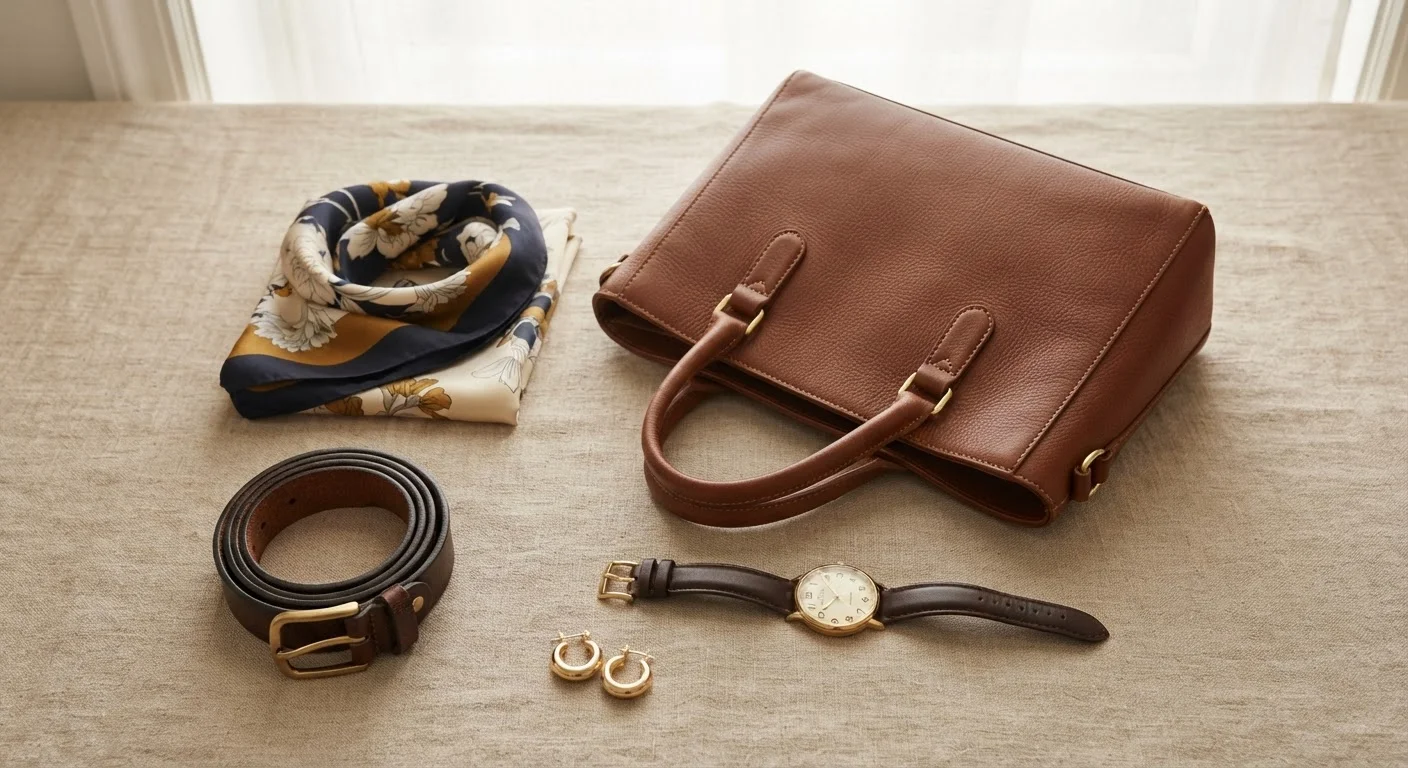
Photo: ConfiReads.com | Blogs For Inquisitive Minds editorial
Key Takeaways
- Accessories shift the formality, mood, and proportion of an outfit without replacing any clothing.
- Each accessory category - belts, bags, scarves, watches, jewelry - does a distinct visual job.
- Mixing metals and layering textures is more accepted in modern styling than rigid rules suggest.
- Intentional accessorizing is one of the most cost-effective ways to extend a wardrobe's versatility.
Why Accessories Have Such Outsized Impact
Accessories aren't an afterthought - they're a multiplier. The same white shirt and dark jeans reads entirely differently depending on whether you add a leather belt and watch, a silk scarf and hoop earrings, or a chunky knit beanie and crossbody bag. The clothes are identical. The message is not.
This is exactly why accessories are often the fastest and most affordable way to extend the range of a wardrobe. If your outfits currently feel like something's missing, the answer is often proportion, color balance, or a single well-chosen finishing piece - not new clothing. Our guide on capsule wardrobe fundamentals touches on how accessories stretch a minimal clothing collection significantly further.
Below, we break down six of the most common everyday accessories and the specific work each one does on an outfit.
Start With One Category at a Time
Six Accessories and the Outfit Work They Do
Belts: Structure, Waist Definition, and Outfit Cohesion
A belt does three things simultaneously: it defines the waist, anchors layers, and signals intentionality. Threading a simple leather or canvas belt through jeans or trousers tells the eye that the outfit was considered. A wide statement belt cinched over a midi dress shifts the silhouette entirely, creating an hourglass emphasis that the dress alone wouldn't produce.
Even when a belt isn't strictly necessary to hold anything up, wearing one at the natural waist on a relaxed-fit outfit adds structure that reads as polished. For business casual environments - see our dress code breakdown - a clean belt is often the detail that separates put-together from underdone.
A belt signals intentionality - the detail that separates put-together from underdone.
Bags: Proportion, Function, and Style Signaling
A bag is the accessory that travels the full length of an outfit with you, so its scale and shape matter enormously. A structured mini bag elevates a casual weekend look toward evening-ready. A slouchy oversized tote softens a crisp blazer-and-trouser combination, making it feel more creative and relaxed. Crossbody bags distribute visual weight differently than shoulder bags - keeping the eye moving and adding dynamism to simpler outfits.
Bag hardware (gold vs. silver tone, matte vs. shiny) also communicates aesthetic. Matching hardware loosely to other metal accents in your outfit creates cohesion without the rigid matching rules that don't actually hold up.
A bag's scale and shape travel with your whole outfit - choose both for proportion and mood.
Scarves: Color, Texture, and Layering Versatility
Few accessories offer as many styling options per square foot as a scarf. Worn as a neck wrap, it introduces color or print at face level - the most noticed zone of any look. Tied to a bag handle, it softens structured leather. Worn as a headband or loose hair tie, it shifts an outfit's personality from classic to playful.
Fabric matters here too: a silk scarf reads polished and editorial, while a chunky knit or jersey loop scarf reads cozy and approachable. If your wardrobe leans toward neutrals, a printed scarf is one of the most affordable entry points for adding personality. Color coordination basics can help you pick prints that work with what you already own.
A scarf introduces color at face level - the most noticed zone of any look.
Watches: Formality Calibration and Wrist Presence
A watch does something almost no other accessory can: it simultaneously signals time-consciousness and personal aesthetic. A slim dress watch with a leather strap elevates casualwear toward smart casual without feeling overdressed. A chunky sport or diver-style watch adds an edge of utility and laid-back confidence to the same outfit. A minimalist face on a mesh or NATO strap sits somewhere in between - versatile across nearly every dress code.
Even in the age of smartphones, a watch remains one of the few accessories that reads as both functional and deliberate. Stacking a watch with a bracelet or two creates wrist presence that draws the eye and adds dimension to otherwise simple outfits.
A watch signals both time-consciousness and personal aesthetic in a single glance.
Jewelry: Scale, Layering, and Mood Setting
Jewelry operates on a spectrum from barely-there to statement, and both ends are valid tools. Small, delicate pieces - a thin chain, subtle studs - add refinement without competing with clothing. Bold earrings or a chunky necklace become the outfit's focal point, which means the clothing underneath can be simpler.
Layering necklaces of varying lengths has become one of the most widely adopted styling techniques in everyday fashion, partly because it doesn't require expensive individual pieces - the combined effect does the work. The same logic applies to stacking rings or mixing earring styles, which many stylists now encourage rather than restrict. If an outfit feels like something is missing, jewelry is often the answer - as explored in why outfits feel off.
Bold jewelry lets clothing stay simple - the accessory becomes the outfit's focal point.
Hats: Occasion Framing and Personality Projection
Hats are among the most transformative accessories precisely because they frame the face and crown the entire silhouette. A wide-brim sun hat softens and romanticizes summer outfits. A structured baseball cap gives sportswear credibility to casual looks. A wool beret or fedora signals creative sensibility and shifts even basic jeans-and-tee combinations toward something more styled.
Because hats are so visually prominent, they work best when they echo at least one other element in the outfit - a color, a texture, or a level of formality. They're also one of the most practical accessories to build into seasonal wardrobe transitions, serving both aesthetic and functional purposes across changing weather.
Hats frame the entire silhouette - they're the crown of any outfit's visual story.
You Don't Need to Wear All of It at Once
Building Your Accessory Instinct Over Time
The goal isn't to follow accessory rules - it's to develop a feel for what each piece contributes so you can make confident, fast decisions when getting dressed. That instinct builds through experimentation: trying a belt on an outfit you'd normally leave beltless, swapping a practical tote for a smaller bag on the same outfit and noticing what changes.
It also helps to understand how accessory choices interact with fabric and fit. A sleek minimalist watch reads differently against a silk blouse than it does against a heavy flannel - both are great, but they're communicating different things. For a deeper look at how material choices shape an outfit's overall feel, fabric fundamentals is worth a read.
Accessories are one area where personal expression has the most room to run - and where the so-called rules are more flexible than most people assume. Trust your eye, experiment often, and let the clothes lead while accessories finish the story.
The content on this site is for informational purposes only and is not a substitute for professional advice. Always consult a qualified professional for guidance specific to your situation.