
Your First Budget in Five Straightforward Steps

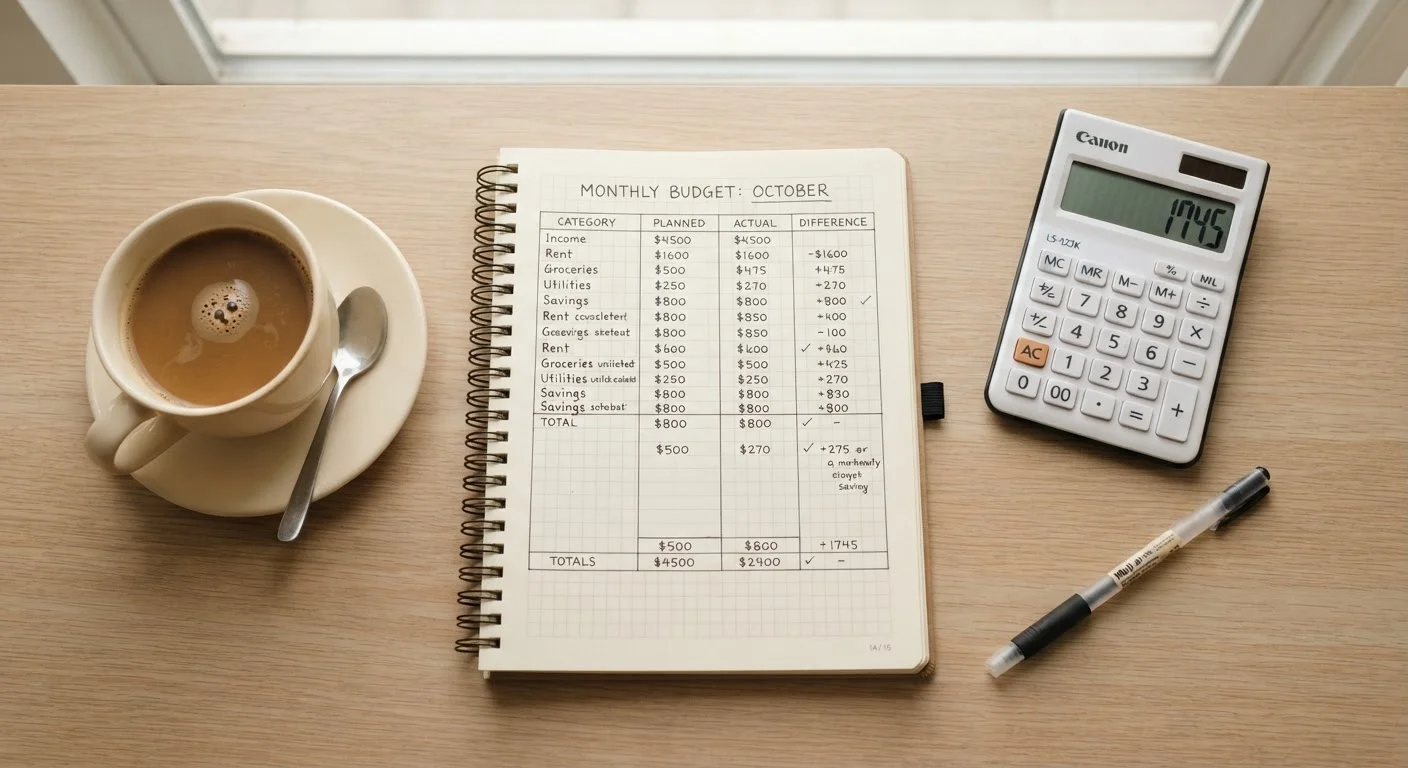
Photo: ConfiReads.com | Blogs For Inquisitive Minds editorial
Key Takeaways
- A first budget only requires two inputs: total income and total expenses.
- Sorting spending into fixed and variable categories makes it easier to find cuts.
- Tracking actual spending against your plan is where real behavior change happens.
- No single budgeting method works for everyone - choose a framework you'll actually use.
- Small, consistent adjustments outperform dramatic budget overhauls every time.
Why a Budget Is Worth Your Time
A budget is not a financial straitjacket - it is a decision made in advance about where your money goes. Without one, spending decisions happen by default, and the default rarely aligns with your actual priorities. Research from the Federal Reserve's annual report on the economic well-being of U.S. households has consistently found that a significant share of Americans could not cover an unexpected $400 expense without borrowing or selling something. A budget is one of the most direct ways to close that gap over time.
You do not need sophisticated software, a finance degree, or a high income to begin. You need a starting point - and this guide provides exactly that in five sequential steps.
Net income
The amount of money you take home after all taxes and payroll deductions have been removed. This is your actual spending power, not your salary figure on paper.
Fixed expense
A recurring cost that stays the same amount each month, such as rent, a car loan payment, or a set subscription fee.
Variable expense
A cost that changes in amount from month to month, such as groceries, gas, or dining out. These are typically the most adjustable part of a budget.
Budget category
A labeled group of related expenses - for example, 'Housing,' 'Food,' or 'Transportation' - used to organize and track spending.
50/30/20 rule
A simple budgeting guideline suggesting you direct 50% of take-home pay to needs, 30% to wants, and 20% to savings or debt repayment.
Zero-based budgeting
A method where every dollar of income is assigned a specific purpose - expenses, savings, or debt - so that income minus all allocations equals zero.
Step 1 - Add Up Your Real Take-Home Income
Your budget starts with net income - the amount that actually lands in your bank account after taxes, Social Security contributions, and any employer-sponsored deductions. Gross (pre-tax) salary is irrelevant here because you cannot spend money that never reaches you.
List every reliable source of income you receive in a typical month:
- Primary employment wages or salary
- Part-time or freelance earnings
- Regular government benefits (Social Security, disability, etc.)
- Child support or alimony received
- Any other consistent, recurring inflows
If your income varies month to month, use a conservative baseline - your lowest recent month is a safer anchor than an optimistic average. Our guide on budgeting with irregular income covers this scenario in depth.
Steps 2 & 3 - List Every Expense and Sort Them
Step 2: Capture every expense. Pull the last two to three months of bank and credit card statements. Write down every recurring charge and every category where you spend regularly. Most people underestimate their spending by 20-30% when relying on memory alone, so statements are essential.
Step 3: Sort expenses into two buckets.
- Fixed expenses - the same amount each month: rent or mortgage, car payment, insurance premiums, loan minimums, subscriptions with a flat fee.
- Variable expenses - amounts that shift: groceries, dining out, gas, clothing, entertainment, personal care.
Fixed expenses are harder to change quickly; variable expenses are where most short-term adjustments happen. For example, if you are also trying to build a wardrobe on a realistic budget, clothing belongs in your variable bucket with a deliberate monthly cap.
Review Three Months, Not Just One
Steps 4 & 5 - Set Limits and Track Your Progress
Step 4: Assign a spending limit to each category. Start with non-negotiables: fixed expenses come off the top. Then allocate money toward savings - even a small, consistent amount matters more than a large, sporadic one. Whatever remains is available for variable spending, divided across your categories.
A common starting framework is the 50/30/20 rule: roughly 50% of take-home pay toward needs, 30% toward wants, and 20% toward savings and debt repayment. It is a useful reference point, not a rigid rule - your actual percentages will depend on your income, cost of living, and obligations. For a deeper comparison of frameworks, see the 50/30/20 rule vs. zero-based budgeting.
Step 5: Track actual spending against your plan. Set aside a few minutes each week to record what you spent versus what you budgeted. Most people find that awareness alone - simply knowing a category limit exists - shifts their behavior meaningfully. At month's end, use a structured review to reconcile and reset. Our monthly budget reset checklist walks through that process in under an hour.
Choose a Budgeting Method That Fits Your Life
Once you have the five-step foundation in place, consider whether a named methodology would help you go further. Three approaches suit most beginners:
- 50/30/20 Rule
- Broad percentage targets - easy to implement and flexible enough for changing circumstances.
- Zero-Based Budgeting
- Every dollar of income is assigned a specific job until the balance reaches zero. This requires more effort but leaves no money unaccounted for. Learn how it works in our guide on zero-based budgeting.
- Envelope Method
- Cash (or digital equivalents) is divided into labeled envelopes for each spending category. Once an envelope is empty, spending in that category stops. Our article on envelope budgeting in the digital age covers how to apply this approach without physical cash.
When you are ready to think beyond month-to-month management, saving and investing become the natural next focus for the dollars your budget frees up.
Common First-Budget Mistakes to Avoid
Most first budgets stumble in predictable ways - none of which are about willpower or discipline.
- Forgetting irregular expenses. Annual insurance premiums, car registration, holiday gifts, and medical co-pays do not appear monthly, but they are real costs. Divide annual totals by 12 and include them as a monthly line item.
- Setting limits too tight. Overly restrictive budgets collapse under the first unexpected expense. Build in a small buffer - sometimes called a miscellaneous or buffer category - to absorb minor surprises.
- Abandoning after one bad month. One month over budget is data, not failure. Use it to recalibrate. Our article on why budgets fail in the first month explains the most common early stumbles and how to sidestep them.
- Not revisiting the budget as life changes. A budget built for your circumstances today needs regular updates - new job, new rent, new family situation. Budgeting needs change across life stages, and your plan should evolve with you.
Don't Omit Debt Minimums
This article provides general financial information and education. It is not personalized financial advice. Consider consulting a licensed financial professional for guidance specific to your situation.
Frequently Asked Questions
The content on this site is for informational purposes only and is not a substitute for professional advice. Always consult a qualified professional for guidance specific to your situation.