
Zero-Based Budgeting: Giving Every Dollar a Job

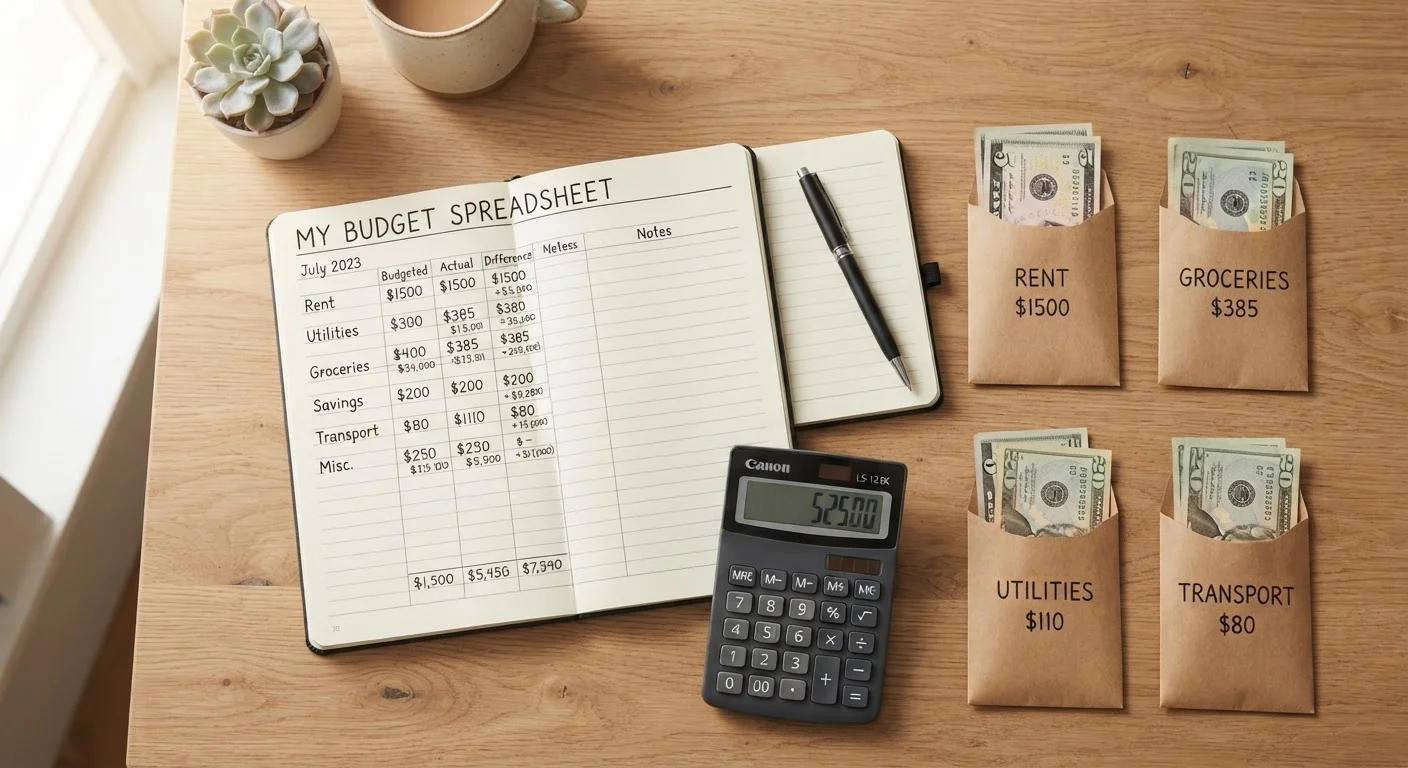
Photo: ConfiReads.com | Blogs For Inquisitive Minds editorial
Key Takeaways
- Zero-based budgeting requires income minus all allocations to equal exactly zero each month.
- Savings and debt payments count as allocated categories - not leftover money.
- The method demands more upfront setup time than percentage-based approaches.
- ZBB works especially well for irregular spenders or those rebuilding financial habits.
- Digital tools and apps can significantly reduce the manual work involved.
- Consulting a financial adviser is recommended before making major money decisions.
How Zero-Based Budgeting Works
The mechanics are straightforward. At the start of each month, you list your total expected take-home income. You then create categories - rent, groceries, utilities, transportation, savings, loan payments, entertainment - and assign dollar amounts until the sum of all categories equals your total income. The equation is: Income − Allocations = $0.
Critically, savings and debt repayment are treated as active allocations, not afterthoughts. If you earn $4,200 in a month, every dollar of that $4,200 must land somewhere intentional. If you have $150 left after filling all categories, you assign that $150 to an emergency fund, extra debt payment, or savings goal - not to a vague "miscellaneous" pile.
This forces a monthly reckoning. You cannot ignore a spending category because the math will not balance. That accountability is precisely what makes the method effective for many people.
Use Last Month's Spending as Your Starting Point
Who Benefits Most From This Approach
Zero-based budgeting is especially useful for people who feel their money disappears without explanation. If you reach the end of the month wondering where your paycheck went, the granular structure of ZBB creates the paper trail you're missing.
It also suits people with specific financial goals - paying off credit card debt, building a down payment, or funding a savings or investment goal. Assigning those goals a dedicated dollar amount each month moves them from aspiration to scheduled priority.
1 in 3
Americans with no formal monthly budget
A 2023 Gallup survey found roughly one-third of U.S. adults do not maintain a detailed household budget, highlighting how much room exists for structured approaches like ZBB.
~$6,000
Average American annual discretionary overspend estimate
Consumer finance researchers have estimated that untracked discretionary spending can cost the average household thousands of dollars annually in categories like dining, subscriptions, and impulse purchases.
That said, ZBB demands more discipline and time than simpler percentage-based frameworks. If you have a relatively stable, predictable spending pattern and just want a broad guardrail, a lighter-touch system like the 50/30/20 rule may be a better fit. Our article comparing both methods walks through the tradeoffs in detail.
Building Your Zero-Based Budget Step by Step
Start by calculating your total monthly take-home pay across all income sources. If your income varies, use a conservative estimate based on recent months. Next, list every spending category you expect to have - fixed costs first (rent, insurance, loan minimums), then variable necessities (groceries, gas), then discretionary spending (dining out, subscriptions, hobbies).
Assign a dollar figure to each. When the total matches your income, you're done. If you're over, trim discretionary categories. If you're under, direct the remainder to savings or debt repayment. For first-time budgeters, our five-step beginner guide provides a hands-on walkthrough.
At month's end, reconcile actual spending against your allocations using the monthly budget reset checklist. Adjust category amounts for next month based on what you learned. This iterative review is where lasting financial habits form.
“A budget is telling your money where to go instead of wondering where it went.”
— Dave Ramsey, Personal finance author and radio host
Common Pitfalls - and How to Avoid Them
The most common failure point is forgetting irregular expenses - car registration, annual subscriptions, holiday gifts. These are predictable costs that simply don't recur monthly. The solution is sinking funds: categories where you set aside a small amount each month so the money is ready when the bill arrives.
Another pitfall is building an overly rigid budget that leaves no room for life's variability. A small "buffer" or "miscellaneous" category of $50-$100 prevents one unexpected expense from unraveling your entire plan. The reasons most budgets fail in month one are rarely about willpower - they're structural design flaws that ZBB, done correctly, is built to prevent.
Finally, don't confuse detailed budgeting with deprivation. Zero-based budgeting gives you permission to spend on things you value - it simply requires that choice to be intentional. If you want to explore what that intentionality looks like compared to other tracking styles, tracking every dollar offers a balanced perspective on granular expense logging.
This article is for general informational and educational purposes only and does not constitute personalised financial or investment advice. Consult a qualified financial adviser before making decisions specific to your situation.
Frequently Asked Questions
The content on this site is for informational purposes only and is not a substitute for professional advice. Always consult a qualified professional for guidance specific to your situation.