
The Science Behind Stopping Distance

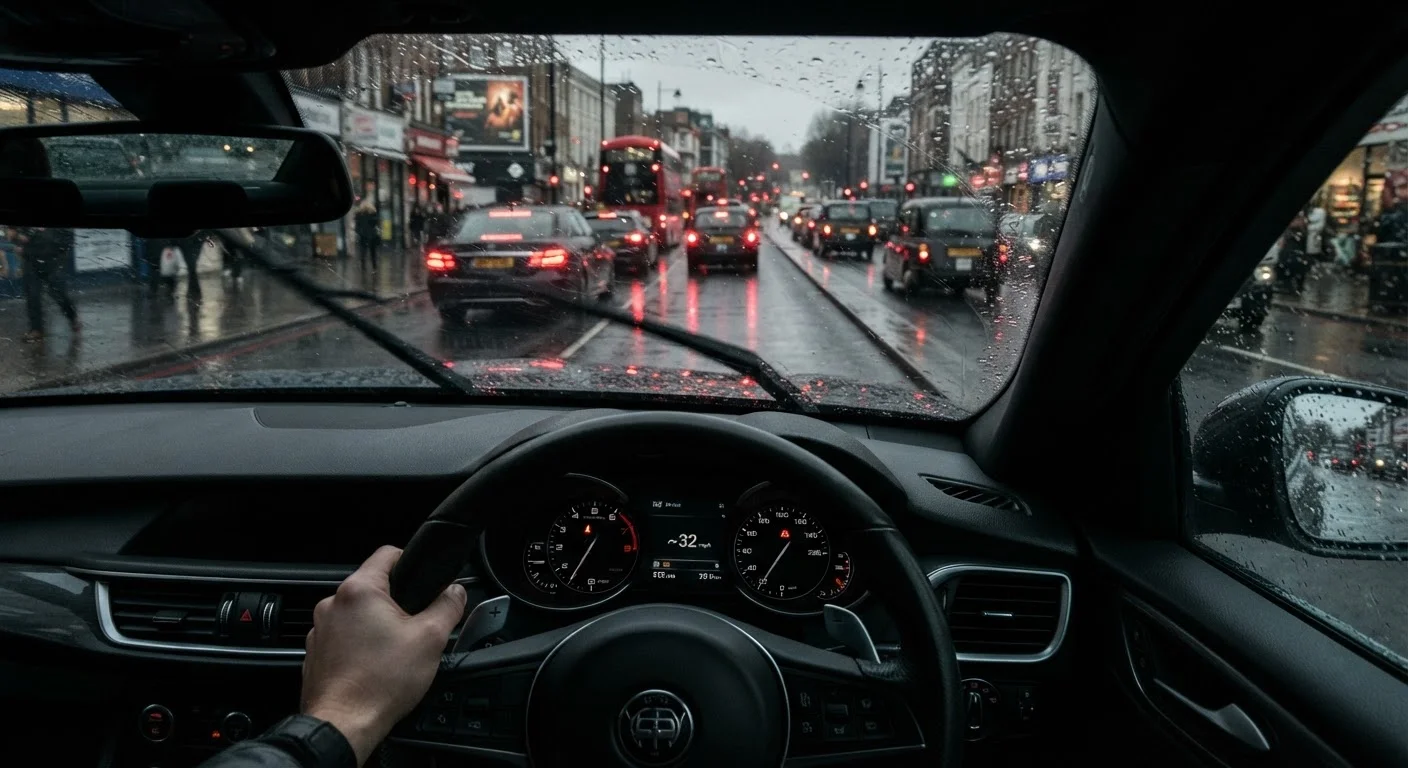
Photo: ConfiReads.com | Blogs For Inquisitive Minds editorial
Key Takeaways
- Stopping distance has two components: reaction distance and braking distance.
- Doubling your speed quadruples your braking distance due to kinetic energy physics.
- Wet, icy, or worn-surface roads can dramatically extend the distance needed to stop.
- Driver impairment, distraction, and fatigue all lengthen reaction time - and therefore total stopping distance.
- Maintaining safe following distance is the most practical way to keep stopping distance manageable.
Two Phases, One Result
Most drivers think of stopping as a single action - pressing the brake - but physics tells a more complex story. Total stopping distance is the sum of two distinct phases that happen in sequence every time a hazard appears on the road.
Reaction distance is how far your vehicle travels between the moment you perceive danger and the moment your foot actually engages the brake. At 60 mph, an alert driver covering the average 1.5-second reaction time travels approximately 132 feet before the brakes even begin to work.
Braking distance is what follows: the distance the car continues forward while the brakes are applied and the vehicle decelerates to a stop. On dry pavement at 60 mph, braking distance for a typical passenger car adds roughly 120-180 additional feet.
Combined, that's potentially over 300 feet - more than many drivers visualize when they estimate how much space they need. Understanding this two-phase model is the foundation of defensive driving, where anticipating hazards early is everything.
Why Speed Has a Bigger Effect Than You Think
The most counterintuitive truth about stopping distance is that it doesn't scale linearly with speed. The relationship is governed by kinetic energy - the energy a moving vehicle carries - which increases with the square of its speed.
This means that when you double your speed, your braking distance doesn't double; it quadruples. Going from 30 mph to 60 mph multiplies braking distance by a factor of four, not two. The numbers quickly become striking:
- 30 mph: Braking distance approximately 45-60 feet on dry pavement
- 60 mph: Braking distance approximately 180-240 feet
- 70 mph: Braking distance approximately 245-315 feet
This exponential relationship is why traffic safety research consistently links higher speeds to dramatically increased crash severity. For a deeper look at what the data shows, see our article on speed and crash risk.
4×
Braking distance increase when speed doubles
Because kinetic energy grows with the square of speed, doubling velocity quadruples the distance required to stop - a fundamental principle of vehicle physics.
~132 ft
Distance traveled during average reaction time at 60 mph
At 60 mph and a 1.5-second average reaction time, a vehicle covers approximately 132 feet before braking begins - nearly half a city block.
Up to 10×
Stopping distance increase on ice vs. dry road
Ice and compacted snow can reduce tire-road friction so severely that stopping distances extend up to ten times those recorded on dry pavement at the same speed.
Road Conditions and Tire Grip
Braking distance figures assume reasonable tire-to-road friction. In reality, that friction varies enormously based on surface conditions - and the consequences of reduced grip are severe.
Wet asphalt can reduce friction coefficients by 30-50% compared to dry pavement. A car that stops in 180 feet on a dry road may need 270-360 feet in the rain. Ice and compacted snow can reduce friction by as much as 80%, which explains why winter stopping distances can reach ten times those of dry conditions.
Tire condition matters just as much as weather. Worn tires with insufficient tread depth - below 2/32 of an inch, the legal minimum in most U.S. states - have significantly reduced wet-weather grip. Underinflated tires also degrade braking performance.
Tread Depth Affects Wet Braking Dramatically
Nighttime driving compounds these risks, since reduced visibility shortens the distance over which a driver can even perceive hazards - meaning reaction time becomes even more critical. Our guide on driving at night covers these compounding risks in detail.
Putting It Into Practice: Following Distance
Knowing stopping distances intellectually is only useful if it shapes how you drive. The most direct application is following distance - the buffer space you maintain between your vehicle and the one ahead.
The widely cited two-second rule - choosing a fixed landmark and ensuring at least two seconds of travel time separates you from the car in front - provides a baseline, but it is a minimum, not a target. At highway speeds or in adverse conditions, three to four seconds is more appropriate. See our detailed breakdown of safe following distance for specifics.
Adjust Following Distance for Conditions
Heavy vehicles such as trucks and buses have substantially longer stopping distances than passenger cars due to their greater mass, so allow additional space when following them. Modern ABS (anti-lock braking systems) prevent wheel lockup and help maintain steering during emergency braking, but they do not shorten stopping distances below the physical limits set by speed and road friction.
For a comprehensive overview of how stopping distance fits into the broader picture of road safety, the complete guide to road safety covers every major factor American drivers need to understand.
Frequently Asked Questions
The content on this site is for informational purposes only and is not a substitute for professional advice. Always consult a qualified professional for guidance specific to your situation.