
Driving at Night: Why Darkness Changes Everything

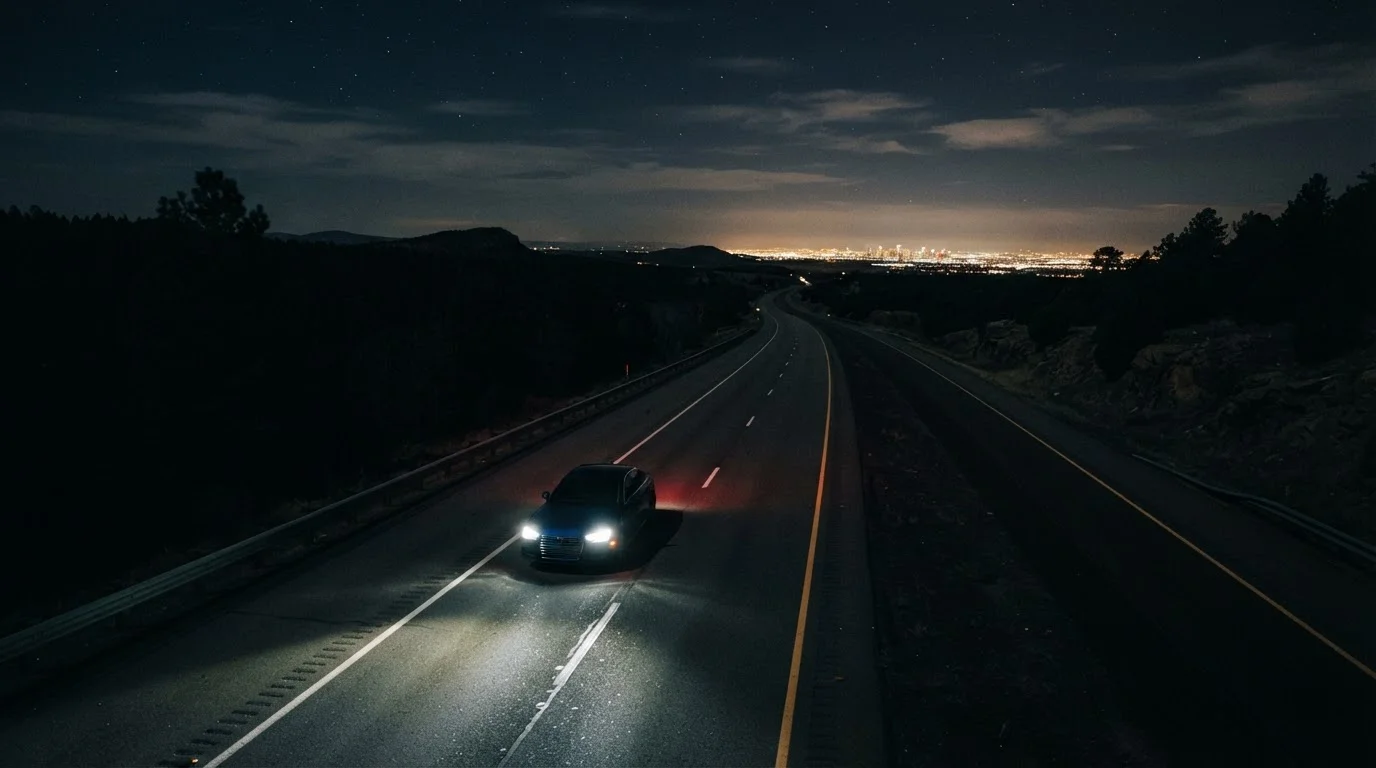
Photo: ConfiReads.com | Blogs For Inquisitive Minds editorial
Key Takeaways
- Nighttime fatal crash rates are significantly higher than daytime, even when accounting for lower traffic volume.
- Human vision degrades substantially in low light, reducing hazard detection distance and peripheral awareness.
- Fatigue and impaired drivers are far more prevalent on nighttime roads, compounding your personal risk.
- Headlight aim, speed management, and following distance are the three most controllable safety factors after dark.
- Simple vehicle checks and adjustments before driving at night can meaningfully reduce your exposure to risk.
Why Nighttime Roads Carry Disproportionate Risk
Darkness does more than reduce what you can see - it fundamentally changes the driving environment in ways that compound each other. According to the National Highway Traffic Safety Administration (NHTSA), a disproportionate share of traffic fatalities occur at night, even though traffic volume is considerably lower than during daylight hours. The reasons are interlocking: diminished human vision, higher prevalence of impaired or drowsy drivers, and reduced conspicuity of pedestrians and cyclists.
Human eyes shift from cone-based color vision to rod-based low-light vision after dark, but rods are less sharp, slower to adapt to sudden brightness changes, and essentially blind in the central field of view. This means peripheral hazard detection - spotting a pedestrian stepping off a curb, for instance - is genuinely harder at night, not just a matter of being less attentive. Pair that with the increased frequency of impaired drivers on weekend nights and the physiological pull of fatigue, and the risk profile shifts significantly from daytime driving.
For those already building strong habits, this article pairs well with our broader resource on road safety for American drivers.
Fatigue Is as Dangerous as Impairment
Before You Drive: Preparation That Pays Off
Effective nighttime driving starts before you pull out of the driveway. A few quick checks can meaningfully reduce the risk you'll encounter once on the road.
What you will need
Working High-Beam Headlights
Extends your forward visibility on unlit roads where low beams are insufficient.
Anti-Glare or Polarized Eyewear
Reduces the blinding effect of oncoming high beams for drivers who are sensitive to glare.
Headlight Restoration Kit
Removes oxidation from plastic headlight lenses to restore output closer to factory levels.
Dash Camera with Night Mode
Records low-light footage that can be valuable documentation in the event of a nighttime incident.
Beyond equipment, consider the route. Unfamiliar roads at night carry additional hazard - unmarked curves, missing signage, and poor lane markings are all harder to navigate without prior familiarity. Where possible, travel routes you know, or review the path in daylight before a nighttime trip.
It's also worth acknowledging how road surface conditions interact with darkness. Wet roads after rain, for instance, become significantly more hazardous when you can't clearly judge standing water depth or lane position. Our guide on driving on wet and icy roads covers how to adapt your technique when conditions change beneath your tires.
Clean Your Windshield and Headlight Lenses
Step-by-Step: Safer Nighttime Driving Habits
The following steps outline the practical adjustments every driver should make when conditions shift from daylight to dark. These are not one-time actions - they are habits to build into every nighttime trip.
Inspect Your Vehicle's Lighting Before Departure
Walk around your vehicle and confirm that headlights (both low and high beam), taillights, brake lights, and turn signals are all operational. A burned-out light is harder to notice during daylight and can be a legal liability and a genuine safety hazard at night. Ask someone to stand behind the car while you apply the brakes, or back up near a reflective surface.
Adjust Your Speed for Reduced Visibility
Posted speed limits are set for normal conditions. At night, your usable vision cone shrinks dramatically, so the posted limit may not be safe for the actual visibility available to you. Reduce speed enough that you can come to a complete stop within the distance your headlights illuminate. On rural unlit roads, this often means traveling 10-15 mph below the daytime speed you'd feel comfortable at.
Use High Beams Strategically - and Correctly
High beams roughly double your forward visibility compared to low beams and are underused by most drivers on unlit roads. Switch to high beams whenever there is no oncoming traffic and no vehicle directly ahead of you. Dim back to low beams when an oncoming vehicle appears or when you are within approximately 500 feet of one - this is a legal requirement in most U.S. states, not just a courtesy.
Increase Your Following Distance
The standard three-second following distance recommended for daytime driving is not sufficient at night. Extend your following distance to at least four seconds, and more on rural or unfamiliar roads. This buffer gives you more time to react to sudden stops, debris, or pedestrians that appear at the edge of your headlight range. Tailgating at night is one of the most common contributors to rear-end collisions in low-light conditions.
Manage Glare from Oncoming Headlights
When faced with blinding oncoming headlights, avoid staring directly into them. Instead, shift your gaze slightly right toward the road's edge line or shoulder, using it as a guide while the vehicle passes. Do not close your eyes or brake suddenly. After the vehicle passes, give your eyes a moment to re-adapt before resuming your normal scan.
Stay Alert to Pedestrians, Cyclists, and Wildlife
Pedestrians and cyclists are dramatically harder to see at night, particularly those not wearing reflective gear. Scan the full width of your headlight beam, not just the road center, and pay extra attention at crosswalks, bus stops, and residential streets. In rural areas, be especially watchful for deer and other wildlife, which are most active between dusk and midnight and again before dawn. If you see one animal, assume others are nearby.
Recognize and Respond to Your Own Fatigue
Fatigue peaks during the body's natural low-energy periods: typically between midnight and 6 a.m. If you feel drowsy, do not rely on coffee, music, or open windows as reliable countermeasures - these are temporary at best. The only safe response is to pull over at a well-lit, populated location and rest. Plan long nighttime drives with scheduled stops every 90-120 minutes to stay ahead of fatigue accumulation. For a deeper look at the warning signs, see our driver fatigue guide.
Never Overdrive Your Headlights
Drivers who are newer to night driving - or who have recently developed concerns about their night vision - should also review our new driver safety guide, which covers foundational habits that apply across all conditions. And for experienced drivers, overconfidence at the wheel is a useful read - familiarity with a route at night can breed complacency that quietly raises crash risk.
The content on this site is for informational purposes only and is not a substitute for professional advice. Always consult a qualified professional for guidance specific to your situation.