
Speed Limits and Speeding: What the Research Actually Says About Risk

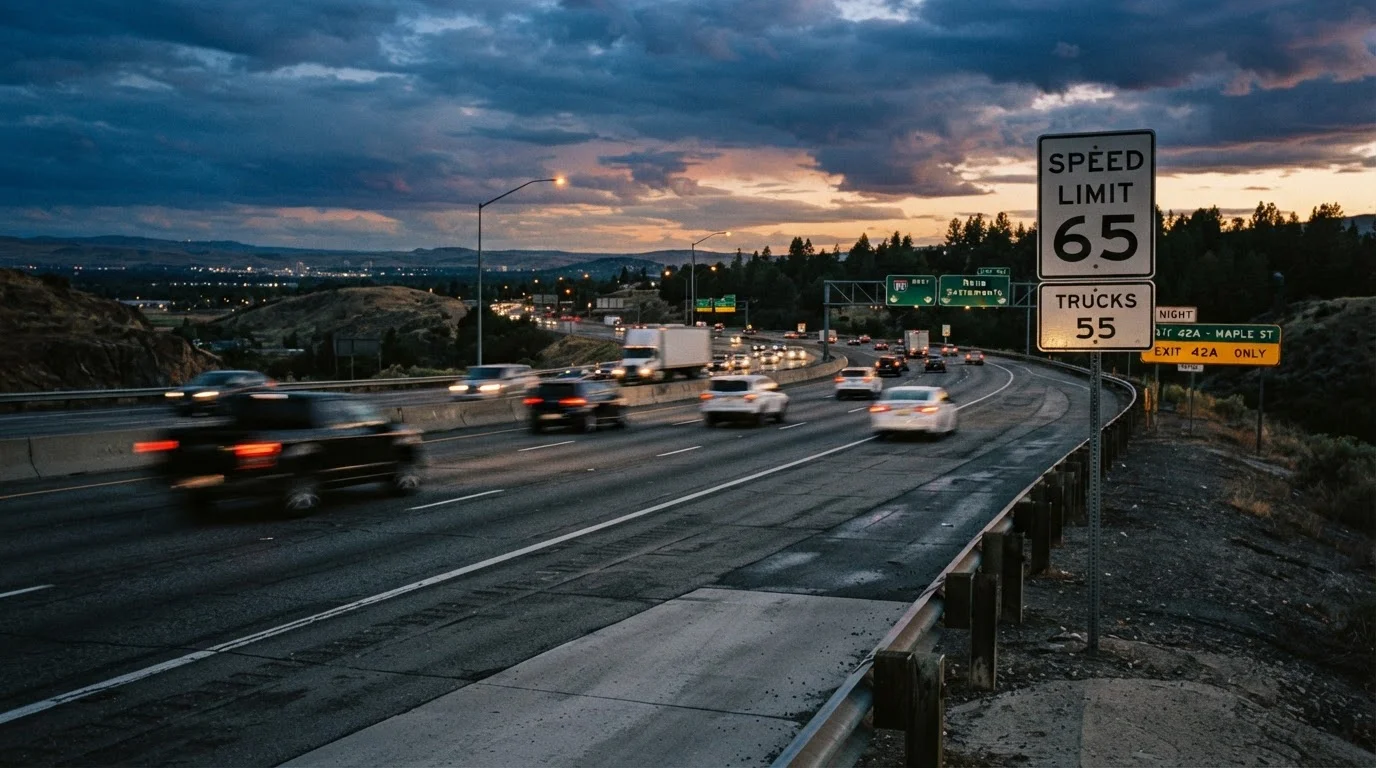
Photo: ConfiReads.com | Blogs For Inquisitive Minds editorial
Key Takeaways
- Higher speeds reduce the time drivers have to react to hazards ahead.
- Stopping distance increases sharply with speed due to the physics of kinetic energy.
- Pedestrians struck at higher vehicle speeds face dramatically lower survival odds.
- Speed-related crashes account for a substantial share of U.S. traffic fatalities each year.
- Posted speed limits are set based on road geometry, traffic density, and surrounding land use - not arbitrary rules.
- Even driving just a few miles per hour over the limit measurably increases crash risk.
Why Speed Matters More Than Most Drivers Think
Many drivers treat posted speed limits as rough suggestions, adjusting upward when traffic flows fast or roads feel wide and clear. Traffic safety research offers a consistent counterargument: speed is not a minor variable. It is one of the most direct determinants of whether a crash occurs and how survivable it is when it does.
The physics are straightforward. Kinetic energy - the force a vehicle carries and must dissipate in a collision - increases with the square of speed. A vehicle traveling at 60 mph carries four times the kinetic energy of one moving at 30 mph. That energy translates directly into crash severity. Stopping distance climbs sharply with speed as well, compressing the window a driver has to respond to any hazard that appears ahead.
Speed also degrades the driver's ability to process information. At higher speeds, peripheral vision narrows, reaction time covers more ground, and the consequences of any steering or braking error grow larger. This is not a matter of driver skill - it is a physical reality that applies equally to experienced and novice drivers.
~33%
U.S. traffic deaths linked to speeding
NHTSA reports speeding as a contributing factor in approximately one-third of all U.S. traffic fatalities in recent years.
4×
Kinetic energy increase from doubling speed
Because kinetic energy scales with the square of velocity, doubling speed quadruples the energy involved in a collision.
~30%
Pedestrian survival rate at 40 mph vehicle impact
Traffic safety research indicates pedestrian survival drops sharply as vehicle impact speed rises, from roughly 90% at 20 mph to around 30% at 40 mph.
What the Data Shows About Speed Limits and Fatalities
NHTSA data places speeding as a contributing factor in approximately one-third of annual U.S. traffic deaths - a figure that has remained stubbornly consistent across years. The Insurance Institute for Highway Safety (IIHS) has separately studied the effects of raising speed limits, finding that each incremental increase is associated with a statistically measurable rise in fatality rates on affected road segments.
Pedestrian and cyclist vulnerability adds another dimension. Traffic safety research has documented the steep drop in pedestrian survival odds as vehicle speed climbs. At 20 mph, survival rates for struck pedestrians are high; by 40 mph, the majority of pedestrian impacts are fatal. Urban speed limit reductions in several U.S. cities have been implemented in direct response to this evidence.
These findings reinforce a key point for everyday drivers: the posted limit is not a floor to exceed comfortably - it is a ceiling calibrated to road conditions and injury risk. Understanding how following distance interacts with speed reinforces this further; the two-second rule for following distance becomes harder to maintain as speed increases.
Speed Limits Are Not Arbitrary - Here's How They're Set
A common misconception is that speed limits are set using the "85th percentile rule" - meaning engineers simply observe how fast most traffic moves and post that speed. While this method has historically influenced some limit-setting, it is not the only or universal standard, and traffic safety advocates have challenged its adequacy given modern crash data.
Road engineers evaluate a range of factors: sight distance (how far ahead a driver can see), road geometry and curves, the presence of driveways or intersections, adjacent land use such as schools or residential zones, and documented crash history. On controlled-access highways with grade separations and no cross-traffic, higher limits reflect genuinely reduced conflict points. On surface streets where pedestrians, cyclists, and turning vehicles are present, lower limits reflect real exposure to injury risk.
Speed Limits Vary by State and Road Type
Practicing defensive driving means treating the speed limit as a tool for managing risk rather than an obstacle to route efficiency. Drivers who remain within posted limits - and reduce further in adverse conditions - give themselves more time and space to respond when the unexpected happens.
Applying This Knowledge Behind the Wheel
Understanding speed-risk research is valuable only if it changes behavior. A few practical implications for everyday driving stand out:
- Conditions often call for speeds below the limit. Rain, fog, construction zones, heavy traffic, and unfamiliar roads all increase stopping distances and reduce visibility. The legal maximum is not always the safe maximum.
- Highway driving is not low-risk by default. High speeds on open roads compress reaction time and amplify crash severity. Fatigue compounds this significantly. Night driving on highways is a particular risk combination.
- Urban speed reductions have measurable safety benefits. Evidence supports the view that lower urban speed limits reduce pedestrian and cyclist fatalities, a finding that informs policy in many U.S. cities.
- Overconfidence in vehicle technology is a risk factor. Modern vehicles with advanced safety systems do not eliminate the physics of speed. Overconfidence at the wheel remains a documented contributor to crash risk regardless of the vehicle involved.
Collectively, the evidence offers a clear message: speed is not simply a legal issue but a safety one. Respecting limits - and understanding why they exist - is among the most straightforward decisions a driver can make to reduce the likelihood of a serious crash.
Adjust Speed for Conditions, Not Just the Sign
Frequently Asked Questions
The content on this site is for informational purposes only and is not a substitute for professional advice. Always consult a qualified professional for guidance specific to your situation.