
Tailgating vs. Following Distance: What the Two-Second Rule Actually Requires

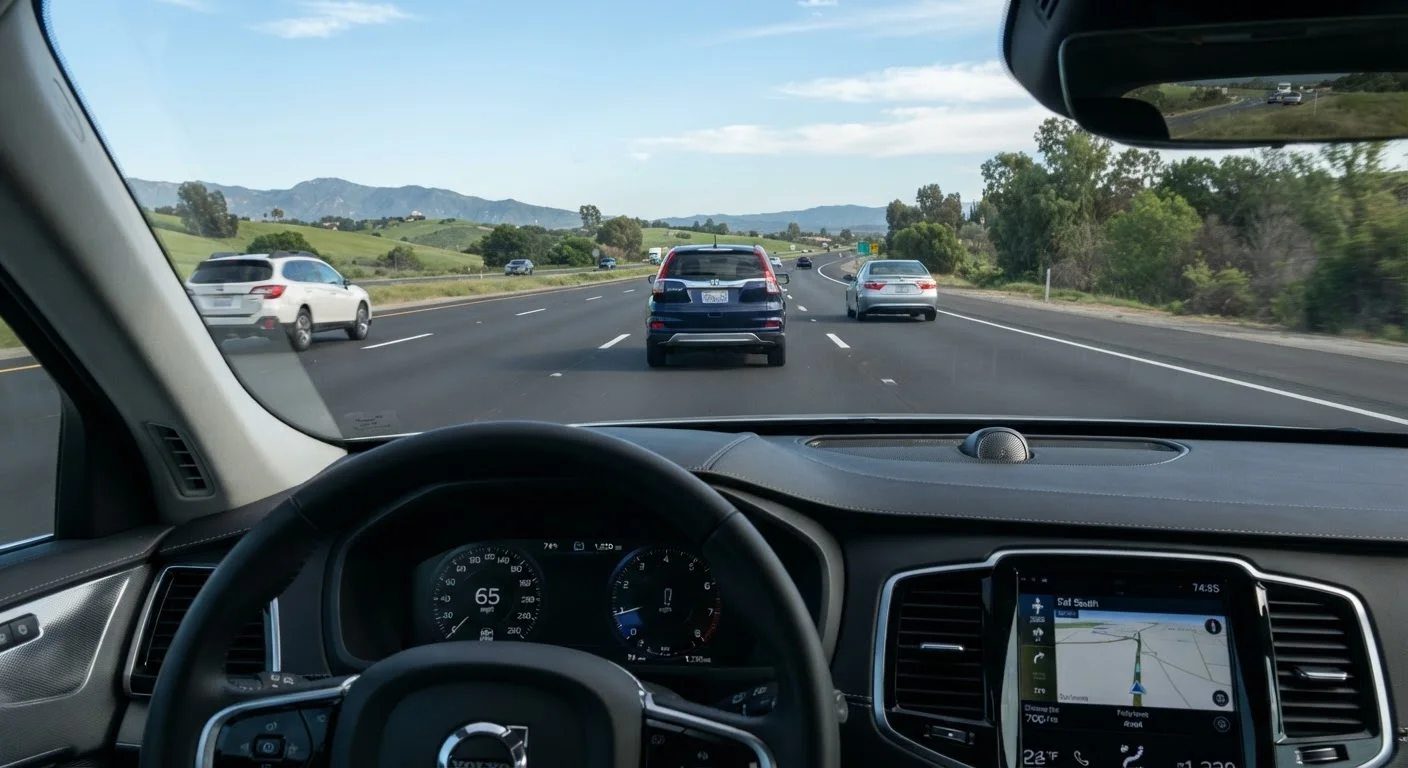
Photo: ConfiReads.com | Blogs For Inquisitive Minds editorial
Key Takeaways
- Tailgating eliminates the reaction buffer every driver needs to stop safely in an emergency.
- The two-second rule is a minimum, not a target - three or four seconds is safer at highway speeds.
- Wet, icy, or low-visibility conditions require significantly longer following distances.
- Rear-end crashes are among the most common collision types in the U.S., and following distance is a direct factor.
- The two-second rule applies to your gap - not the gap the car in front of you maintains.
Why Following Distance Is a Safety Calculation, Not a Courtesy
Following distance is not a matter of politeness - it is physics. When a vehicle ahead brakes suddenly, the trailing driver must perceive the hazard, decide to brake, move their foot, and bring the car to a full stop. That sequence takes time. The gap between vehicles is the only thing that buys that time.
Tailgating - following too closely - compresses or eliminates that margin entirely. Even at 35 mph, a car travels about 51 feet per second. A driver with an average reaction time of 1.5 seconds will cover roughly 77 feet before the brakes even begin to engage. If the gap was 40 feet to begin with, a collision is almost unavoidable.
The two-second rule exists to translate an abstract safety concept into something a driver can measure in real time. By counting the seconds between the moment the vehicle ahead passes a fixed point - a sign, a lane marking, a bridge - and the moment your front bumper reaches the same point, you get a rough but practical measure of your following gap. Two seconds is the widely cited minimum. Many traffic safety professionals treat it as a floor, not a target. See how this fits into the broader picture of defensive driving principles that reduce crash risk.
| Criterion | Tailgating | Safe Following Distance |
|---|---|---|
| Reaction time buffer | None or severely reduced | 2-4 seconds depending on conditions |
| Rear-end collision risk | High - leading cause of crashes | Significantly reduced |
| Stopping distance coverage | Inadequate at most speeds | Adequate at normal speeds; extend in adverse conditions |
| Legal standing | Traffic violation in all U.S. states | Meets or exceeds legal minimum |
| Adjustability for weather | No gap to extend | Gap expanded to 4+ seconds in wet or icy conditions |
| Driver stress level | Elevated - reduces decision time | Lower - more time to assess and respond |
When Two Seconds Is Not Enough
The two-second rule was designed for dry roads and normal visibility. It does not automatically scale with conditions. Three common situations require longer gaps:
- Adverse weather: On wet pavement, stopping distances can increase by 50% or more. On snow or ice, they can double or triple. A four-second gap - or more - is a safer baseline when traction is reduced.
- High speeds: At 70 mph, a vehicle covers about 103 feet per second. Two seconds equates to roughly 206 feet of gap. At that speed, many traffic safety experts recommend three to four seconds to account for the longer stopping distances involved.
- Large or heavy vehicles: Trucks, SUVs towing trailers, and other heavy vehicles require more distance to stop than a typical passenger car. Drivers of such vehicles should add at least one additional second to their baseline gap.
Understanding how speed compounds risk is part of reading the road correctly. The relationship between speed and stopping distance is covered in depth in our analysis of speed limits and crash risk.
~29%
Share of U.S. crashes that are rear-end collisions
Rear-end crashes are consistently among the most frequent crash types reported by the National Highway Traffic Safety Administration (NHTSA).
1.5 sec
Average driver perception-reaction time
Traffic engineering standards commonly use 1.5 seconds as the baseline human reaction time for braking decisions in normal conditions.
2×-3×
Stopping distance increase on wet or icy roads
Vehicle stopping distances can double on wet pavement and triple or more on ice compared to dry road conditions, according to general traffic safety guidance.
How to Apply the Two-Second Rule Correctly
The mechanics are simple but often misunderstood. Choose a stationary reference point on the road - a sign, a painted line, an overpass. The moment the rear of the vehicle ahead passes that point, begin counting: one-one-thousand, two-one-thousand. If your front bumper reaches the same point before you finish that count, you are following too closely.
Common errors include:
- Counting too fast: Many drivers unconsciously rush the count, convincing themselves they are within the safe range when they are not.
- Measuring the wrong gap: The rule applies to the distance between your vehicle and the one directly ahead - not the gap two or three cars up the road.
- Failing to reassess: Following distance must be continuously adjusted. Joining a highway, encountering a slow-moving truck, or entering a construction zone all change the calculation.
The Two-Second Rule Is a Minimum, Not an Ideal
Building the habit of checking your gap every few minutes - rather than only after a near-miss - is the mark of an experienced, attentive driver.
The content on this site is for informational purposes only and is not a substitute for professional advice. Always consult a qualified professional for guidance specific to your situation.