
Tire Pressure and Why It Matters More Than You Think

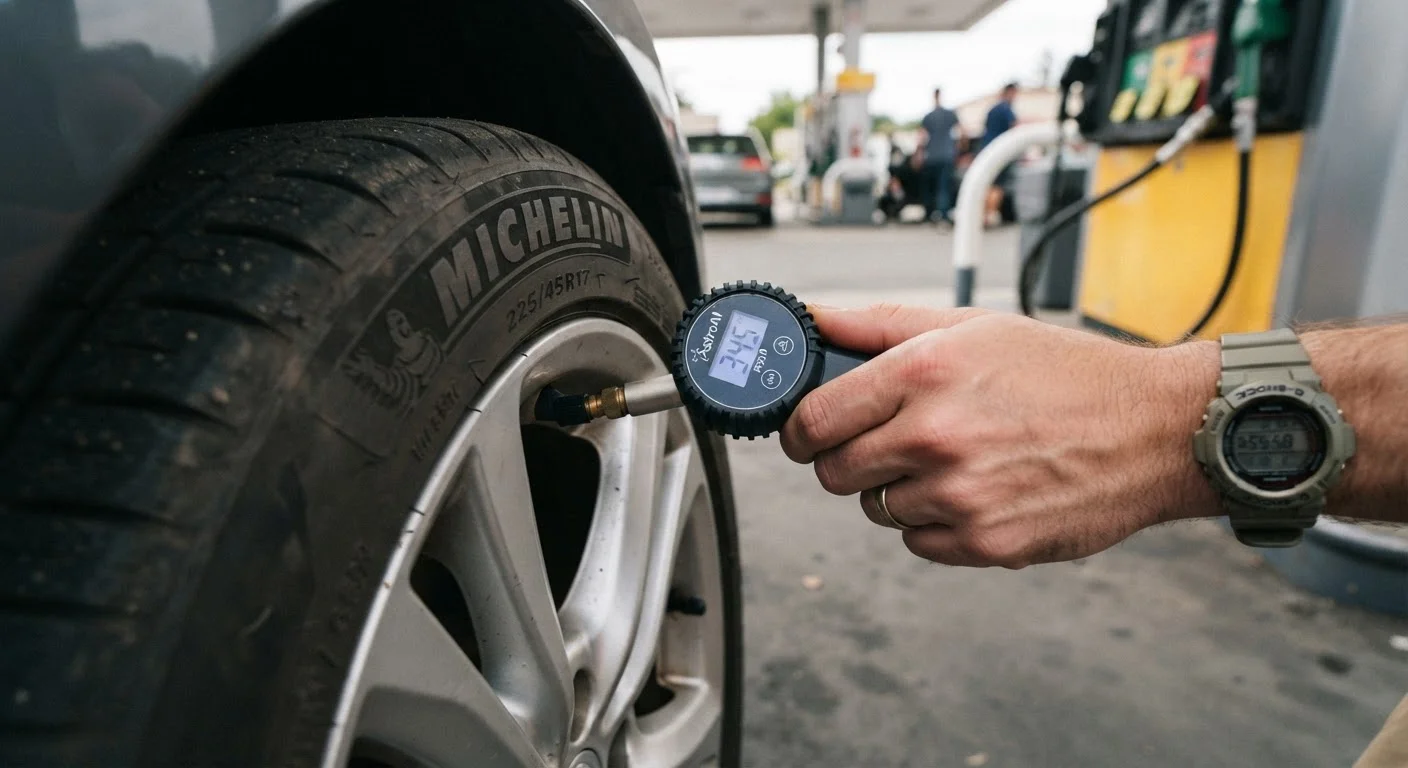
Photo: ConfiReads.com | Blogs For Inquisitive Minds editorial
Key Takeaways
- Your vehicle's correct tire pressure is printed on the driver's door jamb sticker, not on the tire sidewall.
- Underinflated tires reduce fuel economy, cause uneven wear, and increase blowout risk.
- Tire pressure drops roughly 1 PSI for every 10°F drop in ambient temperature.
- Check pressure monthly and before long trips - not just when the dashboard light comes on.
- Overinflation is also dangerous: it reduces contact area and makes tires more prone to impact damage.
What Tire Pressure Actually Does
A tire isn't simply a rubber donut - it's an engineered pressure vessel. The air inside carries the vehicle's weight, absorbs road shock, and maintains the contact patch (the small footprint where rubber meets pavement). When that pressure is correct, the contact patch is the right shape and size. When it's off, that footprint distorts - and so does everything that depends on it: steering response, braking distance, cornering stability, and tire longevity.
Think of it this way: a properly inflated tire distributes load evenly across its tread. An underinflated tire sags at the edges, causing the outer shoulders to bear more weight and wear faster. An overinflated tire bulges at the center, concentrating wear in the middle strip and reducing grip. Neither condition is free - both shorten the life of tires that may cost $100-$200 each to replace.
Front and Rear Pressure May Differ
The Hidden Costs of Ignoring Tire Pressure
Fuel economy is where underinflation quietly drains wallets. A soft tire has higher rolling resistance - your engine has to work harder to push it forward. The U.S. Department of Energy has noted that underinflation reduces gas mileage, with the effect compounding across thousands of miles driven each year. Over time, the fuel you lose to soft tires adds up to a real dollar figure.
Tire wear is the other major cost. Irregular wear patterns caused by improper pressure can cut tire life significantly, pushing you into replacement cycles earlier than necessary. Combined with the fuel penalty, this makes improper tire pressure one of the more quietly expensive maintenance oversights a driver can make - as explored in our look at the real cost of deferred car maintenance.
1 PSI per 10°F
Pressure lost for every temperature drop
The U.S. Department of Energy cites this as a consistent rule of thumb for how ambient temperature affects tire inflation.
25%
Below-target pressure before TPMS activates
Federal law requires TPMS systems to alert drivers when any tire reaches 25% below the vehicle manufacturer's recommended pressure.
$15 or less
Cost of a reliable tire pressure gauge
A basic digital or dial gauge from any auto parts retailer provides accurate, repeatable readings for routine monthly checks.
How to Check Tire Pressure the Right Way
A quality digital or analog tire gauge costs less than $15 and is the most important tool for this task. Here's the straightforward process:
- Check when cold. Drive fewer than one mile to an air source, or check before driving at all. Heat from driving temporarily raises pressure readings by several PSI.
- Find your target PSI. Read the sticker on the inside of the driver's door jamb - not the number on the tire sidewall.
- Remove the valve cap and press the gauge firmly onto the valve stem for a clean reading.
- Add or release air as needed. Most air compressors at gas stations allow you to set a target PSI. Bleed air by pressing the small pin in the center of the valve stem.
- Recheck after adjusting and replace the valve cap securely.
For more small details that matter at the mechanical level, see what mechanics notice that most drivers overlook.
Buy Your Own Gauge - Don't Rely on Station Air
Temperature, Seasons, and Your TPMS Light
Air contracts in cold weather. As a reliable rule of thumb, tire pressure drops approximately 1 PSI for every 10°F decrease in ambient temperature. This means a tire that was correctly inflated at 75°F in October may be 4-5 PSI low by January without a single slow leak. This seasonal drop is one reason monthly checks matter more than most drivers realize.
The built-in TPMS warning light on vehicles made after 2008 is a useful safety net, but it's not a substitute for regular manual checks. The light only activates at 25% below recommended pressure - by which point you're already experiencing reduced safety and economy. Treat the TPMS as a last-resort alert, not a routine monitoring tool.
Staying on top of tire pressure is part of the broader discipline of vehicle ownership. Expenses like premature tire replacement are exactly the type of cost covered in our guide to annual vehicle ownership costs most drivers underestimate. Pairing good tire habits with sound brake maintenance - see our article on brake maintenance myths that could put you at risk - gives you a solid foundation for safer, cheaper driving.
Frequently Asked Questions
The content on this site is for informational purposes only and is not a substitute for professional advice. Always consult a qualified professional for guidance specific to your situation.