
Brake Maintenance Myths That Could Put You at Risk

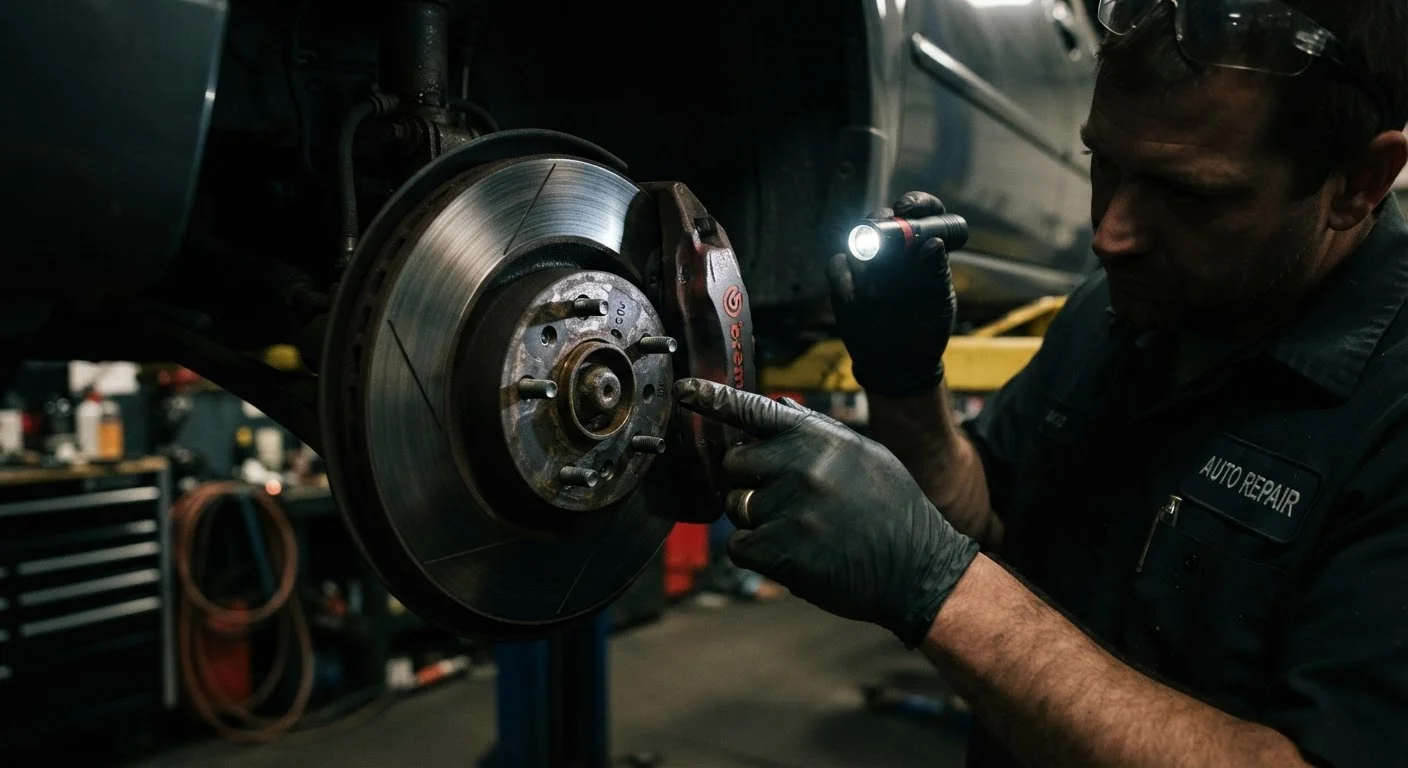
Photo: ConfiReads.com | Blogs For Inquisitive Minds editorial
Key Takeaways
- Squealing brakes don't always mean immediate replacement - the cause matters.
- Brake pads can wear silently; noise alone is an unreliable warning system.
- Flushing brake fluid on a schedule is just as important as replacing pads.
- New rotors are not always required when changing brake pads.
- Rear brakes wear out too - neglecting them creates real stopping-distance risks.
Why Brake Myths Are Genuinely Dangerous
Brakes are your vehicle's most critical safety system, yet some of the most common beliefs about them are flat-out wrong. Acting on bad information - or inaction based on false reassurance - can extend stopping distances, accelerate component wear, and put you and other road users at serious risk.
This article separates common brake misconceptions from what automotive engineers and experienced technicians actually know. For a broader look at how overconfidence affects safe driving, see our piece on how routine breeds subtle driving errors.
Myth
If my brakes aren't squealing, they're fine.
Fact
Brake pads can wear below a safe thickness without producing any audible warning at all.
Many vehicles use a small metal wear indicator designed to produce a squeal when pads reach a low-wear threshold. However, that indicator can corrode, break off, or simply fail to make consistent contact - especially in wet climates. Pads can also wear unevenly, with one side becoming dangerously thin while the other still has material. The absence of squealing is not a guarantee of adequate brake life. Only a visual inspection with a measurement of remaining pad thickness gives you an accurate picture.
Myth
You always need new rotors when you replace the brake pads.
Fact
Rotors should be replaced only when they fall below the manufacturer's minimum thickness specification or show damage such as deep scoring or warping.
This myth costs drivers significant money every year. Rotors have a published discard thickness - a minimum measurement stamped on the rotor itself or listed in the vehicle's service manual. If a rotor still meets that specification and isn't heavily grooved, warped, or cracked, it can often remain in service through another set of pads. A qualified technician can measure rotor thickness with a micrometer and give you a clear, data-based answer rather than a blanket recommendation to replace everything.
Myth
Pumping the brakes in an emergency gives you more stopping power.
Fact
On vehicles equipped with ABS (Anti-lock Braking System), pumping the brakes actually reduces effectiveness - you should apply firm, steady pressure instead.
Pumping the brakes was sound advice before ABS became standard equipment in the United States - federal regulations have required ABS on all new passenger vehicles since the 2013 model year. ABS is specifically engineered to modulate brake pressure many times per second, far faster than any driver can manually pump. Pumping overrides this system. In an emergency stop on an ABS-equipped vehicle, press the brake pedal firmly and hold it down while steering around the obstacle. Do not release and reapply.
Myth
Rear brakes barely do anything, so they last much longer and need less attention.
Fact
Rear brakes contribute meaningfully to overall stopping performance and can wear faster than expected on many modern front-wheel-drive and all-wheel-drive vehicles.
It's true that front brakes typically handle a larger share of braking force during a straight-line stop because weight transfers forward under deceleration. But rear brakes play a critical role in stability and are also used in integrated electronic stability and traction-control systems. On many modern vehicles - particularly those with electronic parking brakes or brake-force distribution systems - rear pads can wear at rates comparable to the front. Neglecting rear brakes until they grind into the rotor is both a safety and a cost mistake.
Myth
Brake fluid never needs to be changed unless there's a problem.
Fact
Brake fluid degrades over time by absorbing atmospheric moisture, lowering its boiling point and reducing braking reliability - it should be flushed on a regular schedule.
Brake fluid is hygroscopic, meaning it draws in water vapor through microscopic permeation of hoses and reservoir caps. As water content increases - often reaching 3-4% within two to three years - the fluid's boiling point drops substantially. Under heavy or repeated braking, this moisture-laden fluid can vaporize, creating compressible gas bubbles in the lines. The result is a soft, spongy pedal and reduced braking force. Most manufacturers specify a flush interval of roughly every two years; check your owner's manual for the recommendation specific to your vehicle.
What Responsible Brake Maintenance Actually Looks Like
Debunking myths is only half the job. Building a reliable maintenance habit is what keeps you safe and controls costs over time. A few practical principles:
- Follow inspection intervals, not just warning signs. Have brake pads, rotors, and fluid checked at every tire rotation or at least once a year - whichever comes first.
- Request a measurement. Ask any technician for the actual pad thickness in millimeters and rotor thickness versus the manufacturer's discard specification. These numbers tell you where you really stand.
- Don't skip the fluid. Brake fluid is hygroscopic - it absorbs moisture from the air over time, lowering its boiling point and reducing braking performance. Most manufacturers recommend flushing it every two years regardless of mileage.
- Both axles matter. Always have front and rear brakes evaluated together. Uneven wear between axles can affect stability during hard braking.
Never Ignore a Grinding or Pulsating Brake
If you're working with a tight vehicle-upkeep budget, our guide to staying on top of car maintenance without overspending offers practical strategies. And for the small warning signs many drivers miss before they become expensive, see what mechanics notice that most drivers overlook.
~22%
Of crash-involved vehicles with brake-related issues
A large-scale NHTSA pre-crash study found brake problems present in roughly 22% of vehicles involved in crashes where vehicle factors were a contributing element.
2 years
Typical brake fluid flush interval
Many vehicle manufacturers recommend replacing brake fluid every two years regardless of mileage to maintain its boiling point and hydraulic integrity.
This article is for general informational purposes only. Always consult a qualified, licensed mechanic for advice specific to your vehicle. Do not delay a professional brake inspection if you have any concern about braking performance.
The content on this site is for informational purposes only and is not a substitute for professional advice. Always consult a qualified professional for guidance specific to your situation.