
Wired vs. Wireless Earbuds: Sound Quality, Convenience, and the Real Trade-Offs

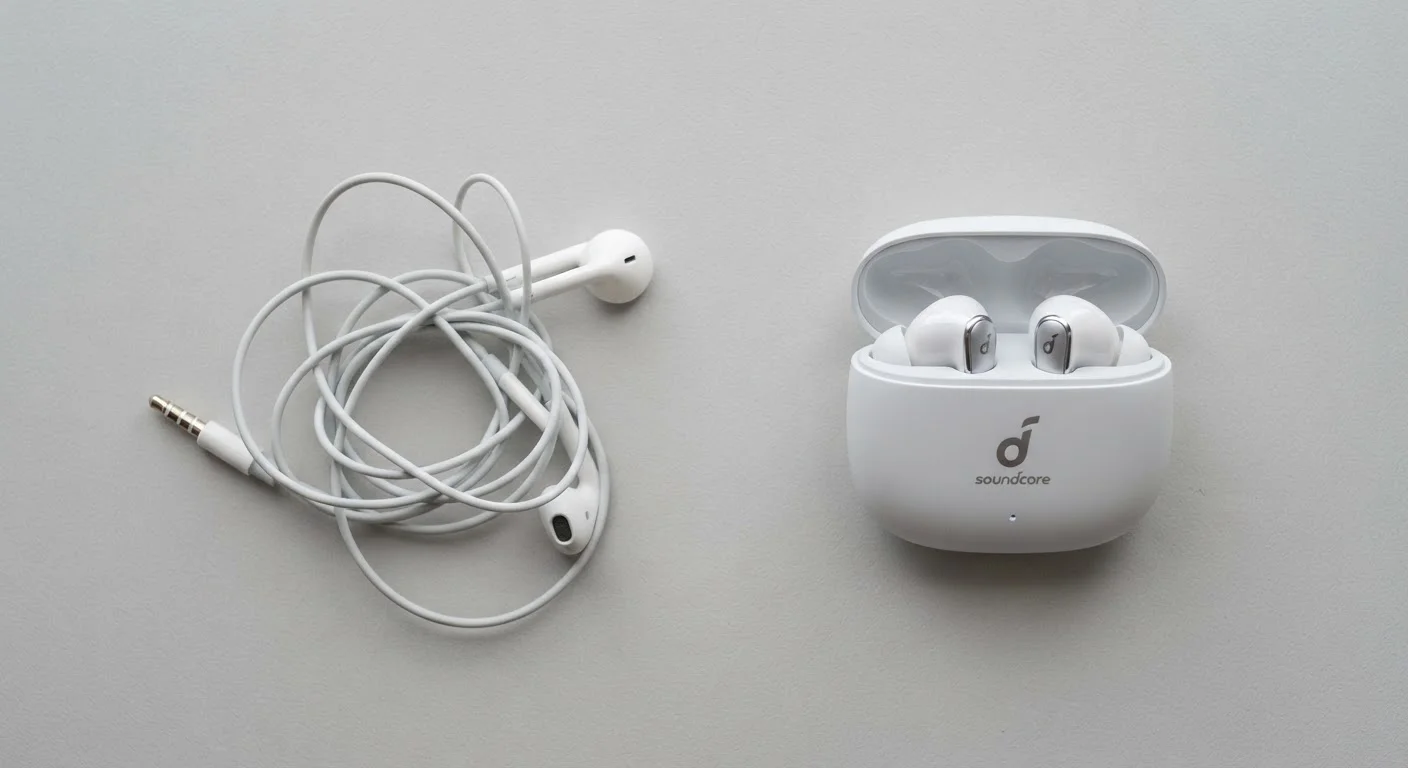
Photo: ConfiReads.com | Blogs For Inquisitive Minds editorial
Key Takeaways
- Wired earbuds deliver consistent audio with zero latency and no battery dependency.
- Wireless earbuds offer cord-free freedom but require regular charging and rely on Bluetooth.
- Modern wireless earbuds have largely closed the audio quality gap with budget wired options.
- Wired earbuds are the safer bet for gaming and video editing where audio sync matters.
- Wireless earbuds typically cost more upfront and carry long-term battery degradation concerns.
Sound Quality: Is There Still a Real Difference?
For years, the conventional wisdom held that wired earbuds always sounded better. The reason is straightforward: wired connections carry audio as an analog or uncompressed digital signal directly from your device, with no wireless processing step in between. That means what leaves the source is exactly what arrives at your ears.
Wireless earbuds use Bluetooth, which compresses audio before transmitting it. How much that compression affects quality depends heavily on the codec - the algorithm used to encode and decode audio over Bluetooth. Older or cheaper wireless earbuds used the SBC codec, which is lower quality. Many modern earbuds now support AAC (common on iPhones and Macs) or aptX and aptX HD (common on Android), which reduce the perceptible quality loss significantly.
In practical terms, casual listeners are unlikely to notice a meaningful difference between a well-reviewed pair of wireless earbuds and a similarly priced wired pair. Audiophiles, however, will generally find wired earbuds more accurate at any given price point. If pristine audio reproduction matters to you, wired still has the edge.
| Criterion | Wired Earbuds | Wireless Earbuds |
|---|---|---|
| Audio Quality | Uncompressed, consistently accurate | Codec-dependent; near-lossless at high end |
| Latency | Effectively zero | 40-200ms depending on codec |
| Battery Required | No | Yes - 6-10 hrs per charge |
| Cable Tangle | Yes | None |
| Typical Entry Price | $15-$40 | $50-$100+ |
| Headphone Jack Needed | Yes (or adapter) | No |
| Long-Term Durability | High (no battery to degrade) | Battery capacity declines over time |
| Best For | Audiophiles, gaming, studio use | Commuting, exercise, travel |
Latency, Battery, and Everyday Convenience
Latency - the delay between a sound being produced and you hearing it - is where wired earbuds have an undisputed, structural advantage. Wired connections are effectively instantaneous. Bluetooth introduces a delay that typically ranges from around 40 to 200 milliseconds depending on the codec and hardware. For streaming music or podcasts, this is irrelevant. For gaming, video calls, or syncing dialogue to a movie, it can be noticeably jarring.
Wireless earbuds, on the other hand, win on convenience. No cable means no tangling, no snagging on a jacket zipper, and no pulling your phone off a table when you turn your head. For workouts or commutes, that freedom is genuinely valuable. Most true wireless earbuds deliver 6-10 hours of playback per charge, with the charging case extending that to 24-36 hours total - plenty for most people's daily needs.
The catch is that batteries degrade over time. After a few years of regular charging cycles, you may notice shorter playback times. Wired earbuds, by contrast, simply work as long as the cable and drivers hold up - no charging required, ever. If you're the kind of person who regularly forgets to charge devices, a wired pair removes that variable entirely.
40-200ms
Typical Bluetooth audio latency range
Latency varies widely by codec; aptX Low Latency can bring this closer to 40ms, while standard SBC may reach 200ms or more.
6-10 hrs
Average wireless earbud battery life per charge
Most true wireless earbuds on the market offer 6-10 hours of continuous playback, with charging cases extending total use to 24-36 hours.
~500 cycles
Typical lithium-ion battery lifespan
Lithium-ion batteries in wireless earbuds generally retain about 80% capacity after 500 full charge cycles, per general battery industry standards.
For more on how charging habits affect battery longevity, see our guide to wired vs. wireless charging.
Cost, Compatibility, and Making the Right Call
Budget plays a significant role in this decision. Entry-level wired earbuds can be genuinely good for $15-$40. Comparable wireless earbuds with reliable Bluetooth and decent sound typically start around $50-$80, with premium options pushing well past $200. You're partly paying for miniaturized battery technology, wireless chips, and the charging case.
Compatibility is worth checking before you buy. Wired earbuds with a standard 3.5mm plug work with virtually any device that still has a headphone jack - laptops, older phones, tablets, in-flight entertainment systems. If your phone has dropped the headphone jack (as many modern iPhones and Android flagships have), you'd need an adapter to use wired earbuds, which adds a step and something else to lose.
Wireless earbuds pair over Bluetooth, which is universal across smartphones, tablets, laptops, and many smart TVs. Pairing is usually seamless, though some earbuds integrate more smoothly with specific ecosystems - Apple AirPods, for example, pair almost instantly with Apple devices but work with any Bluetooth source.
If you're also comparing smart devices more broadly, our honest look at smart home devices covers a similar trade-off between convenience and complexity. And just like choosing an internet connection type - as outlined in our ISP technology comparison - the best earbud choice depends on matching the technology to how you actually use it, not chasing specs alone.
A Note on Adapter Dongles
The content on this site is for informational purposes only and is not a substitute for professional advice. Always consult a qualified professional for guidance specific to your situation.