
The Language of Gadget Specs: A Plain-English Reference

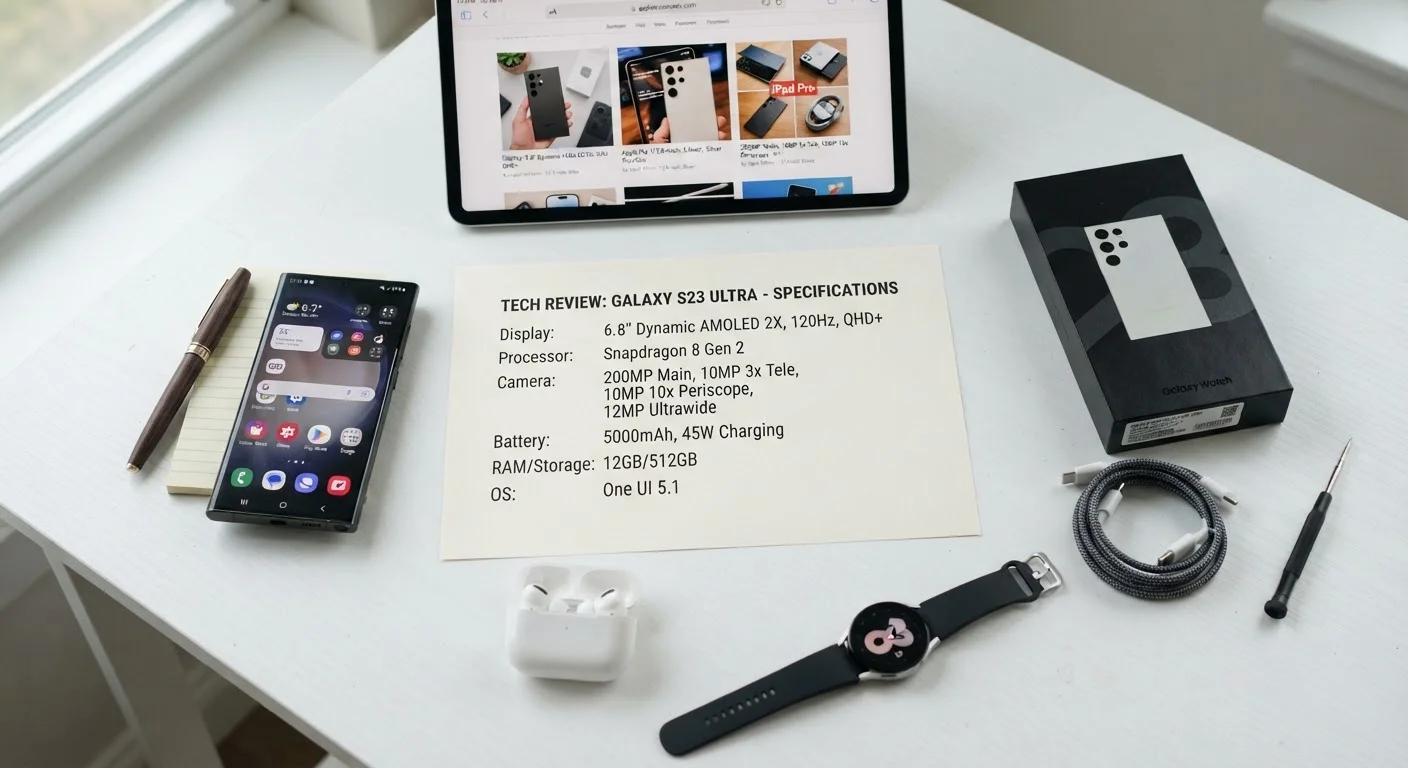
Photo: ConfiReads.com | Blogs For Inquisitive Minds editorial
Why Spec Sheets Feel Like a Foreign Language
Every gadget listing - whether you're looking at a phone, a laptop, or a pair of wireless earbuds - comes packed with abbreviations, numbers, and trademarked buzzwords. Manufacturers assume you already know what those terms mean. Most people don't, and that's not a knowledge failure; it's a communication gap.
This reference guide translates the most common spec-sheet terms into plain English so you can shop, compare, and troubleshoot with confidence. For a broader orientation to what different device categories actually do, see our beginner's map of the device landscape.
| RAM (typical phone range) | 6 GB - 16 GB |
| Common fast-charging standards | USB Power Delivery, Qualcomm Quick Charge |
| IP68 water resistance depth | Up to 1.5 m for 30 minutes (IEC standard) (IEC 60529) |
| Wi-Fi 6 max theoretical speed | 9.6 Gbps (Wi-Fi Alliance) |
| NFC typical operating range | ~4 cm (1.5 in) (NFC Forum) |
| Bluetooth 5.0 range (open space) | Up to ~800 ft (240 m) (Bluetooth SIG) |
Memory, Storage, and Processing Power
RAM
RAM (Random Access Memory) is your device's short-term workspace - it holds the apps and data currently in use. More RAM means you can run more apps at once without slowdowns. On smartphones, 6-8 GB is typical for everyday use; 12 GB or more is common on performance-focused models.
Storage (ROM / Internal Storage)
Often labeled ROM or simply storage, this is where your photos, apps, and files live permanently. Unlike RAM, storage doesn't clear when the device powers off. Common sizes range from 64 GB on budget devices to 1 TB on flagship phones and laptops.
Processor / Chipset
The processor (also called a chipset or SoC - System on a Chip) is the brain of the device. It handles every calculation. Speed is measured in GHz (gigahertz), but the architecture and number of cores matter just as much. A higher GHz number on an older chip may still underperform a lower-GHz modern one.
Specs Don't Tell the Whole Story
Connectivity and Wireless Standards
Wi-Fi Generations
Wi-Fi versions are now labeled by number: Wi-Fi 5 (802.11ac) and Wi-Fi 6 (802.11ax) are the most common. Wi-Fi 6 is faster and handles crowded networks better. You'll only benefit from Wi-Fi 6 on your device if your router also supports it. For deeper networking vocabulary, our plain-English networking glossary covers bandwidth, latency, and more.
Bluetooth
Bluetooth is a short-range wireless standard for connecting peripherals - headphones, keyboards, speakers. Version 5.0 and later offer significantly longer range and more stable connections than older versions. Check that the device and the accessory support a compatible Bluetooth version.
NFC
NFC (Near Field Communication) enables tap-to-pay (like Apple Pay or Google Pay), quick device pairing, and short-range data transfers. It works only within a few centimeters, which is intentional - it makes accidental connections almost impossible.
5G / LTE
LTE (4G) is the current widely available mobile data standard. 5G offers faster speeds and lower latency, but coverage varies significantly by carrier and location. A 5G-capable device only helps if your carrier provides 5G in your area.
Display, Battery, and Durability Terms
Resolution and Refresh Rate
Resolution describes how many pixels a screen contains - more pixels generally means sharper text and images. Common labels include Full HD (1080p), Quad HD (1440p), and 4K. Refresh rate, measured in Hz, controls how many times per second the image updates. A 120 Hz display looks noticeably smoother for scrolling and gaming than a 60 Hz one. Our guide to display specs goes deeper on panel types like OLED and IPS.
Battery Capacity (mAh)
mAh (milliampere-hours) measures how much charge a battery holds. A larger mAh number generally means longer battery life, though the screen, processor, and software also affect how fast power drains.
IP Ratings
IP (Ingress Protection) ratings indicate resistance to dust and water. The format is two digits: the first covers dust, the second covers water. IP68 - the most common high-end rating - means the device is fully dust-tight and can be submerged in water up to 1.5 meters for 30 minutes under standard test conditions. Note that manufacturer warranties often don't cover water damage even on IP-rated devices, so treat it as a safety buffer, not an invitation to swim with your phone.
Understanding these specs helps you make smarter decisions - and also helps you care for your devices properly. See our guide to habits that shorten device life for practical steps to protect what you buy.
The content on this site is for informational purposes only and is not a substitute for professional advice. Always consult a qualified professional for guidance specific to your situation.