
Tinted Moisturizer vs. Foundation vs. BB Cream: Choosing Your Base Coverage

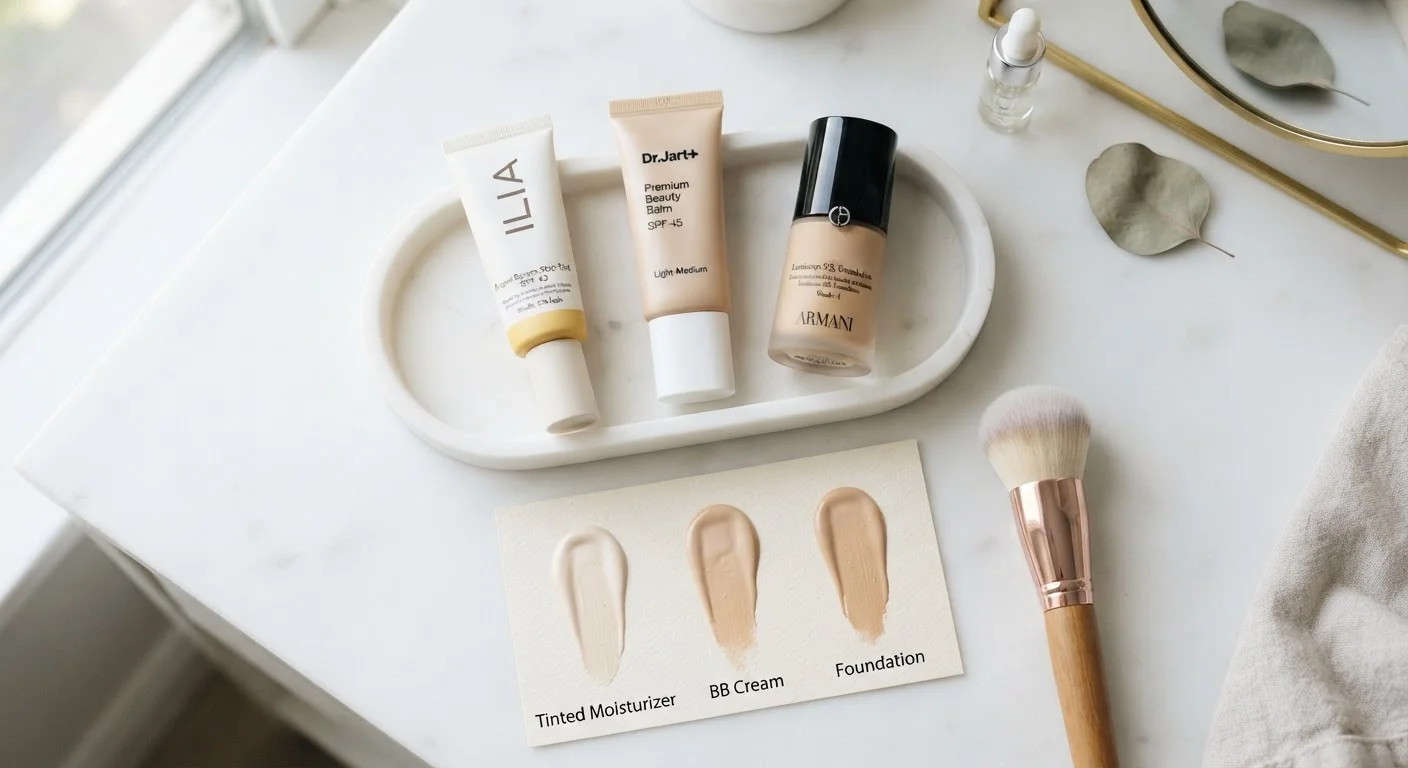
Photo: ConfiReads.com | Blogs For Inquisitive Minds editorial
Key Takeaways
- Tinted moisturizers offer the lightest coverage and double as skincare, ideal for minimal-makeup days.
- BB creams sit in the middle, blending light-to-medium coverage with SPF and skin-conditioning benefits.
- Foundation delivers the broadest coverage range - from buildable sheers to full-coverage formulas.
- Skin type, lifestyle, and the finish you want are the three biggest factors in choosing the right base.
- All three can coexist in your routine - each suits different occasions, seasons, or skin days.
What Each Product Actually Does
Before diving into which formula belongs on your face, it helps to understand what separates them - because the marketing overlap can be genuinely confusing.
Tinted moisturizer is exactly what it sounds like: a lightweight hydrating lotion with a whisper of pigment. The primary job is moisturizing; the tint is a bonus that evens out your complexion without masking it. Skin texture, freckles, and natural flush stay visible - and that's the point.
BB cream (short for beauty balm or blemish balm) originated in German dermatology as a post-procedure skin soother. Modern BB creams are hybrid formulas combining light-to-medium pigment coverage with skincare ingredients like SPF, antioxidants, and humectants. They cover more than a tinted moisturizer but still feel lightweight.
Foundation is the most versatile category - and the most diverse. Formulas range from sheer liquids to full-coverage mattes and everything in between. Unlike the other two, foundation is designed primarily around coverage and finish, with skincare benefits varying by product. If you want precise control over what your skin looks like, foundation is where that precision lives.
If you're still figuring out your skin's personality, our guide on skin types and what they mean for your routine is a great starting point - knowing whether you skew oily, dry, or combination will directly shape which base suits you best.
How They Stack Up: A Side-by-Side Look
Here's a quick breakdown of how these three base products compare across the criteria that matter most at the makeup counter.
| Tinted Moisturizer | BB Cream | Foundation | |
|---|---|---|---|
| Coverage level | Sheer to light | Light to medium | Sheer to full |
| Primary purpose | Hydration + tint | Skin correction + coverage | Even, customizable coverage |
| Skincare benefits | High (moisturizer-forward) | Moderate (SPF, antioxidants) | Varies by formula |
| Finish | Dewy, natural | Natural to satin | Matte, satin, or dewy |
| Wear time | 4-6 hours | 6-8 hours | 8-12+ hours (long-wear) |
| Best for skin type | Dry, normal, mature | Combination, normal | All types (formula-dependent) |
| Ease of use | Very easy | Easy | Moderate (more blending) |
One nuance worth noting: within each category, formulas vary widely. A full-coverage foundation and a sheer tinted foundation are both technically foundations. Always check individual product descriptions rather than relying on category alone.
Matching Base to Skin Type and Lifestyle
Coverage level is only part of the equation. The texture and finish of your base product should also work with your skin, not against it.
- Oily or acne-prone skin: Look for oil-free, non-comedogenic foundations with a matte or satin finish. Many BB creams work well here too, but rich tinted moisturizers can feel heavy by midday.
- Dry or mature skin: Tinted moisturizers and hydrating BB creams tend to be the most flattering - they don't cling to dry patches the way powder-heavy foundations sometimes do.
- Combination skin: A lightweight, buildable foundation or a mattifying BB cream hits the sweet spot, letting you blend sheer where skin is drier and control shine where it isn't.
- Sensitive skin: Shorter ingredient lists in many tinted moisturizers make them a gentler starting point. Always patch-test a new formula on your inner wrist before full-face use.
You Don't Have to Pick Just One
Lifestyle matters just as much as skin type. If your morning routine is genuinely seven minutes, a tinted moisturizer or BB cream with built-in SPF dramatically simplifies things. If you're sitting for photos at a wedding or working a long event, a long-wear foundation is likely to hold up better.
For those just starting out, our beginner's guide to building a makeup collection walks through which products to prioritize first - and which ones can wait.
Application Tips and Building Coverage
How you apply your base product affects the result as much as the formula itself. A few practical pointers:
- Tinted moisturizer: Fingers work brilliantly here - warm the product between your fingertips and press it into skin rather than dragging. A damp makeup sponge adds a barely-there finish.
- BB cream: A flat foundation brush gives the most even layer; a sponge sheers it out further. Build a second layer only where you want more coverage - under eyes or around the nose.
- Foundation: Tools vary by formula. Liquid foundations blend beautifully with a damp sponge; stick and cream formulas respond well to a flat synthetic brush. Start with less than you think you need - you can always add.
One universal tip: apply base product in natural light whenever possible. Artificial lighting - especially bathroom lighting - can make coverage look uneven or heavier than it actually is.
Wondering where base fits in your full makeup sequence? the correct order for applying makeup explains exactly where foundation, concealer, and setting products go - and why the sequence matters for how everything wears.
For budget-conscious shoppers: drugstore BB creams and tinted moisturizers consistently perform well in consumer testing. Our comparison of drugstore vs. department store beauty products breaks down where spending more is worth it - and where it genuinely isn't.
The content on this site is for informational purposes only and is not a substitute for professional advice. Always consult a qualified professional for guidance specific to your situation.