
Chemical Exfoliants vs. Physical Scrubs: What's Actually Happening to Your Skin

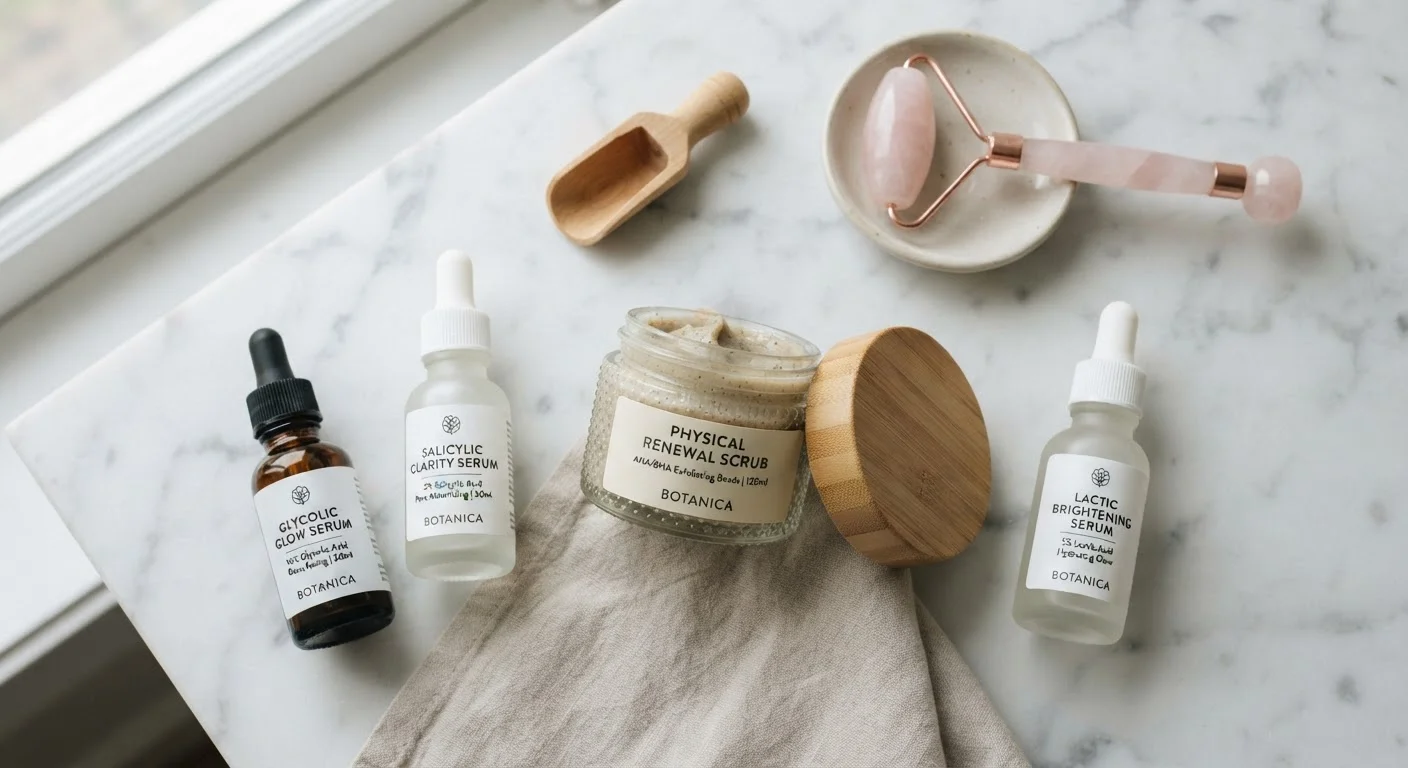
Photo: ConfiReads.com | Blogs For Inquisitive Minds editorial
Key Takeaways
- Chemical exfoliants dissolve the bonds between dead skin cells; physical scrubs manually buff them away.
- AHAs (like glycolic acid) work on the surface; BHAs (like salicylic acid) penetrate pores to clear congestion.
- Physical scrubs carry a higher risk of micro-tears and irritation if particles are too harsh or applied aggressively.
- Chemical exfoliants require sun protection afterward, as they can increase photosensitivity.
- Knowing your skin type is essential before choosing an exfoliation method.
How Each Method Actually Works
Exfoliation - removing the buildup of dead skin cells on the surface - is one of the most impactful steps in any skincare routine. But how you get there matters enormously. The two main approaches work through completely different mechanisms, and mixing them up or misapplying them can do more harm than good.
Chemical exfoliants use acids or enzymes to break down the proteins that hold dead skin cells together. Alpha hydroxy acids (AHAs) - including glycolic acid, lactic acid, and mandelic acid - are water-soluble and work primarily on the skin's surface layer, accelerating cell turnover. Beta hydroxy acids (BHAs), most commonly salicylic acid, are oil-soluble, meaning they can travel into the pore lining itself to loosen congestion. Neither type physically removes anything; they dissolve the cellular glue, letting your skin shed naturally.
Physical scrubs take a mechanical approach: granules, beads, or textured cloths literally abrade the skin's surface to dislodge dead cells. Results are immediate - your skin feels smooth right after rinsing. The trade-off is that the process depends heavily on how hard you press and what the particles look like. Irregular, jagged particles (think walnut shell powder) can create microscopic tears, while round, uniform beads or sugar crystals are considerably gentler. To understand which method aligns with your baseline, it helps to first identify your skin type, since that shapes everything from ingredient tolerance to how often you should exfoliate.
| Criterion | Chemical Exfoliants | Physical Scrubs |
|---|---|---|
| Mechanism | Dissolves cellular bonds with acids/enzymes | Manually buffs away dead cells with abrasion |
| Depth of action | Surface to within pores (BHAs) | Surface only |
| Visible results timing | Gradual over days to weeks | Immediate smoothness |
| Best skin types | Oily, acne-prone, sensitive, uneven tone | Normal to slightly rough, non-reactive |
| Main risk | Photosensitivity, barrier disruption if overused | Micro-tears, inflammation from harsh particles |
| SPF required afterward | Yes - especially with AHAs | Recommended but less critical |
| Learning curve | Moderate - pH, concentration, layering matter | Low - apply, massage, rinse |
| Price range | Budget to premium; widely available | Budget to mid-range; widely available |
The Risks, Realities, and Rules of Use
Both methods come with caveats that the marketing rarely highlights. With chemical exfoliants, the biggest consideration is photosensitivity: AHAs in particular can make skin more vulnerable to UV damage, so daily SPF is non-negotiable. Overuse - applying acids too frequently or at concentrations too high for your skin - can compromise the skin barrier, leading to redness, flaking, and increased sensitivity. Start low (around 5-8% for AHAs) and work up gradually.
Physical scrubs carry their own risks. Applying too much pressure, using a product with sharp or irregular particles, or scrubbing already-inflamed skin can cause micro-abrasions that leave skin more open to irritation and bacteria. Dermatologists often flag this as a reason many patients with acne actually worsen their skin with over-scrubbing. The myth that you need to feel friction to exfoliate effectively is one that dermatology professionals frequently have to dispel.
~5-8%
Beginner-safe AHA concentration range
Cosmetic chemists and dermatologists generally recommend starting at this range before progressing to higher-strength formulas.
2-3x/week
Suggested max exfoliation frequency
Most skincare professionals advise limiting exfoliation to this frequency to avoid compromising the skin barrier.
pH 3-4
Optimal pH range for AHA efficacy
AHAs require a low pH environment - typically between 3 and 4 - to effectively exfoliate; higher-pH formulas are less active.
Frequency matters for both: for most skin types, chemical exfoliation two to three times per week is a reasonable starting point, while physical scrubs used more than once or twice weekly often cross into over-exfoliation territory. If you're building a skincare routine from scratch, introduce only one exfoliation method at a time. And if you use retinol or vitamin C, read up on how to layer actives without causing irritation before stacking acids on top.
A Note on Combination Use
This article is for informational purposes only and is not a substitute for professional skincare or medical advice. If you have a skin condition, consult a qualified dermatologist before adding exfoliants to your routine.
The content on this site is for informational purposes only and is not a substitute for professional advice. Always consult a qualified professional for guidance specific to your situation.