
What Asset Allocation Actually Means-and Why It Changes Over Time

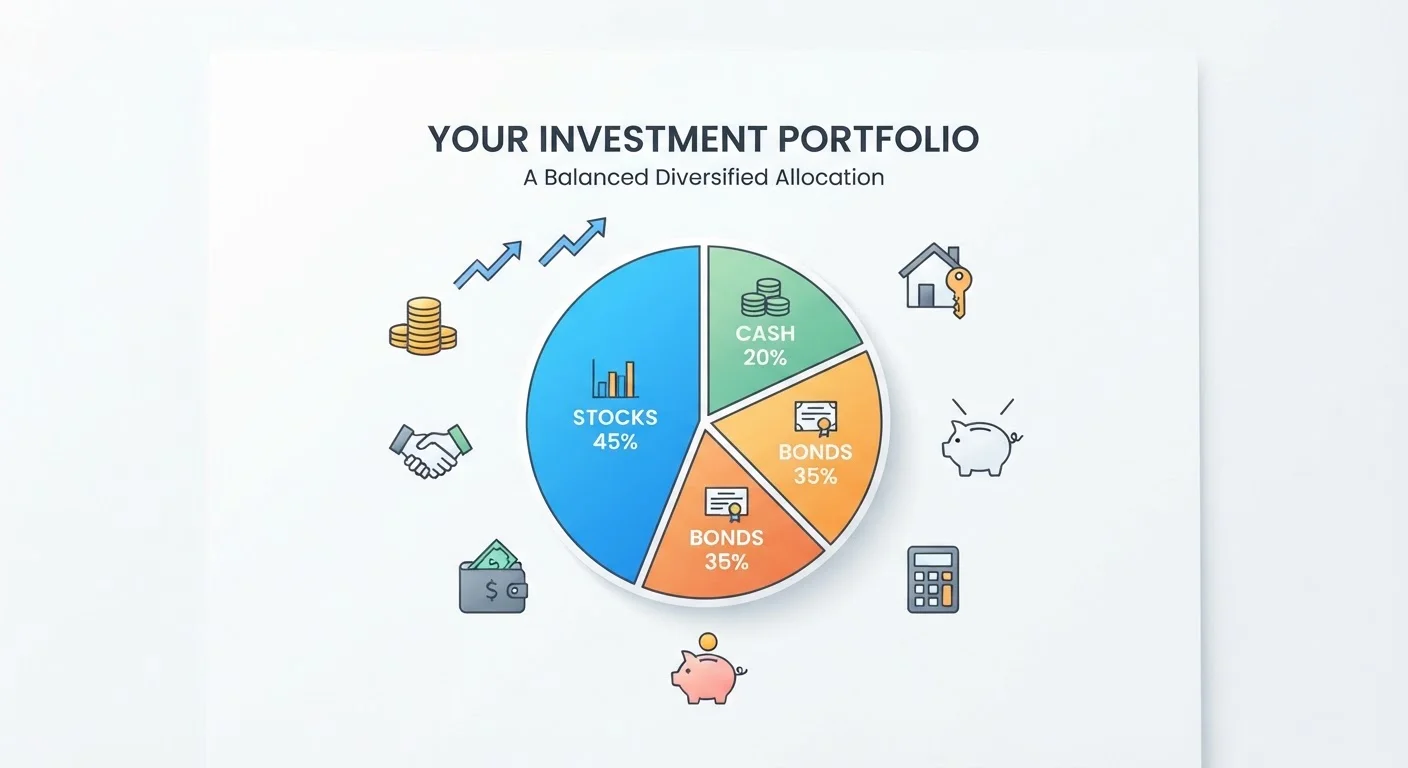
Photo: ConfiReads.com | Blogs For Inquisitive Minds editorial
Key Takeaways
- Asset allocation divides your portfolio among stocks, bonds, and cash to balance risk and return.
- Your ideal allocation depends on your age, risk tolerance, and investment time horizon.
- Younger investors generally hold more stocks; older investors typically shift toward bonds.
- Portfolios should be rebalanced periodically to maintain the intended allocation.
- Asset allocation is one of the most significant drivers of long-term investment performance.
The Three Core Asset Classes
Most portfolios are built around three primary building blocks, each with distinct risk and return characteristics:
- Stocks (equities): Represent ownership shares in companies. Historically they have offered higher long-term returns but also greater short-term volatility.
- Bonds (fixed income): Loans made to governments or corporations in exchange for regular interest payments. Generally less volatile than stocks but with lower potential returns.
- Cash and cash equivalents: Savings accounts, money market funds, and short-term Treasury bills. Very low risk, but returns often barely keep pace with inflation.
The proportion you hold in each category is your asset allocation. A portfolio with 80% stocks and 20% bonds behaves very differently - in both calm and volatile markets - than one split 40/60. Understanding these differences is foundational to making sense of any investment account. For plain definitions of related investing terms, see our personal finance glossary.
~90%
Portfolio variance explained by asset allocation
A widely cited 1986 study by Brinson, Hood, and Beebower found that roughly 90% of a diversified portfolio's return variability over time is explained by asset allocation policy, not security selection.
110 - Age
Common stock-percentage starting formula
Many financial planners use this rule of thumb as a baseline for equity exposure, adjusting based on individual risk tolerance and goals.
1x/year
Recommended minimum rebalancing frequency
Most financial planning guidelines recommend reviewing portfolio allocation at least annually, or when any asset class drifts significantly from its target weight.
Why Allocation Is a Bigger Driver of Returns Than Stock-Picking
Research on institutional portfolios has consistently found that the broad allocation between asset classes - not individual security selection - explains the majority of a portfolio's performance variability over time. In other words, how your money is divided across asset types matters more than which specific stocks or funds you choose within each type.
This finding has important practical implications. Spending hours choosing between two similar index funds matters less than deciding what proportion of your portfolio belongs in equities versus bonds in the first place. Getting the allocation right for your timeline and risk tolerance is the foundational decision.
“The most important decision an investor can make isn't which stock to pick - it's how to divide their money between the major asset classes. That strategic choice drives most of what happens to their wealth over time.”
— William Bernstein, Neurologist and author on investment theory and financial history
How and Why Allocation Changes Over Time
Asset allocation is not a set-it-and-forget-it decision. Two forces push it to evolve:
1. Market drift
When stocks rise sharply, they grow to represent a larger share of your portfolio than intended. Without rebalancing, a target of 70% stocks could drift to 80% or more - increasing your risk exposure without any conscious decision on your part.
2. Life stage shifts
As you approach retirement, you have less time to recover from a severe market downturn. A 30-year-old can weather a 40% stock market decline because they have decades for the market to recover. A 65-year-old drawing down savings does not have the same luxury. This is why conventional guidance is to gradually shift toward bonds and cash equivalents as retirement approaches.
Target-date funds automate this shift. A fund labeled "2045" starts equity-heavy and automatically becomes more conservative as the target year approaches - a useful illustration of how allocation should evolve with time.
Check Your Allocation Before Market Volatility Hits
For a fuller picture of how financial priorities shift across decades, see our guide on saving and investing across every life stage.
Putting It Into Practice
Building an appropriate asset allocation starts with honest self-assessment across three dimensions:
- Time horizon: When will you need this money? The longer the runway, the more short-term volatility you can afford to absorb.
- Risk tolerance: How would you react if your portfolio dropped 20% in a year? If you'd panic-sell, a heavy equity allocation may not suit you emotionally, even if it suits you mathematically.
- Financial goals: Are you saving for retirement, a down payment, or a child's education? Different goals call for different timelines and therefore different allocations.
Once you have an allocation in place, revisit it annually. Rebalancing - selling assets that have grown beyond their target weight and buying those that have fallen below - keeps your portfolio aligned with your intentions.
Asset allocation decisions don't exist in isolation. If you haven't yet established an emergency fund, that step generally comes first. See our framework for deciding whether your next dollar belongs in an emergency fund or an investment account. And since allocation needs evolve alongside income, spending, and life events, it's worth reading how budgeting priorities shift across life stages as well.
This article is for general informational and educational purposes only and does not constitute personalized financial or investment advice. Consult a licensed financial adviser before making decisions about your own portfolio.
Frequently Asked Questions
The content on this site is for informational purposes only and is not a substitute for professional advice. Always consult a qualified professional for guidance specific to your situation.