
Emergency Fund vs. Investment Account: Where Should Your Next Dollar Go?

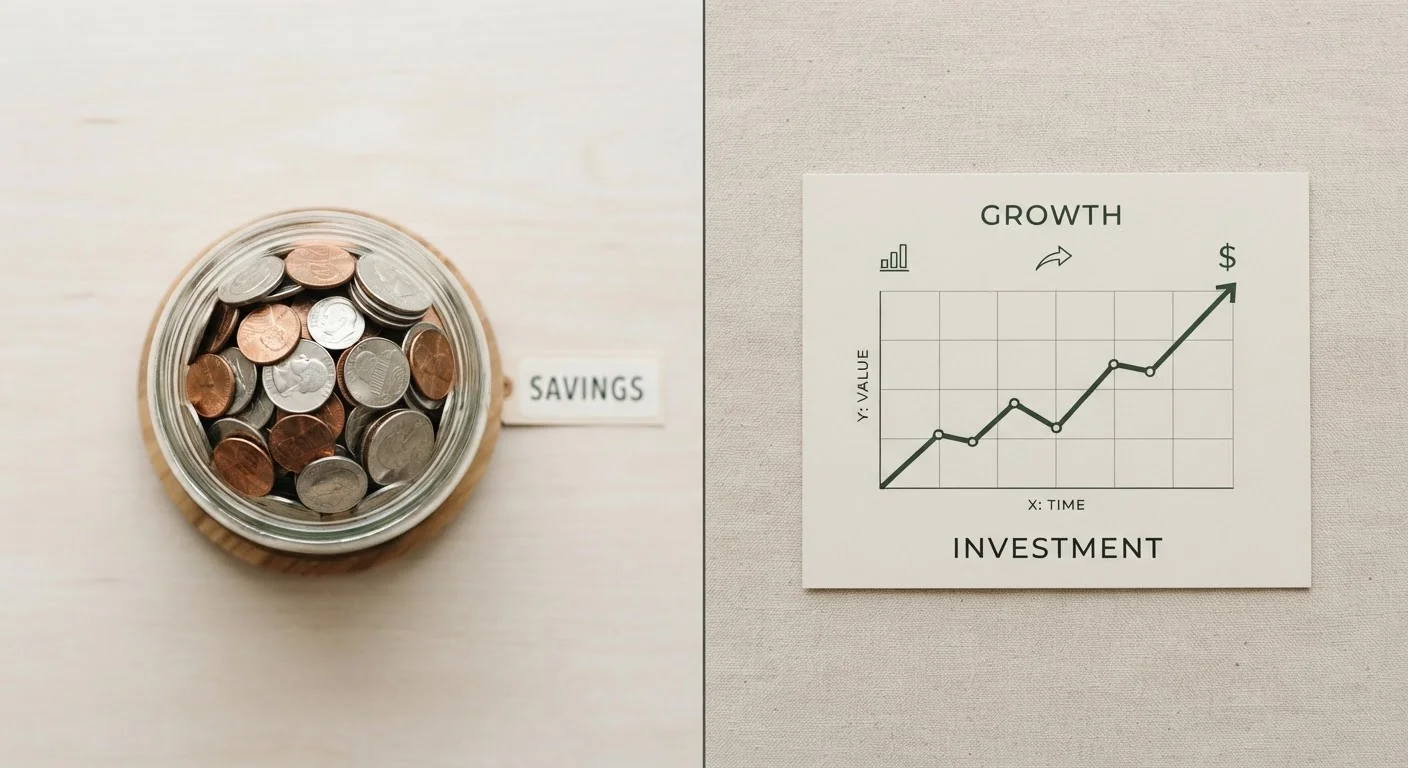
Photo: ConfiReads.com | Blogs For Inquisitive Minds editorial
Key Takeaways
- Most financial planners suggest three to six months of essential expenses as a baseline emergency fund target.
- Investing before your emergency fund is funded exposes you to forced selling at the worst possible time.
- Once your safety net is in place, consistent investing - even small amounts - compounds significantly over time.
- High-interest debt repayment generally takes priority over both saving and investing.
- The right balance between the two depends on your income stability, dependents, and existing savings.
Why This Question Matters More Than It Seems
For many Americans living paycheck to paycheck or just starting to get ahead, every spare dollar feels like a high-stakes decision. Should it go toward a safety net or toward long-term growth? The honest answer is: it depends on where you are in your financial foundation - and getting the sequence wrong can cost you more than you might expect.
Investing without an emergency fund isn't just risky in theory. When a car repair or medical bill arrives with no cash reserves, the typical outcome is credit card debt at a high interest rate, or worse, selling investments at a market low to cover the shortfall. Either scenario can set back your financial progress significantly. As the research on panic selling shows, liquidating investments under pressure is one of the costliest mistakes a new investor can make.
At the same time, delaying investing indefinitely to build a "perfect" emergency fund means missing out on years of compounding - the mechanism by which returns generate their own returns over time.
| Criterion | Emergency Fund | Investment Account |
|---|---|---|
| Primary purpose | Protect against unexpected expenses | Grow wealth over time |
| Liquidity | Immediate, penalty-free access | Varies; selling may trigger taxes or losses |
| Risk level | Very low - FDIC-insured options available | Varies; market value can decline |
| Expected return | Modest (savings rate); preserves capital | Historically higher long-term, not guaranteed |
| Tax treatment | Interest taxed as ordinary income | Varies by account type and holding period |
| When to prioritise | Before you have 3-6 months of expenses saved | After baseline safety net is established |
| Impact of skipping | High risk of debt or forced selling | Lost compounding time; foregone tax benefits |
The Case for Prioritising Your Emergency Fund
An emergency fund is liquid cash - typically held in a high-yield savings account or money market - that you can access without penalty or market risk. Its job isn't to grow; it's to protect everything else you're building. Without one, every financial goal is fragile.
The conventional target is three to six months of essential living expenses: rent or mortgage, utilities, food, insurance, and minimum debt payments. If your income is variable, you work in a volatile industry, or you have dependents, the higher end of that range is more appropriate. You can explore how different savings vehicles compare in our guide to HYSAs, CDs, and money market accounts.
~37%
Americans without emergency savings
A 2024 Bankrate survey found that roughly 37% of U.S. adults could not cover a $400 unexpected expense with cash or savings alone.
3-6 months
Recommended emergency fund coverage
Most personal finance frameworks recommend covering three to six months of essential expenses, with higher targets for variable-income households.
50-100%
Effective return from employer 401(k) match
A common employer match of 50 cents per dollar up to 6% of salary effectively represents an immediate 50% return on matched contributions.
One practical framing: think of your emergency fund as the prerequisite for confident investing. When you know a setback won't derail your portfolio, you're far less likely to make reactive decisions during a market downturn.
The Case for Investing Sooner Rather Than Later
Compounding is time-sensitive in a way that emergency fund contributions are not. Every year you delay investing is a year of potential growth foregone - and those early years carry the most long-term weight because returns compound on themselves over decades.
There's also the matter of tax-advantaged accounts. Contributions to a 401(k) or IRA have annual limits that don't roll over. Missing a year means permanently losing that contribution room. If your employer offers a 401(k) match and you're not capturing it, you're leaving compensation on the table - a particularly costly form of inaction. Our overview of account types explains contribution limits and tax treatment clearly.
For those new to the mechanics of getting started, the first-year investing guide covers the foundational concepts before you commit capital.
A Practical Framework for Allocating Your Next Dollar
Rather than treating this as a binary choice, most financial educators recommend a sequenced approach:
- Eliminate high-interest debt first. Credit card balances at 20%+ APR represent a guaranteed negative return that no investment is likely to outpace reliably. See the debt and credit hub for strategies.
- Capture any employer 401(k) match. This is an immediate return that typically justifies investing even before your emergency fund is complete.
- Build a starter emergency fund. Even $1,000-$2,000 provides meaningful protection while you invest. Grow toward three to six months over time.
- Max tax-advantaged accounts (401(k), Roth IRA) once your baseline fund is in place.
- Invest in a taxable brokerage account after tax-advantaged options are utilized.
You Don't Have to Choose Just One
Once you're ready to invest consistently, strategies like dollar-cost averaging remove the pressure of timing the market and make investing sustainable on any budget. And if you prefer a hands-off approach, consider reviewing the trade-offs of automating your investments before setting it up.
This article is for general informational and educational purposes only and does not constitute personalised financial, investment, tax, or legal advice. Consult a qualified financial adviser to evaluate your specific situation.
The content on this site is for informational purposes only and is not a substitute for professional advice. Always consult a qualified professional for guidance specific to your situation.