
Dry Food vs. Wet Food for Cats and Dogs

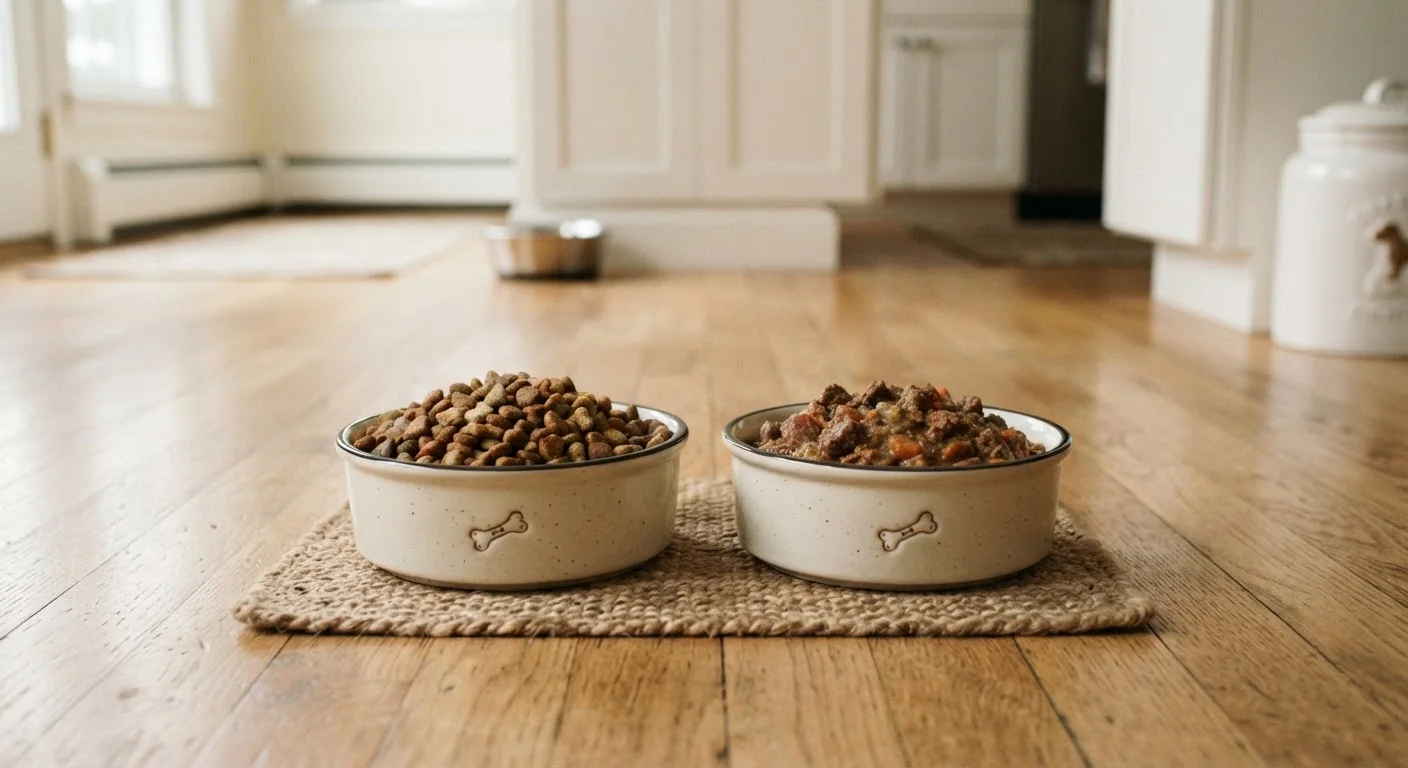
Photo: ConfiReads.com | Blogs For Inquisitive Minds editorial
Key Takeaways
- Wet food contains significantly more moisture than kibble, benefiting cats and pets with urinary or kidney concerns.
- Dry food is generally more affordable per calorie and easier to store than canned food.
- Neither format is universally superior - the right choice depends on your individual pet's health, age, and preferences.
- Many vets recommend a mixed feeding approach to capture benefits from both formats.
- Always verify that any food carries an AAFCO nutritional adequacy statement before feeding it long-term.
Hydration: Where Wet Food Has a Clear Edge
Water intake is one of the biggest practical differences between kibble and canned food. Dry food typically contains only about 10% moisture, while wet food ranges from 70% to 80%. That gap matters most for cats, who evolved as desert hunters with a low natural drive to drink from a bowl. Feeding wet food is one of the most straightforward ways to increase a cat's daily fluid intake without any behavioral change on their part.
For dogs, the hydration advantage is still real but less critical - most dogs drink freely from their water bowl throughout the day. That said, dogs with kidney disease, urinary crystals, or a history of bladder stones may benefit from the extra moisture wet food provides. Always consult your veterinarian before changing your pet's diet around a medical condition.
70-80%
Moisture content in typical wet cat or dog food
Compared to roughly 10% in most dry kibble formulas, wet food delivers substantially more hydration per meal.
~3×
Higher average cost per calorie for wet vs. dry food
Cost comparisons vary by brand and quality, but wet food typically costs significantly more per calorie than equivalent-quality dry food.
If you're feeding primarily dry food, make sure fresh, clean water is always available. Some pet owners add a small amount of warm water or low-sodium broth to kibble as a middle-ground approach.
Dental Health: A Common Misconception Worth Addressing
A widespread belief is that crunchy kibble cleans pets' teeth the way a toothbrush would. The reality is more nuanced. Chewing dry food does produce some mechanical friction on tooth surfaces, which may slow tartar accumulation - but most cats swallow kibble nearly whole, and neither dogs nor cats chew in a way that reaches the gum line effectively.
Wet food, by contrast, leaves a residue that can contribute to plaque buildup if teeth are never brushed. Neither format replaces active dental care. Our guide on pet dental health covers what actually works - from brushing technique to professional cleanings.
Kibble Alone Isn't a Dental Treatment
For pets with existing dental pain or missing teeth, wet food is clearly the more comfortable choice. Discuss your pet's specific dental status with your vet when making feeding decisions.
Cost, Convenience, and Shelf Life
On a per-calorie basis, dry food is almost always cheaper than wet food. Kibble also wins on convenience: a large bag stores easily, pours quickly, and lasts weeks without refrigeration. This makes it the practical default for many busy households or multi-pet homes.
Wet food costs more per serving and requires refrigeration once opened - most cans should be used within 24 to 48 hours. Uneaten wet food left in the bowl for more than a couple of hours should generally be discarded, which adds to cost.
| Criterion | Dry Food (Kibble) | Wet Food (Canned) |
|---|---|---|
| Moisture content | ~10% | 70-80% |
| Cost per serving | Lower | Higher |
| Shelf life (unopened) | Months in sealed bag | Years in sealed can |
| Shelf life (opened) | Weeks if sealed | 1-2 days refrigerated |
| Dental friction benefit | Modest | Minimal |
| Palatability for picky eaters | Variable | Generally higher |
| Suitable for dental pain | Not ideal | Yes |
| Portion control ease | Easy (measuring cup) | Moderate (by weight/can) |
If budget is a genuine concern, a mixed approach - kibble as the base with wet food as a regular supplement - can reduce overall spend while still delivering hydration benefits. For a broader look at managing household pet expenses, the Budgeting Basics hub offers useful practical strategies.
Choosing What's Right for Your Pet
No single format is best for every animal. Healthy adult dogs often do well on quality dry food alone. Cats, senior pets, underweight animals, or those with specific health conditions frequently benefit from wet food - either exclusively or as a supplement. Kittens and puppies have high caloric and nutrient demands; look for foods explicitly formulated for growth or labeled "all life stages."
Whatever format you choose, the most important step is confirming the food meets AAFCO (Association of American Feed Control Officials) nutritional standards. Reading a pet food label carefully helps you verify that claim rather than relying on marketing language. It's also worth exploring common pet nutrition myths that can lead owners astray.
For older animals, both hydration needs and dental comfort often shift with age. Nutritional adjustments for senior pets are worth reviewing if you have an aging dog or cat. Your veterinarian remains the best resource for tailoring a feeding plan to your specific pet's health history and needs.
This article is for general informational and educational purposes only and is not a substitute for professional veterinary advice. Always consult a licensed veterinarian before making significant changes to your pet's diet, especially if they have a health condition.
The content on this site is for informational purposes only and is not a substitute for professional advice. Always consult a qualified professional for guidance specific to your situation.