
Indoor Plants and Air Quality: Separating the Science From the Social Media Claims

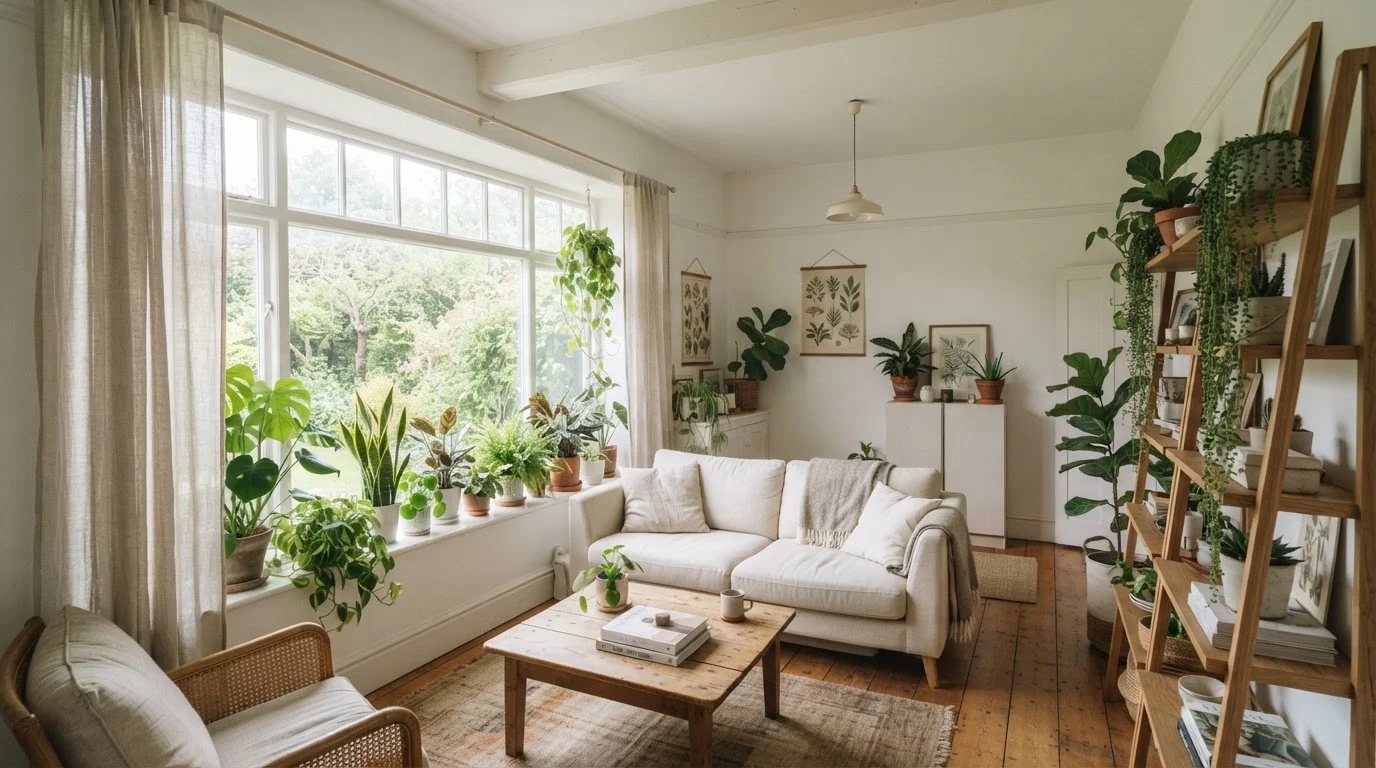
Photo: ConfiReads.com | Blogs For Inquisitive Minds editorial
Key Takeaways
- The original NASA plant study was conducted in sealed chambers, not real homes - results don't directly translate.
- You would need dozens to hundreds of plants per room to match the air-cleaning effect shown in lab conditions.
- Plants do offer real benefits - stress reduction, humidity regulation, and general wellbeing - just not dramatic air purification.
- Mechanical ventilation and air purifiers are far more effective tools for improving indoor air quality.
- Some common houseplants are toxic to pets and children, so placement and plant selection matter.
Where the Plant-Air Story Comes From
The idea that houseplants clean your indoor air traces back to a widely cited 1989 NASA study. Researchers placed plants inside sealed test chambers and measured their ability to remove volatile organic compounds (VOCs) - chemicals like benzene and formaldehyde that can off-gas from furniture, paint, and cleaning products. The plants performed impressively under those tightly controlled conditions, and a simple, compelling message was born: plants purify air.
The problem is that social media, wellness influencers, and even some home décor brands ran with that finding far beyond what the science actually supports. A home is not a sealed NASA test chamber. Your living room has air exchanges, fluctuating humidity, traffic in and out, and far more complex chemistry than a controlled lab environment. The leap from "plants removed VOCs in a sealed box" to "a pothos on your bookshelf is cleaning your air" is a significant one - and the evidence doesn't support it cleanly.
For a broader look at how home environment improvements are often oversimplified, see our article on why your home feels stuffy even with the windows open.
Myths and Facts: What the Research Actually Shows
Below, we address the most common plant-and-air-quality claims circulating online and match each one against what peer-reviewed science actually says.
Myth
A few houseplants will meaningfully clean the air in your home.
Fact
Under real-world conditions, you would need between 10 and 1,000 plants per square meter to match the VOC removal rates measured in lab studies.
A 2019 analysis published in the Journal of Exposure Science & Environmental Epidemiology reviewed a large body of plant-air studies and concluded that natural air exchange in a typical home - the air that simply flows in and out through gaps, vents, and openings - removes airborne pollutants far faster than plants can. The plant removal rates measured in sealed chambers are real, but they become negligible in the context of how air actually moves in a lived-in space.
Myth
The NASA study proved that houseplants purify indoor air.
Fact
The NASA study measured plant performance in sealed, static test chambers - conditions that don't reflect a typical home environment.
The 1989 NASA Clean Air Study was designed to explore life support options for space stations, not home living. Its chambers had no air exchange with the outside, no occupants moving through the space, and no competing sources of dilution. The findings were valid for their purpose but were never intended to be - and scientifically cannot be - applied directly to the open, dynamic environment of a household room.
Myth
Certain plants are especially powerful air purifiers and worth buying specifically for that purpose.
Fact
No houseplant species has been shown to deliver meaningful air-quality improvement under normal indoor conditions, regardless of how it's marketed.
Snake plants, spider plants, peace lilies, and pothos are frequently marketed as superior air purifiers. While these plants were included in the original NASA study and performed reasonably in that sealed context, there is no credible field evidence that any of them outperforms natural ventilation or mechanical filtration in a real home. The marketing claims are outpacing the science by a wide margin.
Myth
More plants in a room means measurably better air quality.
Fact
Increasing plant quantity in a typical room does not produce a detectable improvement in air pollutant levels for most households.
Researchers who have tested plant density in actual room conditions - not sealed chambers - have consistently found that the relationship between plant count and air quality improvement is far weaker than the NASA data implied. Other variables, such as outdoor air infiltration rate, room size, and pollutant source strength, dominate air quality outcomes. Adding more plants simply doesn't move the needle enough to measure in practice.
Myth
Plants are a natural, chemical-free way to avoid the need for an air purifier.
Fact
Plants and air purifiers work through entirely different mechanisms, and mechanical filtration is substantially more effective for removing particulates and VOCs.
HEPA air purifiers physically trap particles as small as 0.3 microns - including dust, pollen, pet dander, and mold spores - at documented efficiency rates. Activated carbon filters in many units also adsorb VOCs. Plants do neither of these things at a meaningful scale in a home setting. Framing plants as a "natural alternative" to air purifiers conflates two very different categories of intervention.
What Plants Actually Do Well
Dismissing plants entirely would be its own kind of overcorrection. Houseplants offer genuine, measurable benefits - they're just different from air purification.
10-1,000+
Plants per m² needed to match lab VOC removal
A 2019 review in the Journal of Exposure Science & Environmental Epidemiology calculated this range based on typical home air exchange rates.
~30%
Reduction in self-reported stress linked to indoor plants
Multiple small studies have found associations between workplace and home plant presence and reduced psychological stress indicators.
- Humidity regulation: Plants release moisture through transpiration, which can slightly raise indoor humidity in dry environments. This won't replace a humidifier but can make a room feel more comfortable.
- Psychological wellbeing: Multiple studies suggest that having plants in living and work spaces is associated with reduced self-reported stress and improved mood. This is a real effect, even if it has nothing to do with VOC removal.
- Biophilic design: Connecting with natural elements indoors - light, texture, greenery - has been linked to lower cortisol levels in some research contexts.
If you want the mental and aesthetic benefits of plants without overstating their air-quality role, that's a completely reasonable approach. Just don't rely on them as a substitute for proper ventilation or air filtration.
Some Houseplants Are Toxic to Pets and Kids
Better Tools for Real Indoor Air Quality
If indoor air quality is a genuine concern - because of allergies, asthma, off-gassing materials, or a poorly ventilated space - there are evidence-backed options worth knowing about.
- Mechanical ventilation: ERV (energy recovery ventilators) and HRV (heat recovery ventilators) exchange stale indoor air with fresh outdoor air while retaining temperature. They're among the most effective interventions available.
- HEPA air purifiers: True HEPA filters capture particulate matter - dust, pet dander, pollen, mold spores - with documented efficiency. Look for units sized to your room's square footage.
- Source control: Reducing VOC sources is more effective than trying to clean air after the fact. Choose low-VOC paints and finishes, allow new furniture to off-gas before bringing it inside, and avoid synthetic fragrances.
- Regular HVAC maintenance: Clean filters and properly maintained ductwork meaningfully affect the air circulating through your home. Check and replace filters on schedule.
Smart home air quality monitors can help you understand what's actually in your air. For a realistic look at those gadgets' benefits and drawbacks, see our piece on smart home devices.
If you have pets or young children, note that several popular houseplants - including pothos, philodendron, and peace lily - are toxic if ingested. Before adding plants, consult our safe home setup guide for new pets.
This article is for general informational purposes only. For health concerns related to indoor air quality, especially for individuals with respiratory conditions, consult a qualified healthcare or environmental health professional.
The content on this site is for informational purposes only and is not a substitute for professional advice. Always consult a qualified professional for guidance specific to your situation.