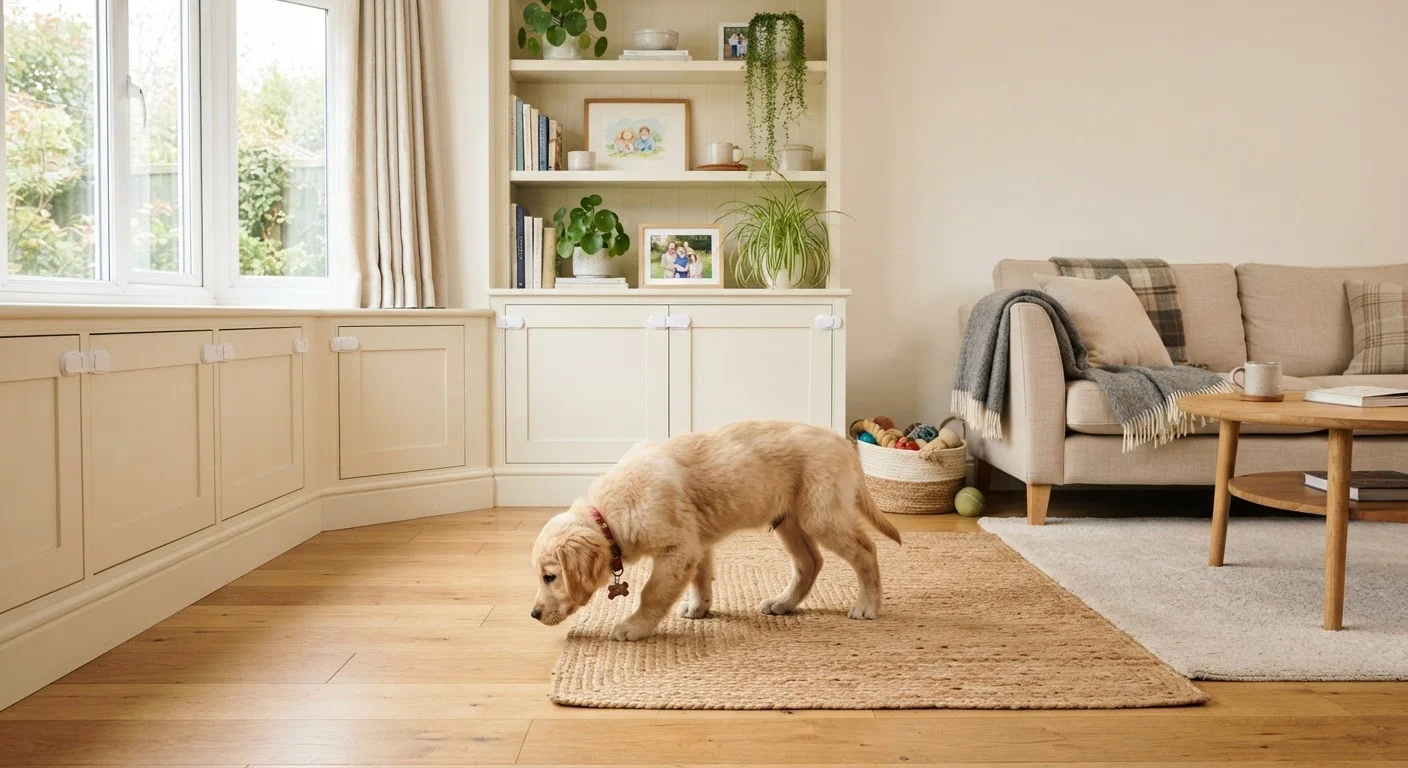
Photo: ConfiReads.com | Blogs For Inquisitive Minds editorial
From toxic houseplants to unsecured cabinets, use this room-by-room checklist to spot hazards before your pet finds them first.
Key Takeaways
Many common houseplants, foods, and cleaning products are toxic to dogs, cats, and small pets.
A room-by-room walk-through is the most reliable way to catch hazards before your pet does.
Securing loose wires, latching cabinets, and blocking unsafe spaces costs little but prevents serious injuries.
Hazard risks vary by species - what's safe for a dog may be dangerous for a rabbit or bird.
Pet-proofing is an ongoing task; revisit your checklist as your pet grows and explores new areas.
Why Pet-Proofing Deserves a Checklist
Bringing a new pet home is exciting - and surprisingly easy to underestimate on the safety front. Pets explore the world with their noses and mouths, squeeze into tight spaces, and have no way of knowing that the cord dangling behind the couch or the lily on the windowsill could hurt them. Most pet-related emergencies happen in familiar home environments, not in the wild or at the shelter.
This checklist takes a room-by-room approach so you can move methodically through your home rather than trying to think of everything at once. While the core hazards - toxins, entrapment risks, falls, and access to dangerous objects - apply broadly, a few items are species-specific. If you're bringing home a rabbit, bird, or guinea pig, pay extra attention to the notes throughout. For a broader look at what pet ownership actually involves day to day, see The Full Picture of Responsible Pet Ownership.
Before you dive in, gather the tools listed below. Most of what you need is inexpensive and available at any hardware or home goods store.
Required
Cabinet safety latches
Prevent pets from nosing open lower cabinets that contain cleaning products, food, or trash.
Required
Cord management sleeves
Bundle and protect exposed electrical cords from chewing damage.
Required
Baby gates or pet gates
Block access to rooms, stairways, or areas that are off-limits to your pet.
Required
ASPCA Animal Poison Control Center number (888-426-4435)
Immediate expert guidance if your pet ingests a potentially toxic substance.
Optional
Plant identification app (e.g., iNaturalist or PictureThis)
Help identify whether houseplants or yard plants are toxic to your specific pet species.
Optional
Outlet covers
Reduce curiosity-driven contact with unused electrical outlets, especially useful for birds and ferrets.
Room-by-Room Safety Checklist
Work through each group in sequence. Check off items as you go - and note anything that needs a supply run or a fix before your pet arrives.
Kitchen & Dining
Latch all lower cabinets, especially those containing cleaning supplies, trash, or food. Child-proof magnetic latches work well for determined dogs and cats.Must
Confirm that grapes, raisins, xylitol-sweetened products, onions, garlic, chocolate, macadamia nuts, and alcohol are stored out of reach - all are toxic to dogs and many are harmful to cats.Must
Store cleaning products, dishwasher pods, and drain cleaners in a locked or high cabinet rather than under the sink.Must
Keep the trash can inside a cabinet or use a model with a pet-resistant lid; food scraps and food wrappers are a common ingestion hazard.Should
Wipe stove knobs clean after cooking and consider knob covers if you have a larger dog that could accidentally turn a burner on.Nice to have
Living Room & Common Areas
Bundle or conceal electrical cords using cable management sleeves or cord covers; exposed cords are a chewing and strangulation risk for many species.Must
Audit all houseplants and remove or permanently relocate any that are toxic to your specific pet - common culprits include lilies (fatal to cats), pothos, sago palm, and dieffenbachia.Must
Secure freestanding bookshelves, tall lamps, and heavy décor items that a climbing cat or large dog could knock over.Should
Check for small objects on low surfaces - coins, rubber bands, hair ties, and batteries can cause choking or intestinal obstruction if swallowed.Must
Cover or block gaps behind and under furniture large enough for a small pet to enter but too tight to back out of safely.Should
Bathrooms & Laundry
Keep toilet lids closed; small dogs, cats, and especially birds can fall in and drown, and toilet bowl cleaners add a chemical hazard.Must
Store all medications - including over-the-counter products like ibuprofen and acetaminophen - in a closed cabinet, never on a counter. These are among the most common causes of pet poisoning.Must
Check that the dryer and washer are empty before starting a cycle; cats seek out warm, dark spaces to curl up in.Must
Secure laundry detergent pods and dryer sheets in a high or latched cabinet - both contain compounds that are harmful if chewed.Must
Bedrooms & Home Office
Tidy loose cords from chargers, monitors, and headphones; wrap them in cord covers or route them out of your pet's reach.Should
Keep sewing supplies, craft materials, rubber bands, and paper clips in closed containers - these are common small-object hazards.Should
Decide in advance which rooms will be off-limits and install baby gates or door pinch guards before your pet arrives home.Nice to have
Outdoor & Garage Spaces
Check fencing for gaps at the base, loose boards, and gate latches that a dog could nose open; even a small gap is enough for many breeds to squeeze through.Must
Store antifreeze, fertilizers, pesticides, and motor oil in sealed containers on high shelves or locked in a cabinet - antifreeze in particular has a sweet taste that attracts animals and is rapidly lethal.Must
Survey the yard for toxic plants such as azalea, oleander, foxglove, and yew; remove them or fence them off before allowing outdoor access.Must
Ensure pools, water features, and rain barrels have covers or barriers; supervise any pet near open water until you're confident in their swimming ability.Should
Toxic Plants Are a Top Emergency Cause
Lilies (all parts) are fatally toxic to cats and can cause acute kidney failure even in small amounts. Sago palm is similarly dangerous to dogs. Before bringing any new plant into your home - or allowing yard access - cross-reference it against the ASPCA's free online toxic plant database. When in doubt, move the plant to a space your pet cannot access, or rehome it entirely.
Hazard risks shift as pets grow. A kitten that ignores electrical cords at eight weeks may become a chewer at six months. Plan to revisit this checklist at each life stage, and again if you rearrange furniture or bring home new plants. For households already managing kids alongside pets, Keeping a Clean Home With Kids and Pets offers compatible routines that make both safety and cleanliness more sustainable.
Species Differences Matter
A hazard checklist for dogs doesn't automatically apply to birds, rabbits, guinea pigs, or reptiles. Birds, for example, are extremely sensitive to non-stick cookware fumes (PTFE/Teflon), aerosol sprays, and scented candles - hazards that pose no equivalent risk to a dog. If you're setting up for a small or exotic pet, review species-specific resources or ask your veterinarian which additional precautions apply. See our guide to small pets for apartment living for more species-level detail.
Home & Pets Editorial Team is the collective byline for our editorial team and contributor network. Articles published under this byline or an editorial pen name are researched, written, and reviewed according to our editorial standards for clarity, consistency, and independence before publication.
The content on this site is for informational purposes only and is not a substitute for professional advice. Always consult a qualified professional for guidance specific to your situation.