
Why Your Home Feels Stuffy Even With the Windows Open

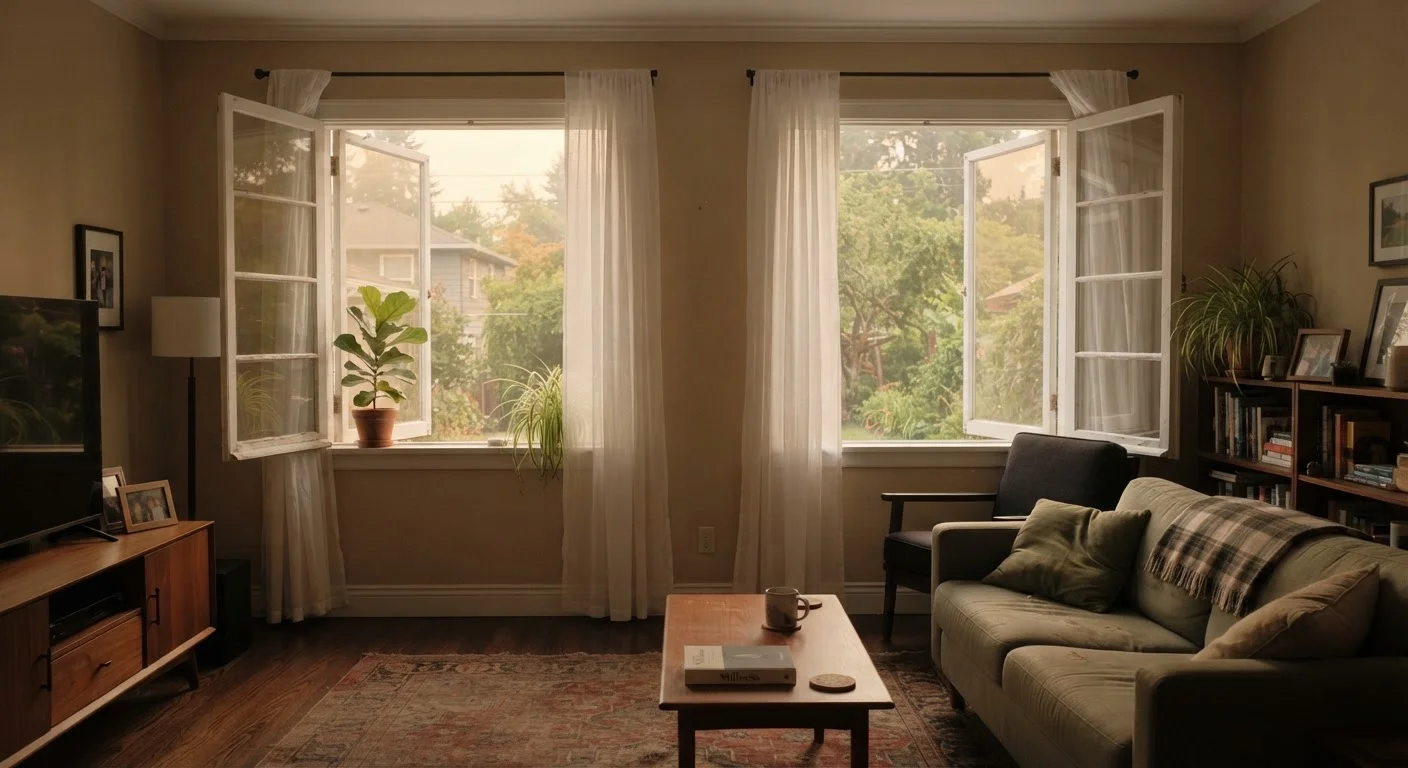
Photo: ConfiReads.com | Blogs For Inquisitive Minds editorial
Key Takeaways
- Opening windows only helps if air has a clear path to enter on one side and exit on another.
- Dirty HVAC filters, closed interior doors, and blocked vents are common hidden culprits.
- High indoor humidity makes rooms feel warmer and stuffier than the thermometer suggests.
- Ceiling fans, exhaust fans, and strategic cross-ventilation can dramatically improve airflow without major renovations.
- Weatherproofing that seals out cold can also trap stale air - ventilation balance matters year-round.
The Real Problem: Airflow, Not Just Fresh Air
Most people assume that opening a window automatically refreshes indoor air. In reality, a window only creates an opportunity - it doesn't guarantee movement. For air to flow, your home needs both an entry point and an exit point. Without both, you're essentially opening a door to a sealed room. The air pressure inside has nowhere to go, so it doesn't.
This is why a single open window on a still day accomplishes almost nothing. Outdoor air only pushes in if there's somewhere for the existing indoor air to escape. That's the core principle of cross-ventilation - and it's the first thing to evaluate when a room feels stuffy.
Weatherproofing Can Work Both Ways
The same weatherproofing that keeps drafts out in winter can work against you in warmer months by sealing stale air in. See our guide to weatherproofing your home to understand how to balance sealing and ventilation throughout the year.
Common Culprits Behind Poor Indoor Airflow
Once you rule out the cross-ventilation problem, several hidden factors may still be working against you:
- Clogged HVAC filters: A dirty filter chokes your system's ability to move air. Most households should replace filters every 60-90 days, but many go much longer. This is one of the cheapest and most impactful fixes available.
- Closed interior doors: Air needs to travel through your home, not just enter one room. Keeping interior doors shut - especially bedroom doors - creates isolated pockets where air stagnates.
- Blocked or closed supply/return vents: Furniture placed over vents, or vents closed in unused rooms, disrupts the balance your HVAC system depends on to distribute air evenly.
- High indoor humidity: Moisture-laden air feels heavier and more stifling than dry air at the same temperature. Bathrooms, kitchens, and basements are common humidity sources that affect the whole home.
- Inadequate exhaust fans: Kitchen and bathroom exhaust fans are designed to pull stale, moist air out. If they're undersized, broken, or vented improperly, that air stays inside.
2-5x
How much more polluted indoor air can be vs. outdoor air
According to the U.S. Environmental Protection Agency, indoor air pollutant levels are often 2 to 5 times higher than outdoor levels - even in industrialized areas.
90%
Share of time Americans spend indoors on average
The EPA estimates Americans spend approximately 90% of their time indoors, making air circulation quality a significant daily health factor.
60-90 days
Recommended HVAC filter replacement interval
Most HVAC manufacturers and industry guidelines recommend replacing standard 1-inch filters every 60 to 90 days for optimal airflow and system performance.
Practical Steps to Get Air Moving Again
Improving airflow doesn't usually require major work. Start with these targeted actions:
- Create a cross-breeze deliberately: Open windows on opposite sides of the room or home. Place a box fan in one window facing outward to pull air through, while a window on the other side stays open as the intake.
- Run ceiling fans correctly: In summer, ceiling fans should spin counterclockwise (when viewed from below) to push air downward and create a cooling breeze effect. In winter, reverse the direction to recirculate warm air from the ceiling.
- Check and replace your HVAC filter: Hold it up to light - if you can't see through it, it's time for a new one. Choose a filter with a MERV rating appropriate for your system (check your manual; higher isn't always better for airflow).
- Open interior doors and unblock vents: Let air travel freely from room to room. Move furniture away from supply and return vents.
- Reduce humidity at the source: Run exhaust fans during and after cooking or showering. Consider a standalone dehumidifier for consistently damp spaces.
For a broader seasonal approach to home upkeep - including ventilation checks - our seasonal home maintenance checklist walks through what to inspect every few months.
The Two-Window Fan Trick
When Your HVAC System Is the Missing Piece
Sometimes the structural layout of a home makes natural ventilation genuinely difficult - particularly in tightly insulated modern construction or homes with few windows. In these cases, your HVAC system has to carry more of the load. A system that's undersized, overdue for service, or configured without proper return-air pathways will underperform no matter how often you change the filter.
If you're weighing cooling options - or wondering whether your current setup is part of the problem - our comparison of central air vs. window units explains the trade-offs in circulation, efficiency, and cost. And if energy bills are climbing alongside your comfort complaints, the real reasons behind energy bill spikes are often connected to the same underlying airflow issues.
Poor ventilation and high energy use frequently share a root cause: air isn't moving where it's supposed to. Fixing one often helps the other.
“Ventilation isn't just about bringing air in - it's about giving stale air a way out. Most homes struggle with the exit, not the entrance.”
— Building Science Corporation, Applied building science research and education organization
Frequently Asked Questions
The content on this site is for informational purposes only and is not a substitute for professional advice. Always consult a qualified professional for guidance specific to your situation.