
Central Air vs. Window Units: Cooling Costs and Trade-Offs for American Homes

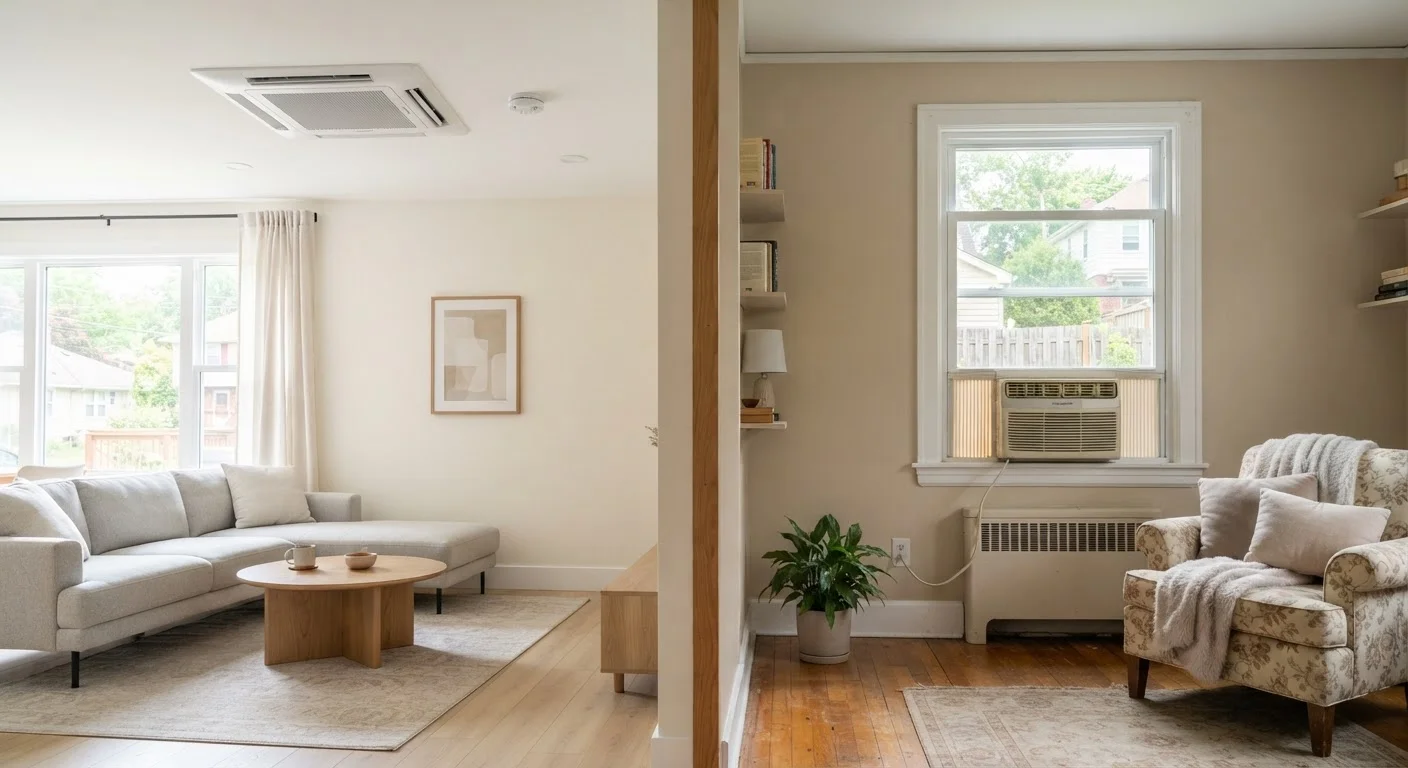
Photo: ConfiReads.com | Blogs For Inquisitive Minds editorial
Key Takeaways
- Central air costs significantly more upfront but covers the entire home with quieter, more consistent cooling.
- Window units are affordable to buy and install but can raise energy bills when cooling multiple rooms.
- SEER ratings measure efficiency - higher-rated systems cost less to run over time regardless of type.
- Central systems add measurable resale value to a home; window units do not.
- Window units work well as supplements to central air in rooms that run hot or are far from ducts.
Upfront Costs and Installation Reality
The most immediate difference between central air and window units is what it takes to get started. A new central air conditioning system - including the outdoor compressor unit, air handler, and professional installation - typically costs between $3,500 and $7,500 for an average-sized home, and can exceed $10,000 if new ductwork is required. That's a significant capital outlay, and it usually means scheduling a licensed HVAC contractor and planning around installation time.
Window units, by contrast, cost between $150 and $700 depending on the cooling capacity (measured in BTUs). Most homeowners can install one themselves in under an hour with no tools beyond a screwdriver. There are no contractor fees and no permits in most jurisdictions. For renters or households without central air already in place, that accessibility is a major advantage.
If your home already has ductwork from a furnace system, adding central AC becomes considerably less expensive. Conversely, homes built without ducts - common in older Northeast and Midwest housing stock - face the steepest central air costs. Renting vs. owning major home appliances is worth exploring if you're weighing whether to finance or lease an HVAC system instead.
| Criterion | Central Air | Window Units |
|---|---|---|
| Upfront Cost | $3,500-$10,000+ | $150-$700 per unit |
| Installation | Licensed contractor required | DIY-friendly, no permit |
| Cooling Coverage | Whole home | Single room per unit |
| Noise Level | Low (compressor outside) | Moderate to high (in-room) |
| Energy Efficiency | Higher for whole-home use | Better for single-room use |
| Air Filtration | Whole-home filtration | Room-only filtration |
| Typical Lifespan | 15-20 years | 8-12 years |
| Home Resale Value Impact | Positive and measurable | None |
| Portability | Not portable | Removable and storable |
Energy Efficiency and Monthly Running Costs
Efficiency is where the comparison gets nuanced. Central air systems are rated using a SEER number - the higher, the more efficient. Modern systems are required to meet a minimum SEER of 14 or 15 depending on the region, and high-efficiency models reach SEER 20 or above. Window units use a simpler EER rating but can also carry ENERGY STAR certification if they meet efficiency benchmarks.
In practice, central air is more efficient at cooling an entire home because the system is designed and sized for that purpose. But if you only need to cool one bedroom overnight, running a central system to do so is wasteful. A single window unit drawing 500-900 watts to cool one room will cost considerably less than running a 3,500-watt central system for the same purpose. The real-world efficiency winner depends entirely on how many rooms you're cooling and how often.
~$500
Average annual central AC electricity cost
The U.S. Energy Information Administration estimates average central air conditioning adds roughly $500 per year to household electricity bills, though this varies significantly by climate zone and home size.
SEER 15+
Minimum efficiency for new central systems (most U.S. regions)
Federal standards updated in 2023 raised minimum SEER requirements for new central AC installations in most of the country, pushing manufacturers toward more efficient designs.
87%
U.S. homes with some form of air conditioning
According to the U.S. Energy Information Administration's Residential Energy Consumption Survey, the vast majority of American homes use at least one form of air conditioning.
For households dealing with broader energy cost concerns, understanding why energy bills spike seasonally can put cooling costs in a fuller context. Similarly, proper home sealing makes either system work harder for less - see our weatherproofing guide for practical steps.
Comfort, Noise, and Air Quality
Central air conditioning distributes cooled air through ducts and vents across every room, maintaining a consistent temperature throughout the home. This whole-home comfort is difficult to replicate with window units, which cool only the room they're installed in and can create temperature gaps between spaces. Households with young children, elderly family members, or anyone sensitive to heat swings will generally find central air more comfortable day to day.
Noise is another meaningful difference. Window units house the compressor right in the room - that familiar hum and rattle is unavoidable. Central systems place the compressor outside and push air quietly through ducts, making them far less intrusive in bedrooms or home offices. If you work from home or are a light sleeper, the noise profile of a window unit may be a dealbreaker.
On air quality, central systems support whole-home filtration. A good HVAC filter captures dust, pollen, and particulates from the air circulated through the entire house. Window units filter only the air in one room, and their filters are smaller and often less effective. For households managing allergies or respiratory conditions, this distinction can matter. For further reading on indoor air factors, see our article on why your home feels stuffy even with windows open.
Window Units and Rental Agreements
Long-Term Value and Practical Flexibility
Over a 10-15 year horizon, central air typically pays back its higher upfront cost through home value and consistent comfort. Real estate data consistently shows that homes with central air conditioning sell faster and at higher prices than comparable homes without it - a meaningful factor if you plan to sell. Window units depreciate quickly, can't be transferred with the home, and generally have shorter lifespans of 8-12 years versus 15-20 years for a well-maintained central system.
That said, window units offer flexibility that central systems simply can't match. You can buy one unit for a hot summer, remove it in October, and store it - or take it when you move. They're also ideal as supplements in homes where certain rooms (top floors, bonus rooms, home gyms) consistently run warmer than the rest of the house despite central air. Good seasonal home upkeep - including cleaning filters and checking refrigerant - keeps both systems running efficiently. Our seasonal home maintenance checklist covers HVAC care among its quarterly to-dos.
This article is for general informational purposes only. Costs and efficiency figures vary by region, home size, and product. Consult a licensed HVAC professional for recommendations specific to your home.
The content on this site is for informational purposes only and is not a substitute for professional advice. Always consult a qualified professional for guidance specific to your situation.