
Wet Roads, Black Ice, and Gravel: Adjusting Your Drive for Every Surface

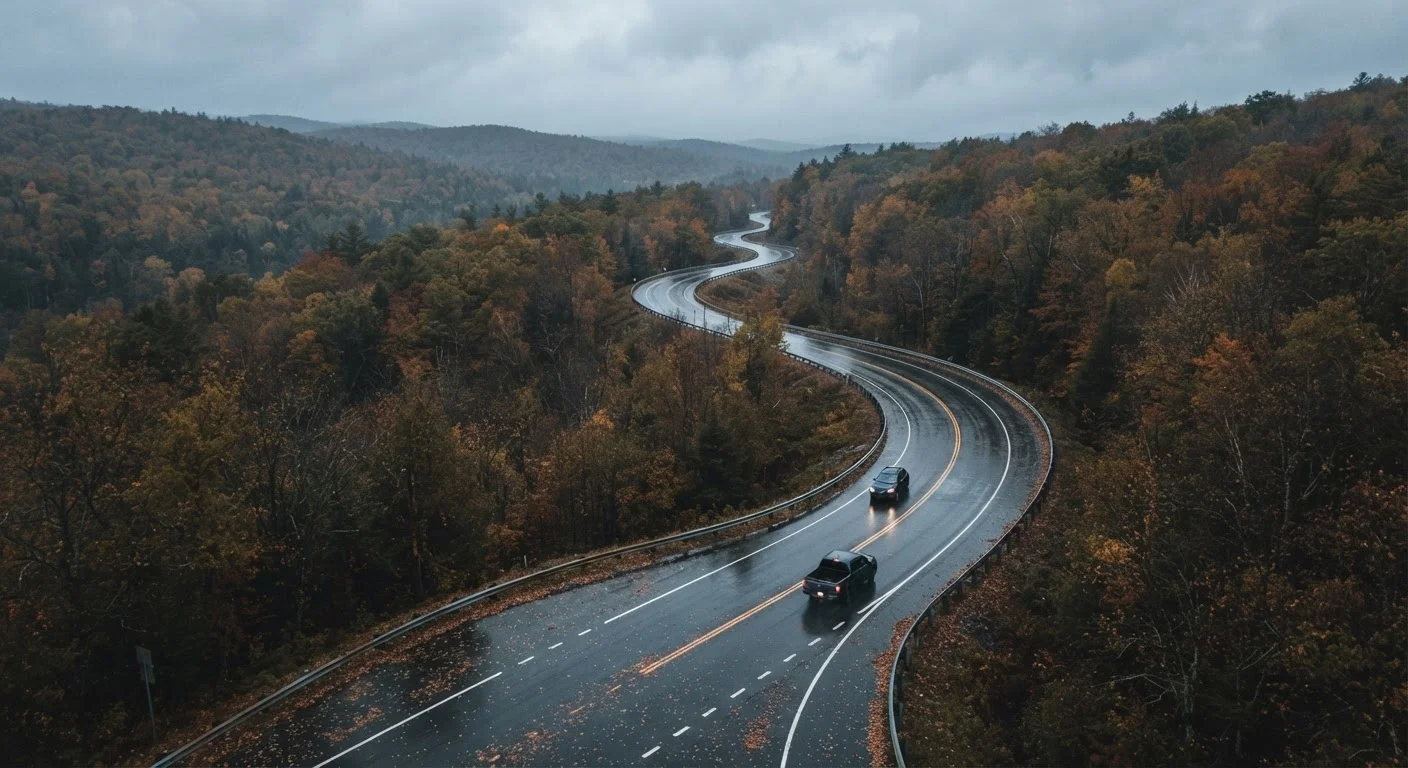
Photo: ConfiReads.com | Blogs For Inquisitive Minds editorial
Key Takeaways
- Wet roads reduce tire grip significantly - increase following distance and brake earlier than normal.
- Black ice is nearly invisible; treat any bridge or shaded pavement as potentially frozen in cold weather.
- Gravel and loose surfaces require slower entry speeds and gentle, deliberate steering inputs.
- Most surface-related crashes are preventable with earlier hazard recognition and reduced speed.
- Your vehicle's traction control and ABS help - but they do not replace sound driving technique.
Why Surface Conditions Change Everything
The relationship between your tires and the road is the single most important physical factor in vehicle control. When that surface changes - whether it turns slick with rain, glazed with ice, or loose with gravel - the margin for error shrinks dramatically. Yet many drivers apply the same habits regardless of what's beneath their tires.
Road surface conditions are a leading contributor to vehicle crashes in the United States. The Federal Highway Administration estimates that roughly 21 percent of all vehicle crashes each year are weather-related, with wet pavement and snow or slush accounting for the majority. Understanding how different surfaces behave - and how to adapt in real time - is a core defensive driving skill.
For a broader framework on reading and responding to hazards, see our guide to defensive driving principles. This article focuses specifically on surface adaptation.
21%
Of all U.S. crashes are weather-related
According to the Federal Highway Administration, approximately 21 percent of annual vehicle crashes in the U.S. involve adverse weather as a contributing factor.
3x
Longer stopping distance on wet roads
Wet pavement can increase braking distances by up to three times compared to dry conditions, depending on speed, tire condition, and road surface texture.
Driving on Wet Roads
Rain reduces available friction between tires and asphalt, lengthening braking distances and making oversteer and understeer more likely during sharp inputs. The danger is highest in the first 10-15 minutes of rainfall, when oil residue mixes with water to create an especially slippery film before being washed away.
Increase following distance to at least four seconds on wet pavement
Reduce speed before entering curves or intersections in wet conditions
Avoid sudden braking or acceleration on wet surfaces
Test your grip in safe conditions after entering wet or unfamiliar roads
Hydroplaning - where tires ride on a film of water rather than the road surface - is a serious risk at highway speeds, particularly with worn tread. If you feel the steering go light or unresponsive, ease off the accelerator gently and hold the wheel steady. Do not brake hard or steer sharply until grip returns.
Tire condition matters enormously on wet roads. Worn wiper blades and low tread depth are two of the first items mechanics flag - both directly affect your ability to manage wet-weather driving safely.
Understanding and Surviving Black Ice
Black ice is a thin, nearly transparent layer of ice that forms on road surfaces - most often on bridges, overpasses, shaded curves, and low-lying areas where cold air pools. It's called "black ice" not because it's dark but because it's clear enough to show the road surface beneath, making it almost invisible until you're already on it.
It typically forms when temperatures hover near or below 32°F and moisture is present - conditions that don't always look threatening. Bridges freeze before road surfaces because cold air circulates beneath them from both sides.
Check the Temperature Before Every Cold-Weather Drive
If your vehicle begins to slide on black ice, the instinct to brake hard or crank the wheel is counterproductive. Instead: ease off the accelerator, keep the wheel pointed where you want to go, and allow the car to slow naturally. With ABS-equipped vehicles, firm steady pressure on the brake pedal allows the system to modulate braking without locking the wheels.
The same principles apply to nighttime driving on cold roads - low visibility makes black ice even harder to spot. Our article on driving safely after dark covers additional habits for low-visibility conditions.
Navigating Gravel and Loose Surfaces
Gravel roads, unpaved shoulders, and construction zones introduce a fundamentally different challenge: the surface itself moves. Loose stones reduce traction, can destabilize a vehicle under sudden steering input, and create significant stopping distance increases - especially at higher speeds.
The most common mistake on gravel is entering too fast. Drivers accustomed to paved roads often carry highway-adjusted speeds onto gravel and lose the ability to steer predictably. Slow down before the surface changes, not after.
Keep steering inputs smooth and deliberate. Sharp turns on loose gravel can cause a vehicle to slide wide or tip if the surface shifts suddenly. Increase your following distance - gravel thrown by the vehicle ahead can damage windshields and obscure vision.
If you drift onto a gravel shoulder from a paved road, grip the wheel firmly, ease off the accelerator, and steer gently back onto the pavement. Do not jerk the wheel - that's the most common trigger for rollover events in this scenario. For more on maintaining vehicle control during unexpected situations, the complete road safety guide is a useful companion resource.
“The road surface is the environment your tires actually inhabit. When that environment changes, everything the driver does has to change with it - speed, spacing, steering inputs, everything.”
— National Safety Council, U.S. nonprofit focused on eliminating preventable deaths and injuries
This article provides general driving safety information for educational purposes. Always follow posted speed limits, local traffic laws, and the guidance of qualified driving instructors for your specific vehicle and conditions.
The content on this site is for informational purposes only and is not a substitute for professional advice. Always consult a qualified professional for guidance specific to your situation.