
Clean Beauty Claims and What the Labels Actually Mean Legally

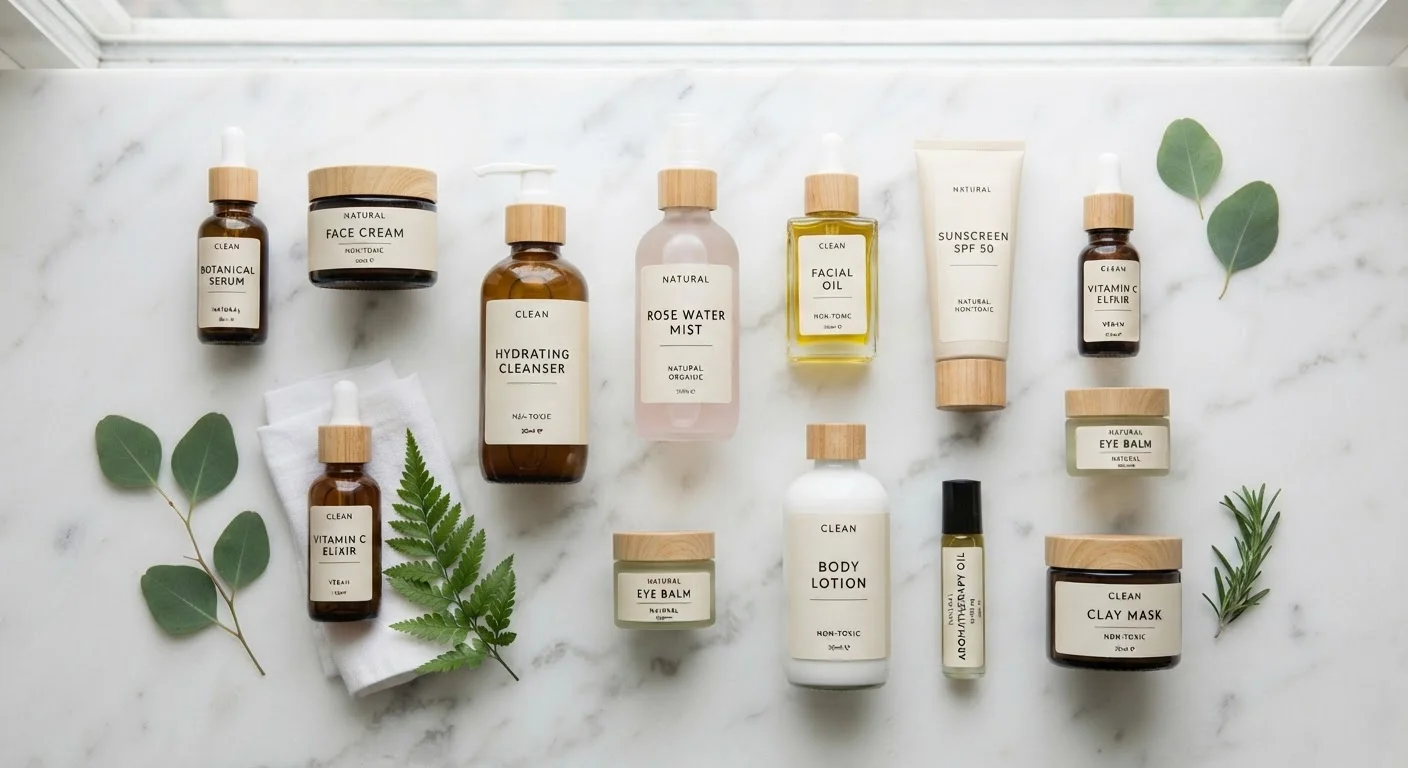
Photo: ConfiReads.com | Blogs For Inquisitive Minds editorial
Key Takeaways
- "Clean," "non-toxic," and "natural" are not legally defined terms under U.S. cosmetics regulations.
- The FDA does not approve most cosmetic products or ingredients before they reach store shelves.
- Each retailer or brand that promotes "clean" products sets its own standards for what qualifies.
- "Natural" or "plant-based" ingredients are not automatically safer or more effective than synthetic ones.
- Reading the full ingredient list - not just the front-of-pack label - gives you the most accurate picture.
- Third-party certifications like USDA Organic or EWG Verified carry more verifiable weight than unregulated marketing terms.
Why "Clean" Labels Don't Have a Legal Definition
Walk down any beauty aisle - or scroll through any retailer's website - and you'll spot them instantly: "clean," "non-toxic," "natural," "green," "pure." These words feel reassuring. But under U.S. law, none of them mean anything specific on a cosmetic label.
The FDA regulates cosmetics under the Federal Food, Drug, and Cosmetic Act, but that law does not require brands to get pre-market approval for most cosmetic ingredients. As long as a product doesn't make drug claims and isn't found to be unsafe after the fact, it can reach shelves with remarkably little vetting. The result? Brands can define "clean" however they like - and most do exactly that.
Retailer-driven standards have partly filled this gap. Sephora's "Clean at Sephora" list, Target's "Clean" label, and Credo Beauty's Dirty List all ban different ingredients, meaning a product certified "clean" by one retailer might not qualify at another. That's not deceptive marketing - it's simply what happens when an industry fills a regulatory vacuum with self-imposed standards.
MoCRA: A Step Forward, Not a Full Fix
Breaking Down the Most Common Claims
"Natural" and "plant-based" suggest ingredients come from nature rather than a laboratory. Neither term is federally defined for cosmetics. A product can be called natural while containing heavily processed botanical extracts or synthetic preservatives. Importantly, as dermatologists frequently note, natural origin does not equal automatic safety - poison ivy is natural, after all. For more on this, see common skincare myths dermatologists want to bust.
"Non-toxic" is perhaps the most misleading of the common claims because toxicity is always dose-dependent - a concept in toxicology that says virtually any substance can be harmful at a high enough concentration. Brands use "non-toxic" to signal the absence of certain high-profile ingredients (parabens, phthalates, formaldehyde releasers), but the term carries no legal obligation.
"Fragrance-free" vs. "unscented" is one distinction that actually matters. Fragrance-free means no fragrance compounds were added. Unscented often means masking agents were used to neutralize odors - those agents can still trigger sensitivities. If you're managing skin sensitivities, fragrance-free is the more reliable choice.
"Hypoallergenic" has no FDA-mandated definition either. Brands self-certify products with this label, and there is no required allergen exclusion list behind it.
0
Federally defined cosmetic "clean" standards in the U.S.
As of MoCRA (2022), the FDA still has not established a legal definition for "clean," "natural," or "non-toxic" as cosmetic label claims.
11
Ingredients banned by U.S. cosmetics regulations
The FDA's list of prohibited or restricted cosmetic ingredients is far shorter than the EU's, which restricts over 2,000 substances - a frequently cited regulatory gap.
~50%
U.S. consumers who seek out "clean" beauty products
According to a 2023 NielsenIQ consumer survey, approximately half of U.S. beauty shoppers actively look for products marketed as clean or natural.
What Labels Do Carry Verifiable Weight
Some terms on beauty packaging are backed by actual standards. Knowing the difference is the fastest way to become a more confident shopper.
- USDA Certified Organic: This seal has a legal definition. Products bearing it must contain at least 95% organically produced ingredients, verified by an accredited third-party certifier. It says nothing about safety or efficacy - but it does tell you something real about agricultural practices.
- EWG Verified: The Environmental Working Group's verification program screens products against its ingredient hazard database. It's a third-party standard, not a government one, but it is transparent about its criteria.
- NSF/ANSI 305 (Contains Organic Ingredients): A less-known but legitimate certification for personal care products containing 70-95% organic content.
- Drug claims trigger FDA review: If a product claims to treat or prevent a medical condition - sunscreen (SPF), anti-dandruff, acne treatment - it's classified as a drug, not just a cosmetic, and faces additional FDA scrutiny. This is why SPF products list an active ingredient in a separate "Drug Facts" panel.
Learning to read the full ingredient list is your most reliable tool. Our guide on reading a beauty product's ingredient label from top to bottom walks through INCI names and concentration order so you can evaluate what's actually inside the bottle.
Check for a Brand's Restricted Ingredients List
How to Shop More Confidently
You don't need a chemistry degree to shop smarter - just a few practical habits.
Flip the bottle. The front-of-pack label is marketing. The ingredient list (required by law to follow INCI naming conventions) is the data. Ingredients are listed in descending order of concentration, so the first five or so matter most. For a deeper breakdown of how this works, see our ingredient labels guide.
Look for specific ingredient exclusions. Rather than trusting a "clean" badge, check whether the brand publishes a concrete restricted ingredients list. Brands that are transparent about what they exclude - and why - generally give you more useful information than those offering only a buzzword.
Use vetted databases. The EWG Skin Deep database and the CosDNA database index thousands of cosmetic ingredients by available safety data. Neither is a regulatory authority, but both apply consistent, publicly documented criteria.
Remember that price doesn't equal safety. A prestige "clean" product isn't inherently safer than a drugstore formula - and vice versa. Where price differences in beauty products are real often comes down to formulation elegance and packaging, not ingredient purity.
The clean beauty movement has genuinely pushed brands to reformulate and be more transparent - that's a real positive. But until federal standards define these terms, the most empowering thing you can do is look past the label and understand what's inside.
This article is for general informational and educational purposes only. It does not constitute medical or dermatological advice. Consult a qualified healthcare professional or dermatologist if you have concerns about specific ingredients or skin conditions.
Frequently Asked Questions
The content on this site is for informational purposes only and is not a substitute for professional advice. Always consult a qualified professional for guidance specific to your situation.