
Dollar-Cost Averaging: Investing on a Consistent Schedule

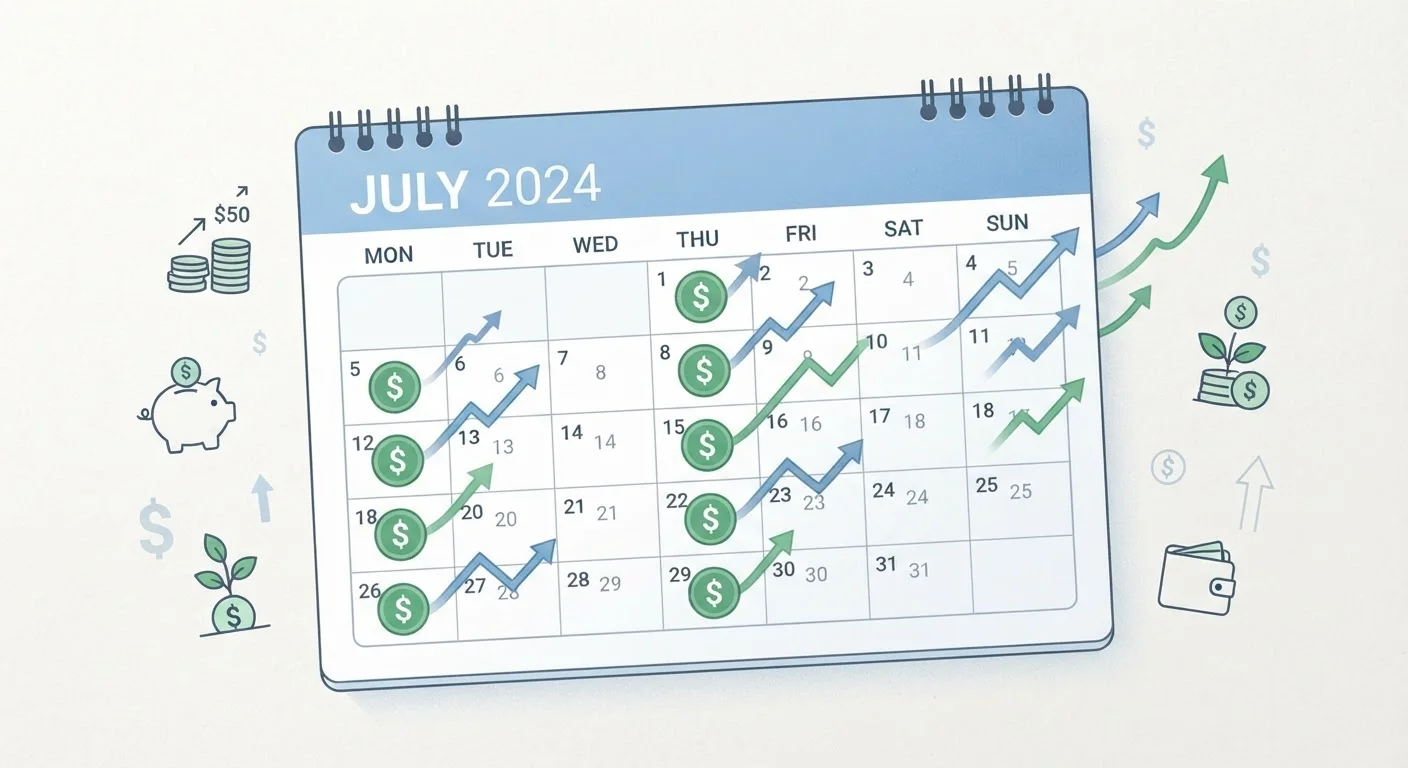
Photo: ConfiReads.com | Blogs For Inquisitive Minds editorial
Key Takeaways
- Dollar-cost averaging invests a fixed amount on a consistent schedule, regardless of market conditions.
- The strategy removes the emotional pressure of trying to pick the perfect time to invest.
- DCA naturally buys more shares when prices drop and fewer when prices rise.
- Automating contributions makes DCA easier to maintain and less prone to emotional decisions.
- DCA does not guarantee profit or protect against loss in a declining market.
How Dollar-Cost Averaging Works
The mechanics are straightforward. Say you decide to invest $200 each month into a broad index fund. In January, shares cost $50 each - you buy 4 shares. In February, the market dips and shares cost $40 - your $200 now buys 5 shares. In March, prices climb to $80 - you get 2.5 shares. After three months you've invested $600 and hold 11.5 shares at an average cost of roughly $52 per share, even though prices swung between $40 and $80.
This averaging effect is the core benefit. You're not trying to predict the market's next move - you're simply participating on a schedule. The strategy pairs naturally with building a consistent savings habit, because both rely on removing day-to-day decision-making from the equation.
~$7T
Assets in U.S. index mutual funds and ETFs
According to the Investment Company Institute, consistent automatic investing into index funds represents a large share of long-term retail investment activity in the United States.
2 in 3
401(k) participants making automatic contributions
Vanguard's "How America Saves" report consistently finds that the majority of workplace retirement plan participants invest through automatic payroll deductions - a natural form of DCA.
The Behavioral Case for DCA
Markets are noisy. Headlines about recessions, interest rate decisions, and geopolitical events create real anxiety for investors, and that anxiety often leads to poor timing decisions - buying high during periods of euphoria and selling low in panic. Dollar-cost averaging sidesteps much of this by making the investment decision ahead of time.
When you automate a monthly transfer to your investment account, you're pre-committing to a plan. You don't have to decide whether today is a good day to invest - you already decided, structurally. This matters more than many investors realize. Automating your investments can reduce the emotional friction that causes people to pause contributions at exactly the wrong moments.
“The stock market is a device for transferring money from the impatient to the patient.”
— Warren Buffett, Chairman and CEO, Berkshire Hathaway
What DCA Doesn't Do
It's worth being direct about limitations. Dollar-cost averaging does not guarantee a profit, and it does not protect against loss if the investments you're holding decline persistently. If an asset trends downward over years, buying more of it at regular intervals accumulates more of a losing position.
DCA also isn't a substitute for choosing broadly diversified, appropriate investments. The strategy works best when applied to diversified vehicles - like broad index funds or target-date funds - not concentrated bets on individual stocks or speculative assets. Understanding how compound interest amplifies long-term returns is equally important: DCA gets money invested, but the underlying asset still determines the outcome.
Choose Broadly Diversified Funds for DCA
Getting Started With a DCA Plan
Setting up a dollar-cost averaging plan requires three decisions: how much to invest, how often, and in what. For most investors, the amount should be whatever is affordable after covering essential expenses and maintaining an adequate emergency fund. If you're weighing whether to invest at all versus building a safety net first, our guide on the emergency fund vs. investment account decision offers a useful framework.
Once you've set an amount, automate it. Most brokerages and employer retirement plans allow recurring contributions on a fixed schedule. Treat the transfer like a bill - non-negotiable and on time. The strategy gains its power from consistency over years, not from any single contribution. If you're building out your broader financial plan, the principles behind sinking funds can complement DCA by reserving money for predictable irregular expenses, keeping your investment contributions untouched.
This article is for general informational and educational purposes only and does not constitute personalized investment, financial, tax, or legal advice. All investing involves risk, including the possible loss of principal. Past performance does not guarantee future results. Consult a qualified financial adviser before making investment decisions based on your individual circumstances.
Frequently Asked Questions
The content on this site is for informational purposes only and is not a substitute for professional advice. Always consult a qualified professional for guidance specific to your situation.