
Compound Interest: The Quiet Force Behind Long-Term Wealth

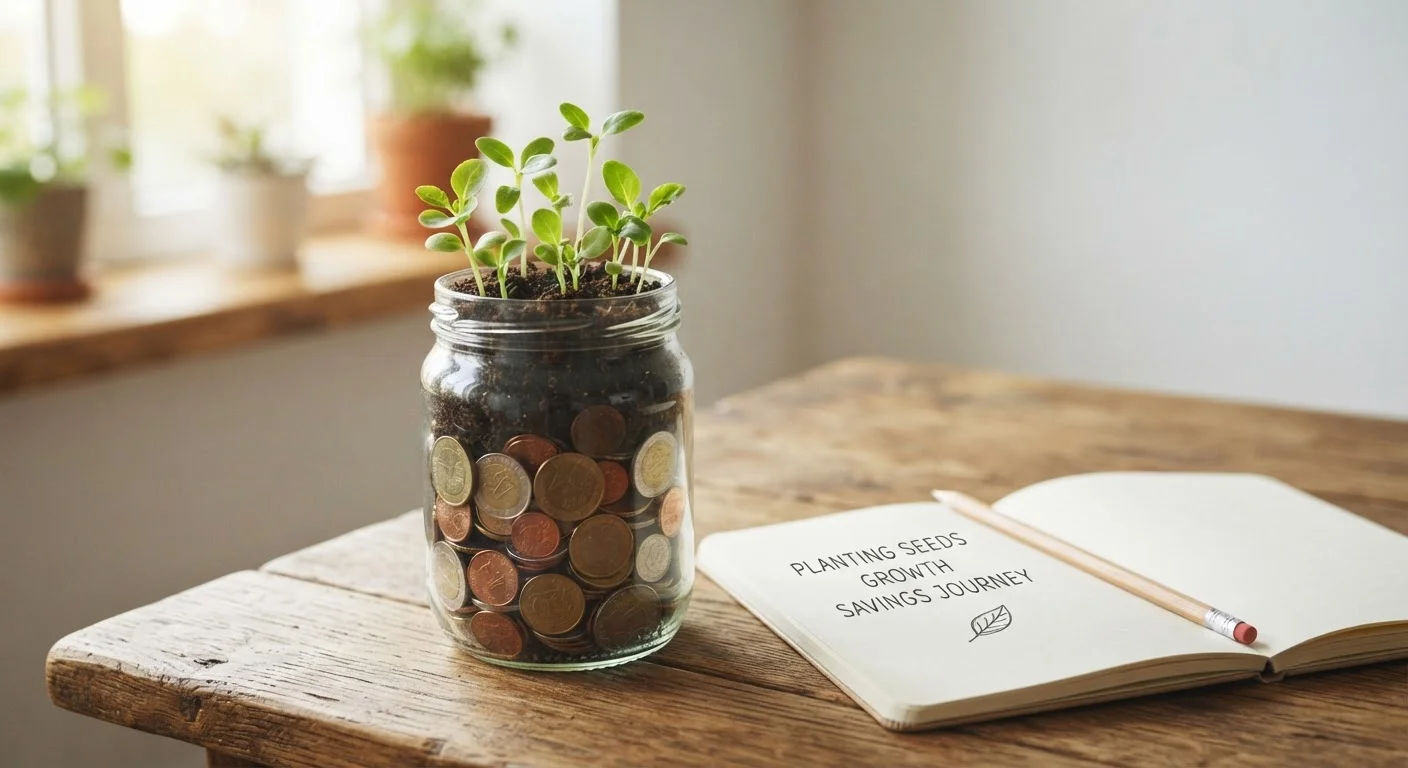
Photo: ConfiReads.com | Blogs For Inquisitive Minds editorial
Key Takeaways
- Compound interest grows your money by earning returns on both your principal and accumulated interest.
- Starting earlier - even with smaller amounts - dramatically outperforms starting later with larger contributions.
- Compounding works against you in debt, growing balances the same way it grows savings.
- APY (Annual Percentage Yield) reflects the true effect of compounding and is the most accurate rate to compare.
- Consistent contributions and patience are the two most important inputs to compound growth.
How Compound Interest Actually Works
The mechanics are straightforward. Suppose you deposit $1,000 into an account earning 5% interest per year. After year one, you have $1,050. In year two, the 5% applies to the full $1,050 - not just the original $1,000 - giving you $1,102.50. By year three, you're earning interest on $1,102.50. This snowball effect is compound interest in action.
What makes it powerful is the curve it creates. Growth is slow and barely perceptible in the early years, then accelerates sharply as the accumulated balance grows. After 30 years at 5%, that initial $1,000 grows to roughly $4,322 - with no additional contributions.
For a clearer picture of the terminology involved, see our plain-language finance glossary, which covers APY, principal, and related concepts.
$4,322
Growth of $1,000 over 30 years at 5%
Illustrative calculation using annual compounding at a constant 5% rate, with no additional contributions.
10 years
Head start that dramatically changes outcomes
Financial planning research consistently shows that a decade of additional compounding time can outweigh significantly larger later contributions.
22%+
Average credit card APR in the US
According to Federal Reserve data, average credit card interest rates have exceeded 20% APR in recent years, making compounding debt particularly costly.
Why Time Is the Most Powerful Variable
No other factor influences compound growth as decisively as time. A 25-year-old who saves $200 a month at a 6% average annual return will accumulate more by age 65 than a 35-year-old saving the same amount - even though the later saver contributes for 10 fewer years. The first decade of compounding sets the foundation for everything that follows.
This is why personal finance guidance so consistently emphasises starting early, even if the initial amounts are small. Waiting for the 'right time' or for a higher income often costs far more in foregone compounding than it saves in the short term.
“Compound interest is the eighth wonder of the world. He who understands it, earns it; he who doesn't, pays it.”
— Attributed to Albert Einstein, This quote, widely circulated in financial education, underscores the dual nature of compounding as both a wealth-building tool and a source of mounting debt.
If you're thinking about how compounding fits into your broader financial journey, saving and investing across every life stage maps out how priorities and strategies typically shift from your 20s through retirement.
Where Compound Interest Works For - and Against - You
Compounding is a neutral mathematical force. In savings accounts, retirement accounts, and long-term investment portfolios, it works in your favour, steadily multiplying your money. In consumer debt - particularly credit cards - it works against you with the same efficiency.
A $3,000 credit card balance at 22% APR, with only minimum payments made, can take over a decade to repay and cost thousands in interest. The compounding mechanics are identical to a savings account, just flowing in the opposite direction.
This dual nature makes understanding compounding essential for both saving and debt management. If you're working on building a budget that supports consistent saving, the Budgeting Basics hub offers practical frameworks for managing cash flow.
Putting Compound Interest to Work
The practical steps are simple, even if they require patience. First, prioritise accounts and investments where your money compounds - high-yield savings accounts, certificates of deposit, and tax-advantaged retirement accounts such as a 401(k) or IRA. Second, make contributions regular and automatic, removing the temptation to skip months. Third, leave the balance untouched for as long as possible; withdrawals interrupt compounding and reset part of the growth curve.
Automating savings is one of the most research-backed behavioural strategies for building wealth. Building a savings habit that sticks explores why automation and system design outperform willpower alone. For those just getting started, Your First Year of Investing covers foundational account types and habits that complement a compounding strategy.
Automate Contributions to Maximise Compounding
This article is for general informational and educational purposes only and does not constitute personalised financial, investment, or tax advice. Past performance does not guarantee future results. Consult a qualified financial adviser before making decisions about your own savings or investments.
Frequently Asked Questions
The content on this site is for informational purposes only and is not a substitute for professional advice. Always consult a qualified professional for guidance specific to your situation.