
Secured vs. Unsecured Debt: Key Differences That Matter When You Borrow

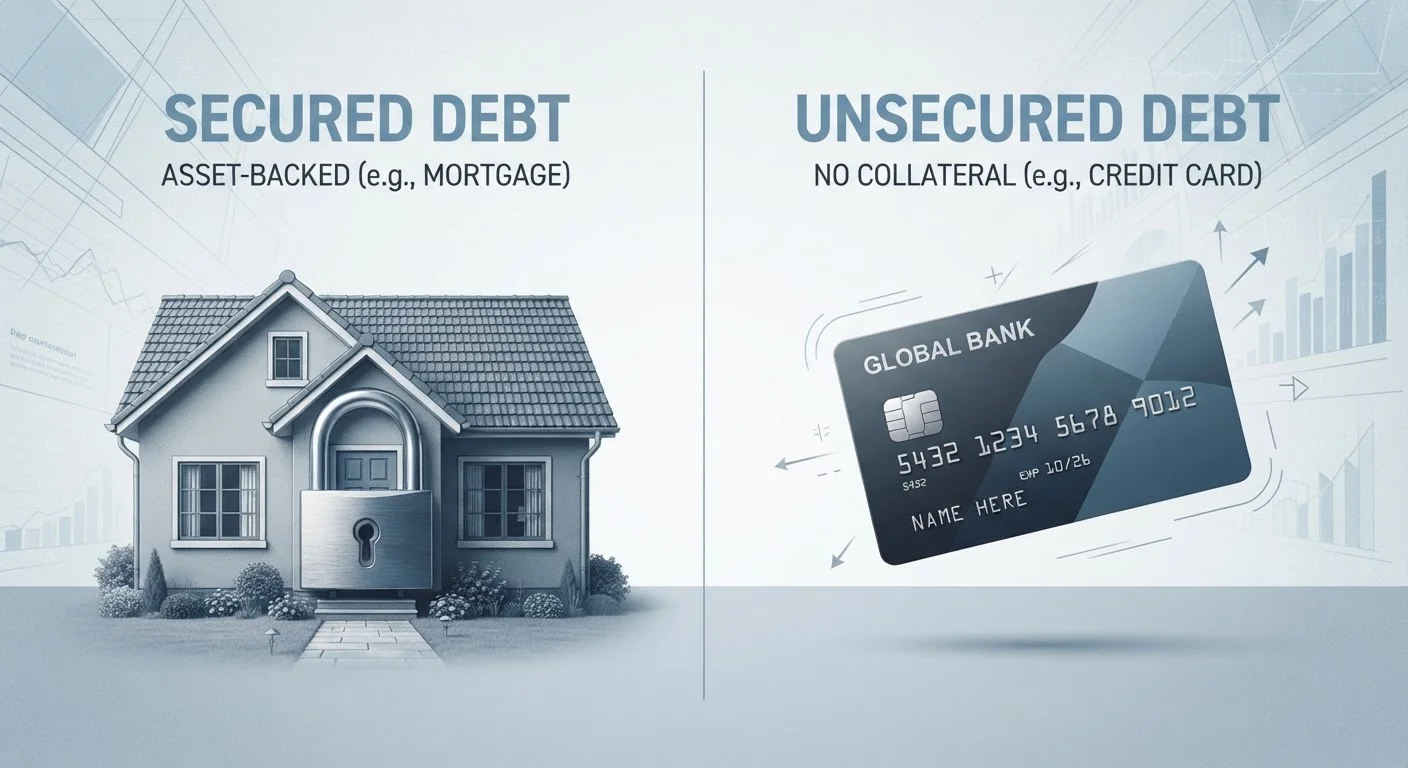
Photo: ConfiReads.com | Blogs For Inquisitive Minds editorial
Key Takeaways
- Secured debt is backed by collateral; the lender can seize that asset if you default.
- Unsecured debt carries no collateral, but typically comes with higher interest rates to offset lender risk.
- The type of debt affects your interest rate, borrowing limits, and what happens when you miss payments.
- Both debt types appear on your credit report and influence your credit score.
- Choosing the right debt type depends on your financial goals, assets, and risk tolerance.
What Makes Debt Secured or Unsecured?
When you borrow money, the lender takes on risk. How that risk is managed - and shared - is the core distinction between secured and unsecured debt.
Secured debt is tied to a specific asset, called collateral. If you stop making payments, the lender has a legal right to claim that asset to recover what you owe. Common examples include mortgages (where your home is the collateral) and auto loans (where the vehicle serves the same role). Because the lender's exposure is limited by that asset, secured loans typically carry lower interest rates.
Unsecured debt is issued based on your creditworthiness alone - your credit score, income, and repayment history - with no specific property pledged as a backstop. Credit cards, personal loans, student loans, and medical bills are typical examples. Lenders compensate for the higher risk by charging higher interest rates.
For a broader foundation, see our plain-language guide to debt before diving deeper.
Side-by-Side: How the Two Types Compare
The table below outlines the key practical differences borrowers encounter when choosing between secured and unsecured debt.
| Secured Debt | Unsecured Debt | |
|---|---|---|
| Collateral required | Yes - specific asset pledged | No - creditworthiness only |
| Typical interest rate | Lower, due to reduced lender risk | Higher, to offset lack of collateral |
| Common examples | Mortgage, auto loan, HELOC | Credit card, personal loan, student loan |
| Borrowing limits | Often higher, asset-backed | Generally lower, credit-score driven |
| Default consequence | Repossession or foreclosure | Collections, lawsuits, credit damage |
| Approval difficulty | Easier with poor credit if asset available | Depends heavily on credit score and income |
One nuance worth noting: interest rates on unsecured debt can vary widely depending on your credit profile. A borrower with excellent credit may qualify for a personal loan rate that rivals some secured products, while a borrower with thin credit history could face rates several times higher. Always compare the APR, not just the advertised interest rate, when evaluating any loan offer.
What Happens When You Default
The consequences of missing payments differ significantly between the two debt types - and that difference should inform your borrowing decisions.
With secured debt, a lender can initiate repossession or foreclosure once you default. For a mortgage, that typically follows a defined legal process that can take months. For an auto loan, repossession can happen more quickly, sometimes within days of a missed payment depending on your state's laws. You lose the asset, and a deficiency balance - the gap between what the asset sells for and what you owe - may still follow you.
With unsecured debt, lenders cannot immediately seize property. Instead, they can report the delinquency to credit bureaus, sell the debt to a collection agency, or eventually sue you and seek a court judgment. A judgment can lead to wage garnishment or bank levies, depending on state law. So while there's no collateral at immediate risk, the long-term financial damage can still be severe.
Don't Assume Unsecured Debt Is Lower Risk
Regardless of debt type, missed payments damage your credit score and remain on your credit report for up to seven years. If you're weighing a payoff strategy, our debt avalanche vs. debt snowball comparison can help you prioritise.
How Each Type Affects Your Credit and Borrowing Power
Both secured and unsecured debts appear on your credit report and factor into your credit score - but in slightly different ways.
Secured loans like mortgages contribute to your credit mix, one of the factors credit-scoring models weigh. Carrying a mortgage responsibly over time can strengthen your score. Auto loans work similarly. On the unsecured side, credit cards affect your credit utilisation ratio - the percentage of available revolving credit you're using - which is one of the most heavily weighted factors in most scoring models.
If you're trying to establish credit from scratch, secured products can be a smart starting point. A secured credit card - where you deposit cash as collateral - reports to the bureaus just like a regular card but poses minimal risk to the lender. Our guide to building credit without taking on unnecessary debt covers this approach in detail.
For borrowers weighing whether to consolidate unsecured debt, the credit card vs. personal loan comparison walks through the tradeoffs clearly.
Match the Debt Type to the Purpose
This article is for general informational purposes only and does not constitute personalised financial or legal advice. Consult a licensed financial adviser for guidance specific to your situation.
The content on this site is for informational purposes only and is not a substitute for professional advice. Always consult a qualified professional for guidance specific to your situation.