
Debt Avalanche vs. Debt Snowball: Choosing a Payoff Strategy That Fits Your Life

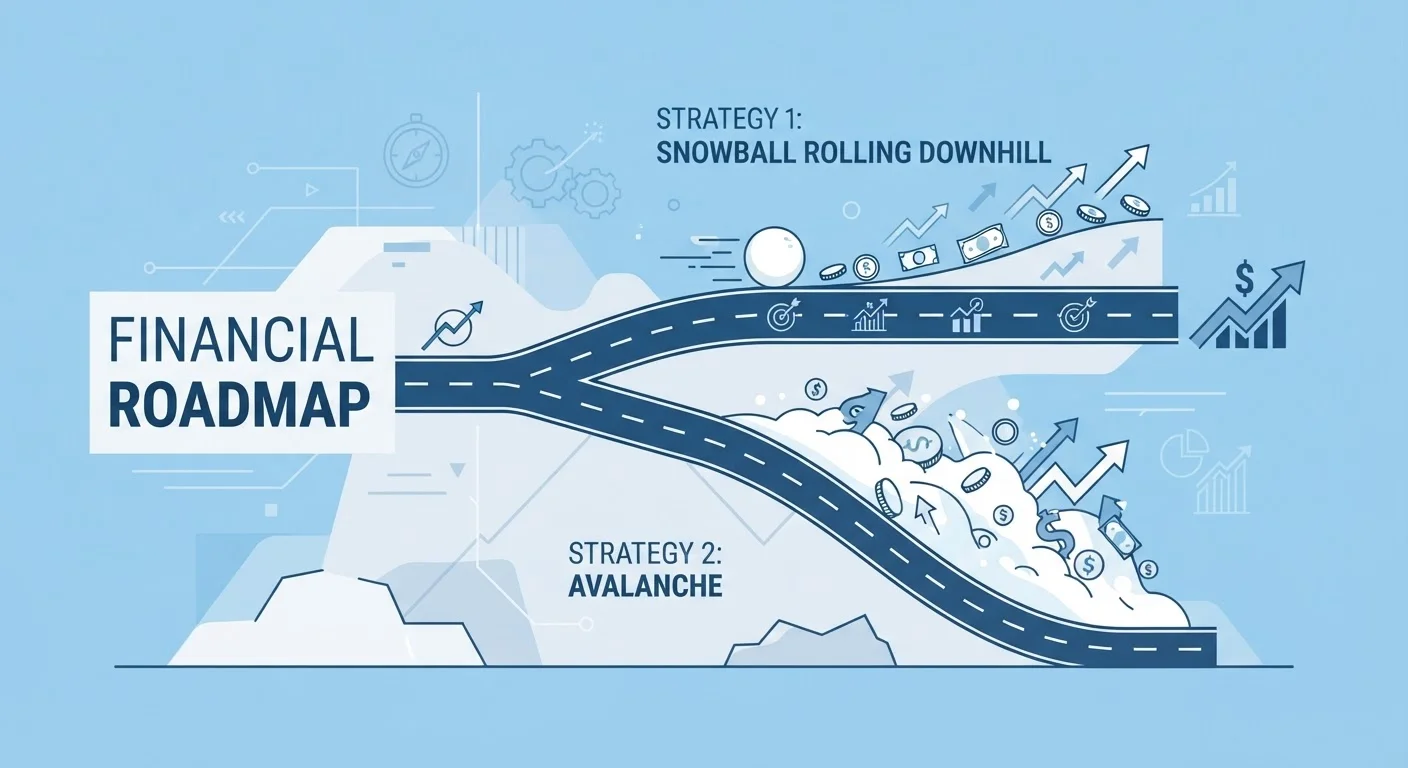
Photo: ConfiReads.com | Blogs For Inquisitive Minds editorial
Key Takeaways
- Debt Avalanche targets your highest-interest debt first, minimizing total interest paid.
- Debt Snowball eliminates your smallest balance first, building psychological momentum.
- Avalanche typically saves more money; Snowball often produces better follow-through for many people.
- Both methods require a consistent monthly surplus beyond minimum payments to work.
- Your personality and financial situation, not just the math, should drive your choice.
- Hybrid approaches exist - you can switch strategies if circumstances change.
How Each Strategy Works
Both methods share the same mechanical foundation: pay minimums on every debt, then direct any extra money toward one target debt at a time. The difference is how you select that target.
Debt Avalanche: Rank your debts by interest rate, highest to lowest. Throw all surplus funds at the highest-rate balance while maintaining minimums on the rest. Once it's gone, redirect that full payment to the next-highest-rate debt - and so on down the list.
Debt Snowball: Rank your debts by outstanding balance, smallest to largest. Attack the smallest balance first with every extra dollar, regardless of its interest rate. When it's paid off, roll that freed-up payment into the next-smallest debt.
If you're newer to how debt and interest actually work, our plain-language debt starter guide lays out the core concepts clearly before you choose a strategy.
| Criterion | Debt Avalanche | Debt Snowball |
|---|---|---|
| Target selection | Highest interest rate first | Smallest balance first |
| Total interest paid | Lower (mathematically optimal) | Potentially higher |
| Time to first payoff | Slower (if highest-rate debt is large) | Faster (small balances clear quickly) |
| Psychological reward | Delayed - progress is gradual | Early - quick wins build momentum |
| Best income profile | Stable, predictable income | Variable or unpredictable income |
| Complexity | Moderate - requires rate tracking | Simple - sort by balance |
| Suits borrowers who… | Prioritise efficiency over motivation | Need visible milestones to stay on track |
The Real Cost Difference
The avalanche method wins on pure math. By eliminating the highest-interest debts first, you reduce the amount that accrues interest each month. Over a multi-year repayment period, this can translate into meaningful savings - often several hundred to several thousand dollars, depending on balances and rates.
The snowball method, by contrast, may leave high-rate debts accruing interest longer. You could pay more overall, but you'll eliminate individual accounts faster - which reduces the number of creditors you're managing and, for some borrowers, feels like real progress.
~$1,200
Potential interest savings from Avalanche vs. Snowball
NerdWallet's modeling of a typical multi-debt scenario found avalanche savers often avoid over $1,000 in interest, though the exact figure depends heavily on balances and rates.
77%
Americans carrying some form of debt
According to Pew Research Center data, the vast majority of U.S. households hold at least one form of debt, making repayment strategy a near-universal financial concern.
20%+
Average APR on credit card balances
Federal Reserve consumer credit data shows average credit card interest rates have exceeded 20% APR, making high-rate debt especially costly to carry long-term.
Neither approach is universally "better." The best strategy is the one you actually complete. Research in behavioral economics consistently finds that motivation and follow-through are the limiting factor in debt repayment - not financial knowledge. That's a case for being honest with yourself about your track record.
For a different lens on managing debt load, see our guide on what debt consolidation actually does - it's a separate tool worth understanding before committing to either repayment strategy.
Choosing the Strategy That Fits Your Life
Before picking a method, honestly assess two things: your cash flow and your psychological profile.
Both Methods Require One Non-Negotiable
Cash flow check: Both strategies require a monthly surplus beyond minimum payments. If your budget is extremely tight, that surplus may be small - and that's fine. Even $50 per month directed consistently at a target debt will compound over time. If your income fluctuates, the snowball's ability to eliminate minimum payments faster may give you more flexibility during lean months. The debt management guide for variable-income earners covers this scenario in depth.
Motivation check: Have you started (and stopped) debt repayment plans before? If yes, lean toward the snowball. If you're analytical, patient, and motivated by numbers rather than milestones, the avalanche's efficiency may suit you better.
You can also combine approaches - some people start with a snowball on one or two small debts, then switch to avalanche once they feel momentum. Whatever method you choose, pairing it with a solid budget is essential. The Budgeting Basics hub offers practical frameworks for tracking spending and protecting your monthly surplus. And once your debt is controlled, the Saving & Investing hub is a natural next step for redirecting those freed-up payments.
This article is for general informational and educational purposes only and does not constitute personalized financial advice. Consider consulting a licensed financial adviser or credit counselor regarding your specific circumstances.
The content on this site is for informational purposes only and is not a substitute for professional advice. Always consult a qualified professional for guidance specific to your situation.