
Credit Card vs. Personal Loan for Paying Off Debt

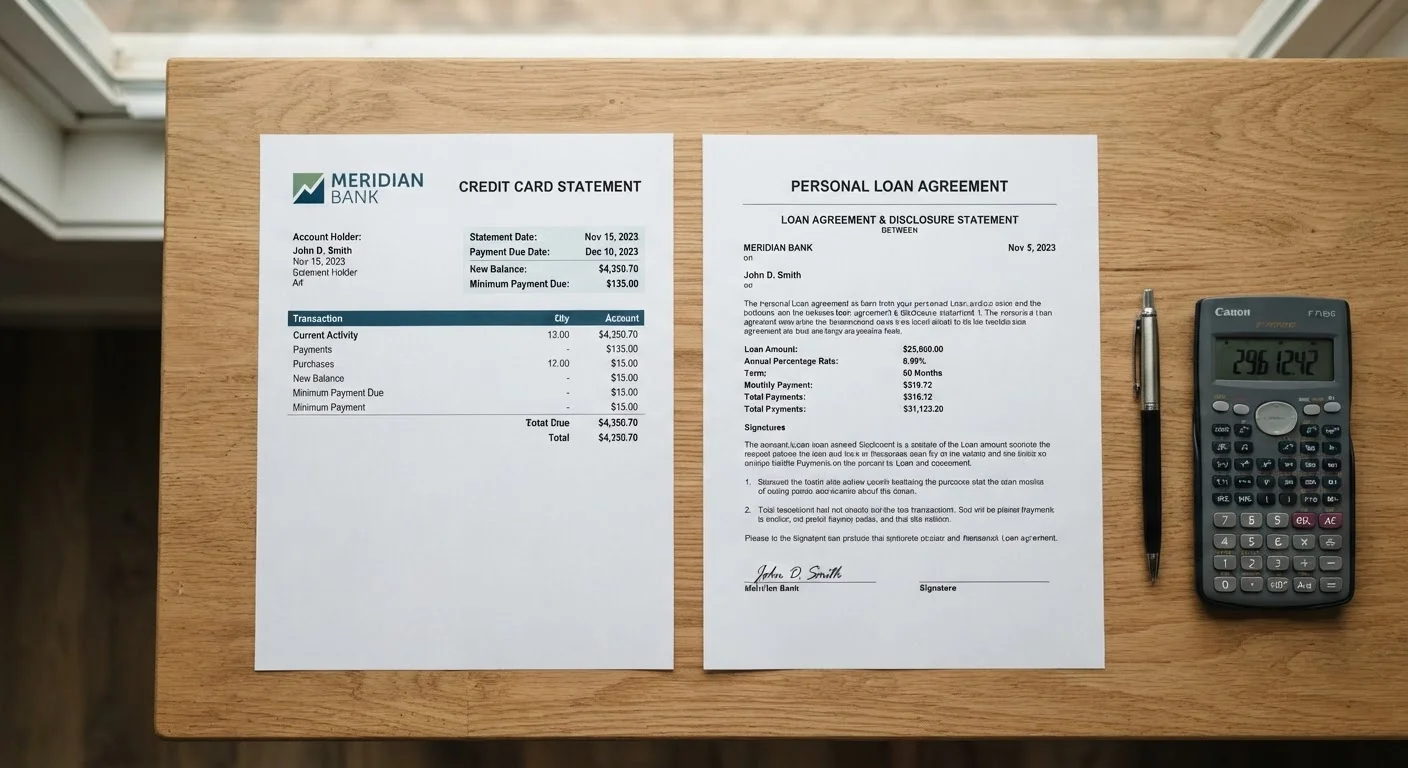
Photo: ConfiReads.com | Blogs For Inquisitive Minds editorial
Key Takeaways
- Personal loans typically carry lower fixed interest rates than standard credit card APRs.
- Balance transfer cards can offer 0% APR promotions, but these windows are limited and often come with fees.
- Personal loans create a fixed repayment schedule; credit cards allow minimum payments that can extend debt for years.
- Your credit score significantly affects the rates you qualify for on either product.
- Neither option eliminates debt - they restructure it; spending habits must change alongside any debt tool.
Understanding the Core Difference
Both credit cards and personal loans are forms of unsecured debt - meaning no collateral is required - but they work in fundamentally different ways. If you're new to how these instruments function, the plain-language guide to debt offers a solid starting point before diving into repayment strategy.
A credit card is revolving credit: your available balance replenishes as you pay it down, and you can borrow repeatedly up to your limit. The minimum payment is small relative to the balance, which means carrying a balance over time generates compounding interest - often at APRs between 20% and 29% for standard cards as of recent Federal Reserve data.
A personal loan is installment credit: you borrow a lump sum and repay it in equal monthly payments over a fixed term, typically 24 to 84 months. The interest rate is usually fixed, so your payment never changes, and the account closes once the loan is repaid.
| Criterion | Credit Card | Personal Loan |
|---|---|---|
| Interest Rate | 20%-29% standard; 0% promo available | Typically 10%-18% (credit-dependent) |
| Repayment Structure | Revolving; flexible minimum payments | Fixed monthly installments |
| Repayment Term | Open-ended (no set payoff date) | Fixed term (24-84 months) |
| Origination / Transfer Fee | 3%-5% balance transfer fee | 0%-8% origination fee (varies) |
| Risk of Re-spending | High (credit limit reopens after payoff) | Lower (lump sum disbursed once) |
| Best Case Scenario | Paid off within 0% promo window | Lower rate, disciplined fixed payoff |
When a Credit Card Makes Sense
The strongest case for using a credit card to pay off debt is the balance transfer with a 0% introductory APR. Many issuers offer 12 to 21 months of interest-free repayment when you transfer an existing balance to a new card. If you can pay the full transferred amount within that window, you avoid interest entirely - a meaningful advantage over even a competitive personal loan rate.
The caveats matter, though. Balance transfer fees - typically 3% to 5% of the transferred amount - add to your balance upfront. If you miss a payment or carry a remaining balance past the promotional period, the rate resets to the card's standard APR, which can be steep. This option works best for people with strong repayment discipline and a balance small enough to eliminate within the promotional window.
Balance Transfer Cards: Read the Fine Print
When a Personal Loan Makes Sense
For larger balances, longer repayment timelines, or borrowers who want the psychological and practical clarity of a fixed end date, personal loans are generally the stronger tool. Qualified borrowers can access rates significantly below average credit card APRs - often in the 10% to 18% range depending on credit profile and lender - and every payment chips away at the principal in a predictable way.
Personal loans also reduce the temptation to re-spend. Once you use a loan to pay off a credit card, that card's credit limit is freed up. Without discipline, some borrowers accumulate new card charges - a pattern sometimes called "reborrowing" - ending up with both a loan payment and fresh card debt. For a deeper look at this dynamic, see our article on what debt consolidation actually does.
~21%
Average credit card interest rate (APR)
The Federal Reserve reported average credit card interest rates on accounts assessed interest exceeded 21% in recent periods, highlighting the cost of carrying a revolving balance.
3%-5%
Typical balance transfer fee
Most card issuers charge a percentage of the transferred amount as an upfront fee, which should be factored into total cost comparisons with personal loan origination fees.
If your income varies month to month, the fixed payment of a personal loan can also be a constraint. Our guide on managing debt on a variable income explores how to handle repayment when cash flow isn't predictable.
How Your Credit Score Shapes Your Options
Both products are underwritten based on creditworthiness, but the impact is different. For personal loans, a lower credit score typically means a higher interest rate - sometimes high enough to erase the rate advantage over your existing card. Some lenders won't approve applicants below a certain score threshold at all.
For balance transfer cards, approval and the quality of the promotional offer also depend on credit. Applicants with excellent credit (typically 740 and above) are most likely to access the longest 0% periods and lowest transfer fees. If your score needs work, you may find neither option delivers a meaningful rate improvement - in which case focusing on building credit responsibly alongside an aggressive payoff plan on your current cards is a more realistic path.
Once you choose a repayment vehicle, your strategy for tackling the balance matters just as much. The debt avalanche vs. debt snowball comparison can help you prioritise which balances to attack first.
This article is for general informational purposes only and does not constitute personalised financial or legal advice. Rates, terms, and eligibility vary by lender and individual circumstances. Consult a qualified financial professional before making decisions about your specific debt situation.
The content on this site is for informational purposes only and is not a substitute for professional advice. Always consult a qualified professional for guidance specific to your situation.