
Credit Utilization: The Ratio That Quietly Shapes Your Score

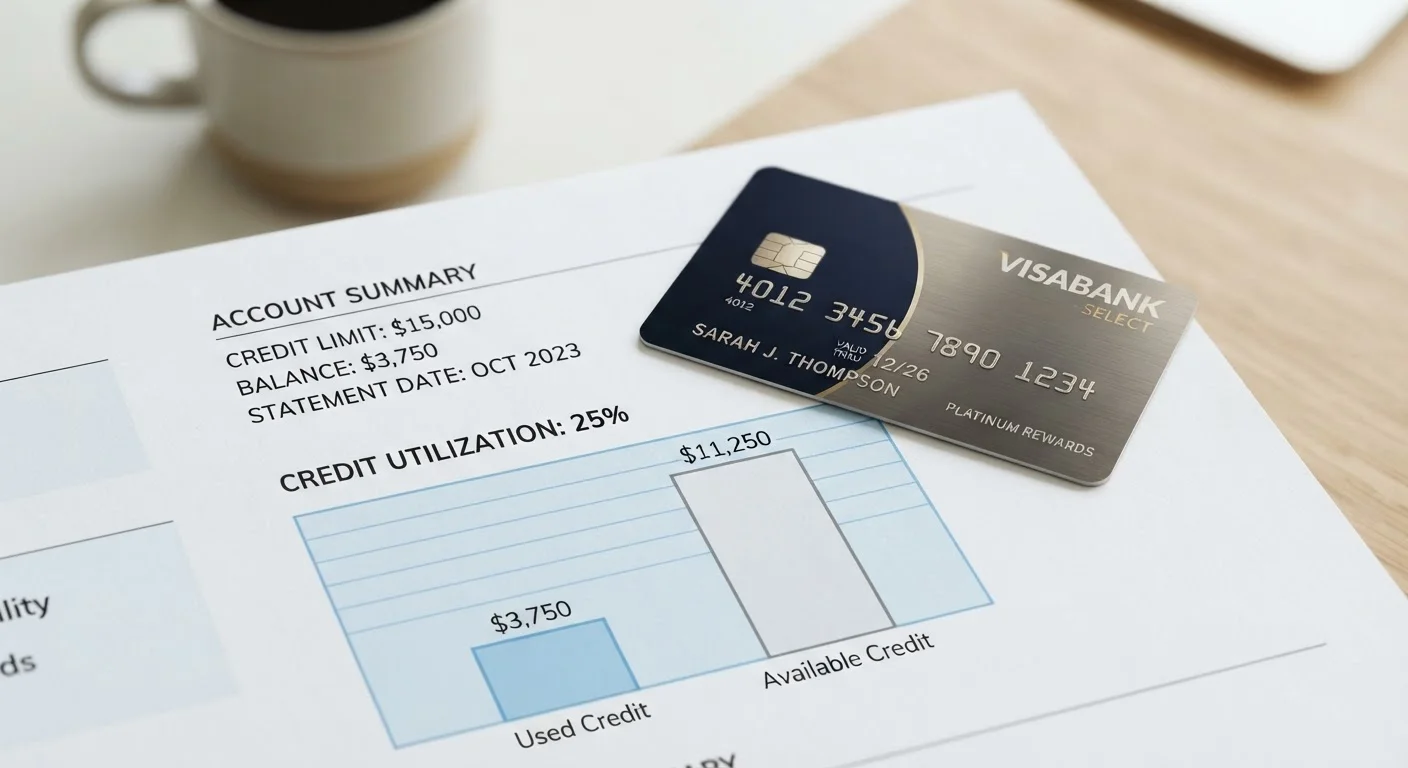
Photo: ConfiReads.com | Blogs For Inquisitive Minds editorial
Key Takeaways
- Credit utilization typically accounts for about 30% of a FICO score, making it one of the largest single factors.
- Most credit experts generally recommend keeping utilization below 30%, with lower being better.
- Utilization is recalculated every billing cycle, so improvements can show up on your score relatively quickly.
- Both overall utilization and per-card utilization are considered by major scoring models.
- Paying down balances - or requesting a credit limit increase - can lower your ratio.
Why Utilization Carries So Much Weight
Of all the variables that go into a credit score, credit utilization is one of the most powerful and - importantly - one of the most controllable. Under the FICO scoring model, amounts owed (the category that includes utilization) accounts for roughly 30% of your score. Only payment history, at 35%, carries more influence.
The logic behind this weighting is straightforward: lenders interpret high utilization as a sign that a borrower may be stretched financially. Someone using 85% of their available credit looks riskier to a potential lender than someone using 15%, even if both have spotless payment histories. It signals dependency on borrowed money rather than disciplined use of it.
For a deeper look at how the various scoring factors stack up over time, see our year-by-year breakdown of how credit scores develop.
~30%
FICO score weight for amounts owed
According to FICO's published scoring breakdown, 'amounts owed' - the category encompassing credit utilization - accounts for approximately 30% of a standard FICO score.
<10%
Utilization common among highest scorers
FICO has noted that consumers with scores in the exceptional range (800+) typically carry average utilization rates well below 10% across their revolving accounts.
30%
Widely cited upper threshold for healthy utilization
Consumer finance guidance from organizations including the Consumer Financial Protection Bureau points to 30% as a commonly recommended ceiling, with lower being preferable.
How the Calculation Actually Works
Calculating your utilization ratio is simple arithmetic. Add up all outstanding balances on your revolving credit accounts (typically credit cards and lines of credit), then divide that total by the sum of all your credit limits. Multiply by 100 to get a percentage.
Example: Card A has a $600 balance on a $2,000 limit; Card B has a $400 balance on a $3,000 limit. Your total balance is $1,000 and your total limit is $5,000 - giving you a 20% utilization rate.
What many people miss is that scoring models also evaluate each card individually. In the example above, Card A carries 30% utilization on its own - right at the commonly cited threshold - while Card B sits at a more comfortable 13%. If Card A's balance climbed to $1,800, that card's individual utilization would spike to 90% and could significantly affect your score even though your aggregate rate might still appear moderate.
For definitions of related terms you'll encounter when reviewing your credit report, our credit and debt glossary is a useful reference.
Practical Ways to Improve Your Ratio
Because utilization is recalculated each billing cycle based on balances reported by your card issuers, it responds to change faster than most other credit factors. Here are the main levers available to most consumers:
- Pay down balances: The most direct route. Even partial paydowns can produce meaningful ratio improvements within a billing cycle or two.
- Make mid-cycle payments: Your issuer typically reports your balance once a month, usually around your statement closing date. Paying before that date can lower the balance that gets reported - and therefore your utilization - even if you pay the full balance each month.
- Request a credit limit increase: If your balance stays the same but your limit rises, your ratio falls. Note that this may involve a hard inquiry; our article on hard vs. soft inquiries explains the potential score impact.
- Avoid closing unused cards: Eliminating a card removes its limit from your total available credit, which can raise your utilization ratio.
If you're in the process of building credit from scratch, approaches like secured cards and credit-builder loans can help you establish a positive history without taking on unnecessary debt - see our guide on building credit responsibly for details.
Time Your Payments Strategically
Common Misconceptions Worth Clearing Up
One persistent myth is that carrying a balance month to month helps your score. It doesn't - and it costs you interest. You can demonstrate responsible utilization simply by using your card and paying it off in full. The card reports activity; the score improves; you pay no interest.
Another misconception is that utilization is permanent or slow to change. Unlike a late payment, which can linger on your report for up to seven years, a high utilization ratio resets as soon as you pay down the balance. That's genuinely good news for anyone actively working on their credit.
Finally, some consumers worry that routine actions - checking their own score, being added as an authorized user, or applying for a card that was ultimately denied - harm their credit in lasting ways. Many of these concerns are unfounded. Our article on things that won't hurt your credit score addresses several of these misconceptions directly.
This article is for general informational and educational purposes only and does not constitute personalized financial or credit advice. Consult a qualified financial professional for guidance specific to your situation.
Frequently Asked Questions
The content on this site is for informational purposes only and is not a substitute for professional advice. Always consult a qualified professional for guidance specific to your situation.