
A Year-by-Year Look at How Credit Scores Are Built Over Time

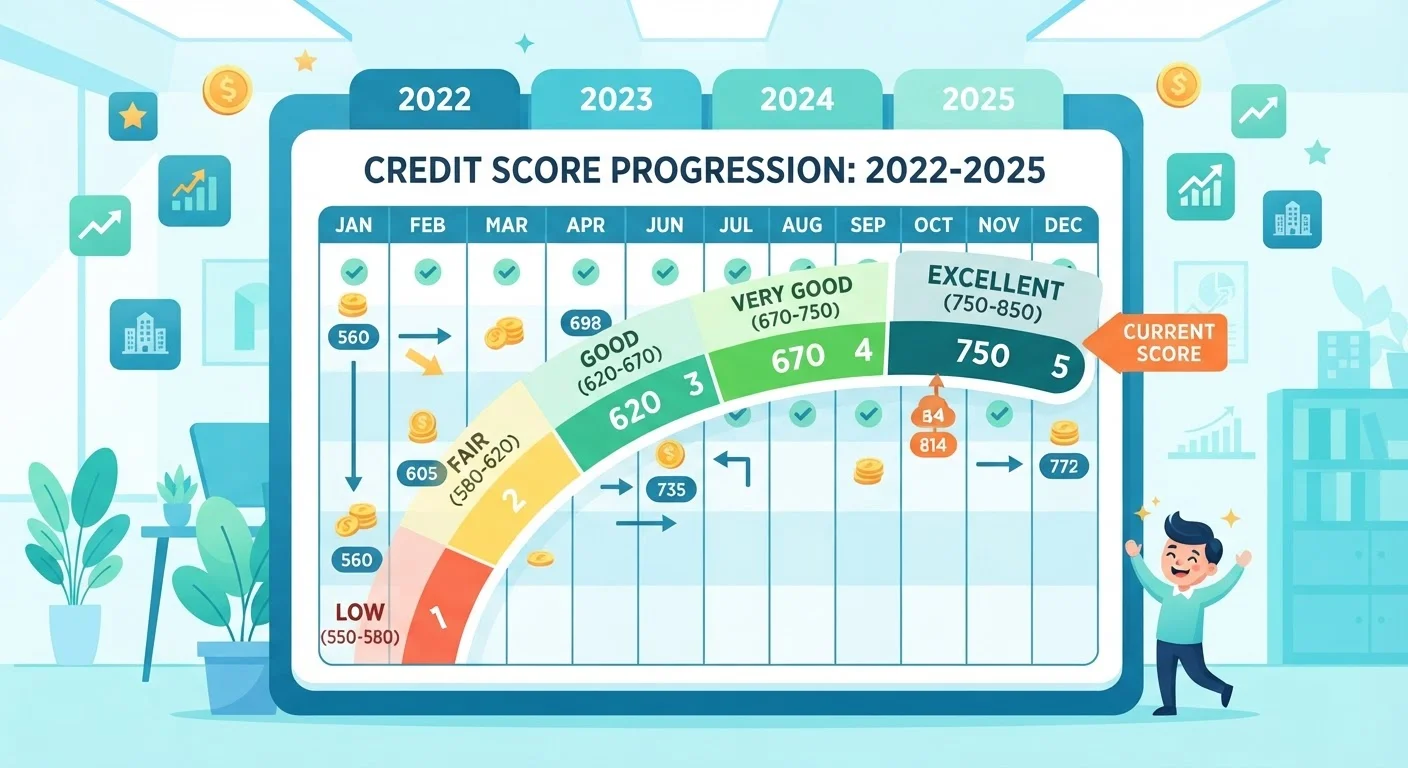
Photo: ConfiReads.com | Blogs For Inquisitive Minds editorial
Key Takeaways
- Credit scores are not built overnight - consistent habits compound meaningfully over two to seven years.
- Payment history is the single largest factor in your score, accounting for roughly 35% under FICO models.
- Closing old accounts or opening many new ones can temporarily lower your average account age.
- Even small positive steps in year one - like a secured card - create a foundation that pays off later.
- Negative marks like late payments can stay on your credit report for up to seven years.
Why Time Is a Core Ingredient in Credit Scoring
Many people focus on paying down debt or keeping balances low - both smart moves - but overlook a factor that cannot be rushed: time. Credit scoring models reward borrowers who have demonstrated responsible behavior across an extended period, not just recently.
The reason is straightforward from a lender's perspective. A borrower who has managed multiple accounts for seven years without a missed payment is statistically less risky than someone with a perfect six-month record. Length of credit history gives scoring models a longer data window to evaluate.
That said, time alone does nothing. Every month that passes either strengthens or weakens your profile depending on the choices attached to it. Understanding what happens year by year helps you make decisions that work with the timeline rather than against it.
35%
Weight of payment history in FICO score
FICO's published scoring breakdown shows payment history is the single largest factor in a standard FICO score.
15%
Weight of credit history length in FICO score
According to FICO, the length of your credit history - including oldest account, newest account, and average age - accounts for 15% of your score.
7 years
How long most negative items stay on your report
Under the Fair Credit Reporting Act (FCRA), most derogatory marks including late payments and collections must be removed after seven years.
The First Year: Laying the Foundation
If you are starting with no credit history, the first year is about getting a foothold. Options like secured credit cards, credit-builder loans, or becoming an authorized user on a family member's account can each generate your first tradeline - the term for any credit account appearing on your report.
By month six, you may receive your first scoreable credit file if the account is being reported to the major bureaus. FICO requires at least one account that is six months old and has been reported within the past six months to generate a score at all.
By the end of year one, consistent on-time payments on even a single account establish the most important habit in credit building. See how to build credit without taking on unnecessary debt for low-risk approaches suited to this stage.
Years Two Through Four: Momentum Builds
This stretch is where responsible behavior starts to produce visible results. A borrower who has paid on time for two years while keeping balances low can realistically reach the 680-720 score range, depending on their starting point and credit mix.
Several things happen during these years that matter:
- Average account age rises. Each additional month increases the average age of your open accounts, gradually improving the history-length component of your score.
- On-time payments accumulate. Payment history is the largest single factor in FICO scoring - around 35%. Two to four years of clean payment history is a substantial positive signal.
- Hard inquiries age out. Hard inquiries from new account applications typically affect your score for about twelve months and fall off your report after two years. Understanding the difference between hard and soft inquiries helps you avoid unnecessary dings during this period.
This is also a reasonable time to consider adding a second account type - such as an installment loan if you only have revolving credit - to begin diversifying your credit mix.
Set Up Autopay for the Minimum Due
Years Five Through Seven: Reaching Strong Credit Territory
Borrowers who have maintained clean records for five or more years are typically well into the "good" credit range (700+) and may be approaching "very good" or "exceptional" territory (750+). At this stage, keeping credit utilization low and avoiding new hard inquiries become the main levers for continued improvement.
One important caution: many people unknowingly stall their progress by closing old accounts. If you paid off a credit card five years ago and close it today, you lose the account's contribution to your average account age. Keeping it open - with occasional small purchases to prevent the issuer from closing it - preserves that history.
By year seven, any negative items from early financial missteps (a single late payment, a small collection) are approaching or have already dropped off your report, allowing the clean recent record to dominate.
It is also worth noting what has no effect on your timeline. Many common actions people worry about - like checking their own score - do not affect credit at all. Avoiding phantom risks lets you focus on what genuinely moves the needle.
Protecting the Progress You Have Built
A strong credit score built over years can be damaged quickly by a few specific mistakes: missing a payment by 30 or more days, maxing out a credit card, or defaulting on a loan. These are not abstract warnings - a single 30-day late payment can drop a score in the 780 range by 90 to 110 points, according to FICO's published estimates.
The practical upshot: the longer your positive history, the more you have to protect - and the more damage a single misstep can cause. Automating minimum payments is the simplest safeguard. For readers navigating significant debt alongside credit building, consult a nonprofit credit counseling agency or a licensed financial adviser to develop a plan suited to your specific circumstances.
This article is for general informational purposes only and does not constitute personalized financial or credit advice. Individual results vary based on your full credit profile and the specific scoring model used. Consult a qualified financial professional for guidance on your situation.
Frequently Asked Questions
The content on this site is for informational purposes only and is not a substitute for professional advice. Always consult a qualified professional for guidance specific to your situation.