
Budgeting Methods Worth Knowing: A Plain-English Glossary

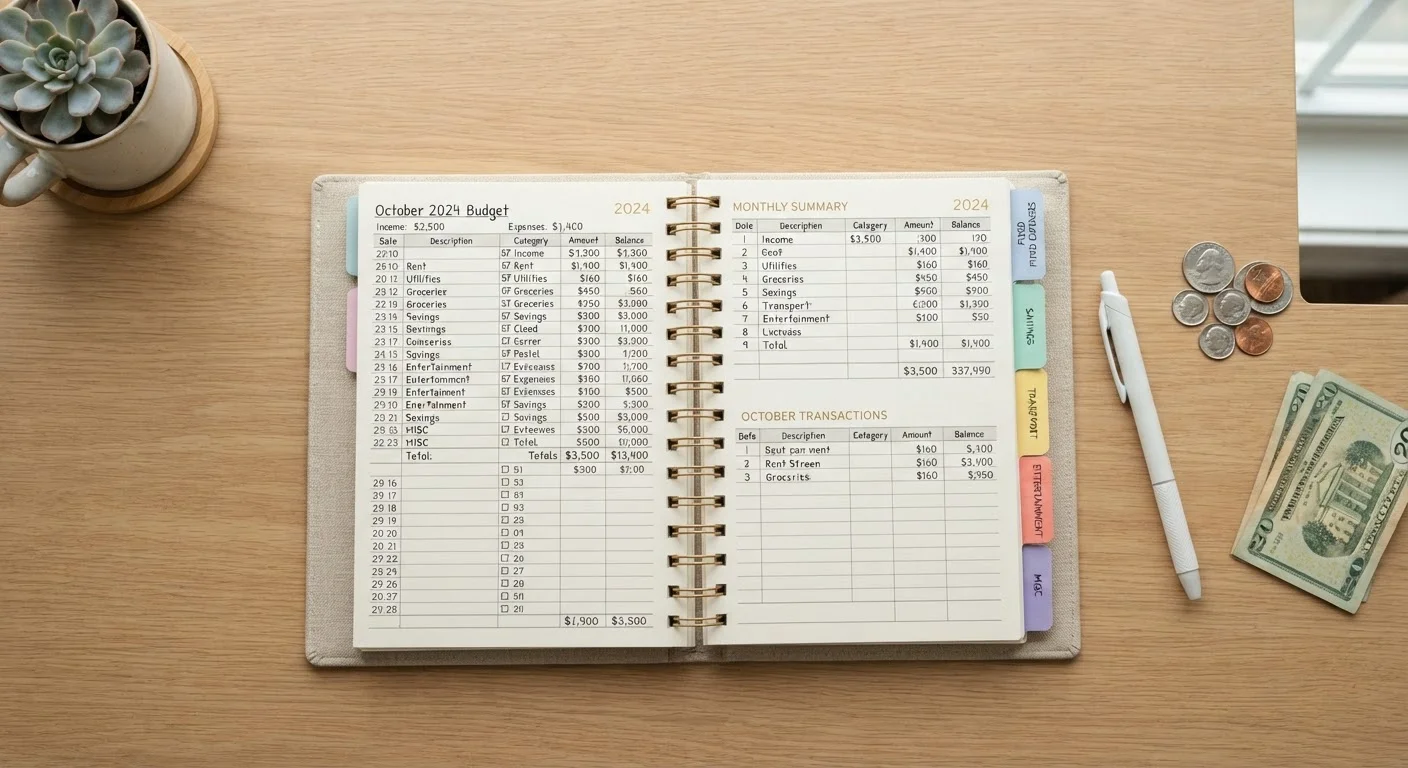
Photo: ConfiReads.com | Blogs For Inquisitive Minds editorial
Why Budgeting Terminology Matters
Personal finance advice is full of shorthand. You may hear "pay yourself first" in one podcast and "zero-based budgeting" in another, with little explanation of what either actually means in practice. Before choosing a budgeting method, it helps to understand what each term describes - and which framework might suit your income, lifestyle, and goals.
This glossary defines the most common budgeting concepts in plain English. It is general educational information, not personalized financial advice. For guidance specific to your situation, consider speaking with a qualified financial professional.
Zero-Based Budgeting
A method where every dollar of income is assigned a specific purpose - spending, saving, or debt payoff - so that total allocations equal total income. No dollar is left unaccounted for.
50/30/20 Rule
A budgeting guideline that allocates approximately 50% of after-tax income to needs, 30% to wants, and 20% to savings and debt repayment. Ratios can be adjusted to fit individual circumstances.
Pay-Yourself-First
A savings-first strategy where a set amount is moved into savings or investments automatically at the start of each pay period, before discretionary spending begins.
Envelope Budgeting
A cash-management system where money is divided into physical or virtual envelopes labeled by spending category. Spending in a category halts when its envelope is empty.
Values-Based Budgeting
A flexible approach that aligns spending allocations with the individual's personal priorities and life goals rather than preset percentage rules.
Anti-Budget
A simplified budgeting style that automates savings and fixed bills first, then allows free spending on whatever remains - minimizing the need for detailed category tracking.
Discretionary Spending
Non-essential expenditures, such as entertainment, dining out, and hobbies, that can be reduced without affecting basic needs.
Cash Flow
The net movement of money into and out of a household over a period of time. Positive cash flow indicates income exceeds expenses; negative cash flow means the opposite.
Looking for broader savings and investing vocabulary? See our saving and investing glossary for terms like APY, compound interest, and diversification.
Common Budgeting Methods, Defined
Each budgeting method below represents a distinct philosophy about how to organize and allocate your money. None is universally superior - the right fit depends on your habits, income regularity, and financial priorities.
| Most flexible method | Values-Based Budgeting |
| Best for detail-oriented planners | Zero-Based Budgeting |
| Lowest tracking effort | Anti-Budget / Pay-Yourself-First |
| Recommended emergency fund target | 3-6 months of essential expenses (Widely cited personal finance guideline) |
| Needs allocation in 50/30/20 | ~50% of after-tax income |
| Core budgeting starting point | Net (take-home) income, not gross pay |
Zero-Based Budgeting
Every dollar of income is assigned a specific job - expenses, savings, or debt repayment - so that income minus all allocations equals zero. The goal is deliberate awareness of every dollar, not spending everything you earn.
50/30/20 Rule
A percentage-based framework that divides after-tax income into three broad buckets: roughly 50% toward needs (housing, groceries, utilities), 30% toward wants (dining out, entertainment), and 20% toward savings and debt repayment. It is a starting point, not a rigid rule, and individual circumstances may call for different ratios.
Pay-Yourself-First (Reverse Budgeting)
Savings contributions are transferred automatically at the start of each pay period before any discretionary spending occurs. The remaining balance is available for living expenses. This approach prioritizes long-term goals without requiring detailed tracking of every purchase.
Envelope Budgeting
Cash is physically divided into labeled envelopes - one per spending category - at the beginning of the month. Spending stops when an envelope is empty. Digital apps now replicate this logic with virtual envelopes. See how envelope budgeting translates to the digital world for a deeper look at both approaches.
Values-Based Budgeting
Spending allocations are driven by what the individual genuinely values most - whether that is travel, family, health, or giving - rather than fixed percentage rules. It requires honest self-assessment before numbers are assigned.
Anti-Budget
A minimalist variation of pay-yourself-first: automate savings and fixed bill payments, then spend whatever remains without detailed tracking. It reduces friction but requires confidence that your fixed commitments are adequately covered.
No Single Method Works for Everyone
Ready to apply one of these methods? Our five-step budgeting walkthrough covers income tracking, expense categories, and realistic limit-setting for first-time budgeters.
Supporting Terms You Will Encounter
Understanding the methods above is easier once you know the foundational vocabulary that underpins them all.
~33%
Americans with a formal household budget
Gallup polling has consistently found that fewer than half of U.S. adults maintain a detailed household budget.
3-6 months
Recommended emergency fund coverage
Most personal finance educators recommend holding three to six months of essential expenses in accessible savings before other investment goals.
- Net Income
- Take-home pay after taxes and payroll deductions - the figure most budgets use as their starting point, not gross (pre-tax) income.
- Fixed Expense
- A recurring cost that stays the same each period, such as rent, a car payment, or a loan installment. Fixed expenses are typically the first items entered into any budget.
- Variable Expense
- A cost that fluctuates month to month, such as groceries, fuel, or utilities. Variable expenses are often the primary target for spending reductions.
- Discretionary Spending
- Non-essential purchases - dining out, subscriptions, hobbies - that can be reduced or eliminated without affecting basic needs.
- Emergency Fund
- A dedicated cash reserve for unexpected costs (medical bills, car repairs, job loss) that keeps unplanned expenses from derailing a budget. Many financial educators suggest building this before aggressively paying down non-emergency debt.
- Cash Flow
- The net difference between money coming in and money going out over a given period. Positive cash flow means income exceeds spending; negative cash flow means the reverse.
For a full reference on debt-related terms that intersect with budgeting - such as debt-to-income ratio and APR - visit our credit and debt glossary. And if you have heard that budgets are too restrictive or only for people in financial trouble, this myth-busting article addresses the most common misconceptions directly.
This article is for general informational and educational purposes only and does not constitute personalized financial advice. Consult a qualified financial professional before making decisions specific to your financial situation.
The content on this site is for informational purposes only and is not a substitute for professional advice. Always consult a qualified professional for guidance specific to your situation.