
Actual Cash Value vs. Replacement Cost Coverage: The Difference That Matters After a Claim

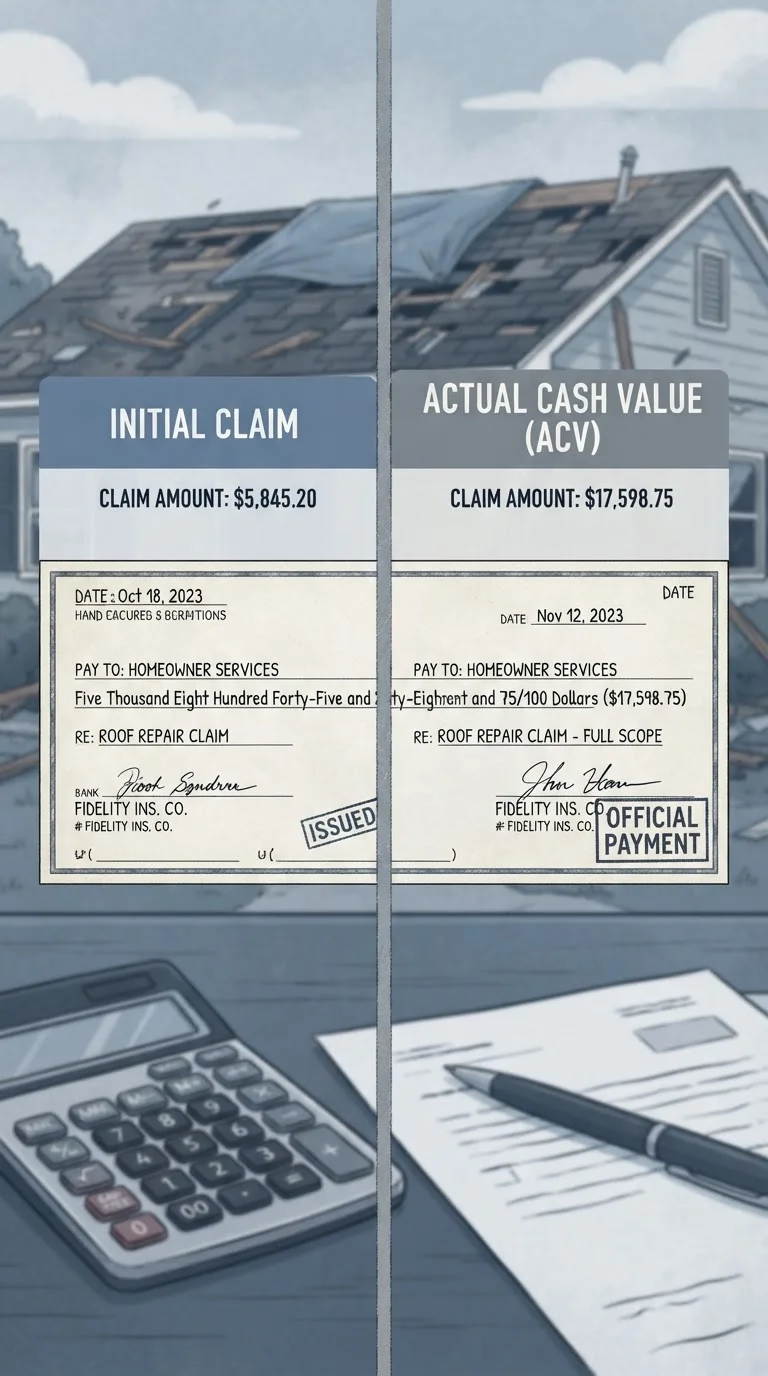
Photo: ConfiReads.com | Blogs For Inquisitive Minds editorial
Key Takeaways
- Actual Cash Value pays what your property is worth today, after depreciation is subtracted.
- Replacement Cost Value pays what it actually costs to buy a comparable new item - no depreciation deducted.
- The gap between ACV and RCV payouts can easily reach thousands of dollars on a single claim.
- RCV coverage typically costs more in premiums than ACV coverage.
- Your policy documents spell out which valuation method applies - always check before you file a claim.
- Some RCV policies release a depreciation holdback only after repairs or replacement are completed.
What Each Valuation Method Actually Means
Actual Cash Value (ACV) is calculated by taking what it would cost to replace your property and then subtracting depreciation - the reduction in value caused by age, wear, and obsolescence. If your five-year-old roof was damaged in a hailstorm, the insurer doesn't price out a brand-new roof. It prices one out and then deducts a percentage for every year that roof has been in service.
Replacement Cost Value (RCV) skips that depreciation step. The insurer pays what it actually costs to repair or replace the damaged property with a comparable new item at today's prices. That five-year-old roof gets replaced at current material and labor costs, with no age-related reduction.
Both methods still apply your policy's deductible before the check is written. For a deeper look at how deductibles interact with your final payout, see how deductibles, premiums, and out-of-pocket maximums work together.
| Criterion | Actual Cash Value (ACV) | Replacement Cost Value (RCV) |
|---|---|---|
| Depreciation applied? | Yes - subtracted from payout | No - paid at today's replacement cost |
| Typical premium cost | Lower | Higher |
| Payout amount | Lower - reflects worn value | Higher - reflects new replacement cost |
| Out-of-pocket gap after loss | Larger - policyholder absorbs depreciation | Smaller - insurer absorbs depreciation |
| Common use in auto insurance | Standard for total-loss claims | Generally not available for vehicles |
| Common use in home insurance | Often default for personal property | Standard for dwelling; endorsement for contents |
| Upfront payment process | Single payment after deductible | May require depreciation holdback release after repairs |
The Real-Dollar Gap: A Simple Example
Here's what the difference looks like in practice. Suppose a fire destroys a living room sofa that originally cost $1,800 and is four years old. The insurer estimates that comparable sofas cost $2,000 today and that furniture depreciates at roughly 10% per year.
- ACV payout: $2,000 − 40% depreciation = $1,200 (minus your deductible)
- RCV payout: $2,000 (minus your deductible)
That's an $800 gap on a single piece of furniture. Scale that across a house full of belongings - appliances, electronics, clothing, tools - and the shortfall can reach tens of thousands of dollars. How insurers calculate claim payouts explains the formulas in detail, including how depreciation schedules are set.
~20%
Typical annual depreciation on electronics
Consumer electronics are commonly depreciated at 20% or more per year by insurers, meaning a three-year-old laptop may be valued at less than half its original price under ACV.
$10,000+
Potential ACV vs. RCV gap on a home claim
On a significant homeowners claim involving roofing, appliances, and personal property, the difference between ACV and RCV payouts can exceed $10,000 depending on the age and scope of damaged items.
Where These Valuations Show Up in Your Policies
Both home and auto insurance use these valuation methods, but they apply differently depending on the coverage type.
Homeowners insurance: Dwelling coverage (the structure itself) is commonly written on an RCV basis. Personal property coverage - your belongings - may default to ACV unless you pay for an RCV endorsement. Check your declarations page carefully; the two can differ within the same policy.
Auto insurance: Total-loss payouts on collision and comprehensive claims are almost always based on ACV - specifically, the vehicle's fair market value at the time of loss. There is no standard RCV option for vehicles the way there is for home contents. For more on how those coverages work, see collision and comprehensive auto coverage.
Renters insurance: Personal property coverage defaults to ACV in many standard policies. Upgrading to RCV is usually available for a modest premium increase and is worth pricing out.
How to Find Your Policy's Valuation Method
The Depreciation Holdback: An RCV Detail Worth Knowing
Many RCV policies don't send the full replacement amount upfront. Instead, they pay the ACV first - the depreciated amount - and release the remaining depreciation holdback only after you've completed the repair or replacement and submitted proof. This protects insurers from paying out on work that never gets done.
What this means practically: you may need to front some money, complete the work, and then request the holdback reimbursement. If cash flow is tight, that gap can be stressful even with RCV coverage. Understanding this process upfront helps avoid surprises - hidden costs that catch people off guard after a claim covers this and other post-claim financial realities.
The bottom line: the valuation method in your policy is one of the most consequential details in your coverage. Read it before you need it, not after.
This article is for general informational purposes only and does not constitute personalized insurance, financial, or legal advice. Coverage terms, exclusions, and payout calculations vary by insurer and policy. Always review your actual policy documents and consult a licensed insurance agent or adviser for guidance specific to your situation.
The content on this site is for informational purposes only and is not a substitute for professional advice. Always consult a qualified professional for guidance specific to your situation.