
Deductibles, Premiums, and Out-of-Pocket Maximums: How They Interact

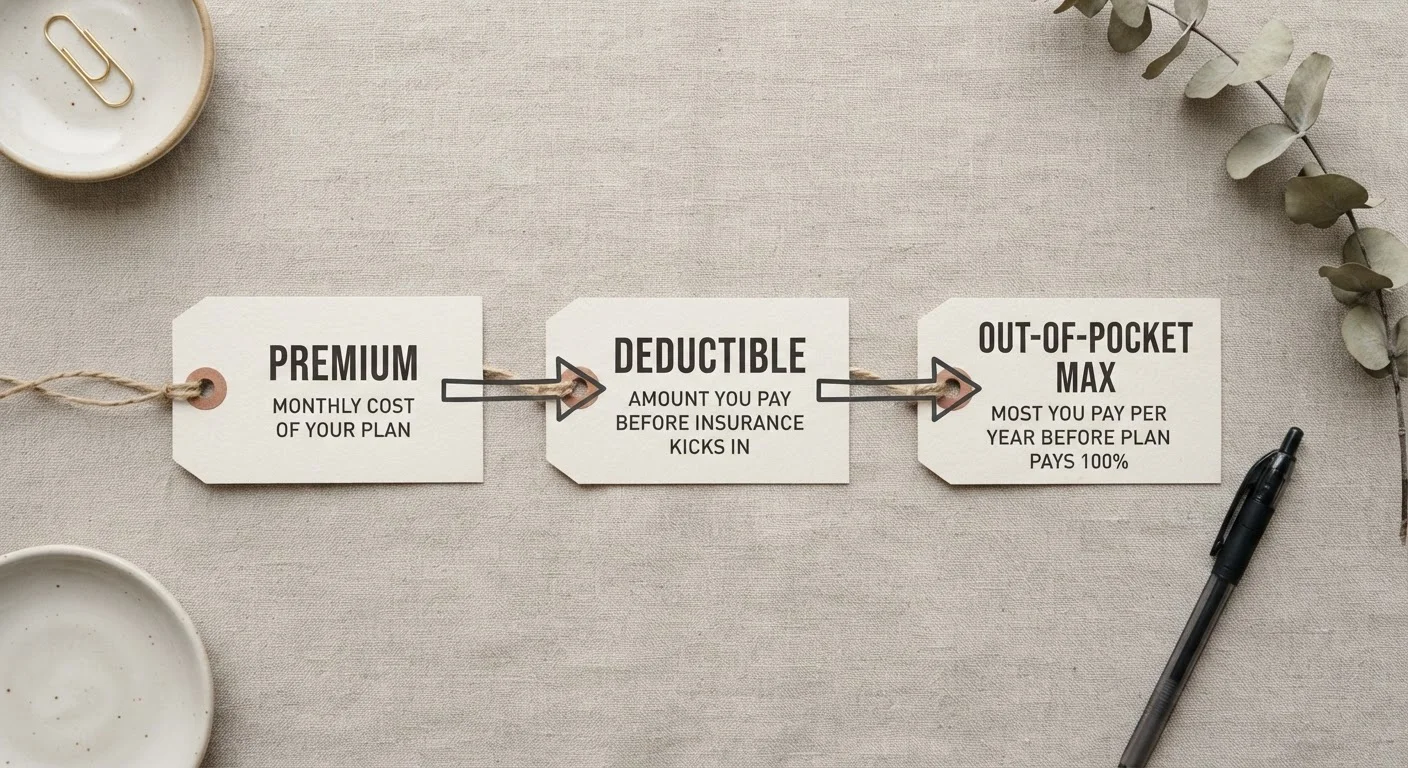
Photo: ConfiReads.com | Blogs For Inquisitive Minds editorial
Key Takeaways
- Premiums are paid whether or not you file a claim - they are the cost of maintaining coverage.
- Your deductible resets each policy year and must typically be met before most benefits kick in.
- The out-of-pocket maximum acts as a financial ceiling - once hit, covered care costs you nothing more.
- Lower premiums often mean higher deductibles and out-of-pocket maximums, and vice versa.
- Premiums generally do not count toward your deductible or out-of-pocket maximum.
- Understanding all three numbers together lets you estimate your realistic annual cost exposure.
What Each Number Actually Means
Before you can understand how these three figures interact, it helps to get each one straight. For a plain-language overview of all the cost terms you'll encounter across policy types, see Insurance Cost Terms Every Policyholder Should Know.
Premium: This is your monthly payment to the insurance company - essentially the price of having coverage at all. You owe it whether you use your policy or not. Missing payments can result in a lapse in coverage.
Deductible: This is the dollar amount you pay out of your own pocket on covered claims before the insurer starts contributing. If your health plan has a $1,500 deductible, you pay the first $1,500 of covered medical costs each policy year before your insurance begins sharing the bill.
Out-of-Pocket Maximum: This is the hard cap on how much you'll spend on covered expenses in a given policy year. Once your cumulative payments - deductible, copays, and coinsurance combined - reach this ceiling, the insurer picks up 100% of covered costs for the remainder of the year. Your monthly premiums continue regardless.
These Terms Appear Across Policy Types
How the Three Numbers Work Together
Think of the three figures as a sequence. First, you pay your premium to keep the policy active. Then, when a covered event occurs, you pay costs out of pocket until your deductible is met. After that, the insurer begins sharing costs through coinsurance or copays. Finally, if your total spending hits your out-of-pocket maximum, the insurer absorbs all remaining covered expenses for the year.
Here's a simplified example using a health plan:
- Monthly premium: $350
- Annual deductible: $2,000
- Coinsurance after deductible: 20% (insurer pays 80%)
- Out-of-pocket maximum: $6,000
If you have $10,000 in covered medical bills, you'd pay $2,000 (deductible) + 20% of the remaining $8,000 ($1,600 coinsurance) = $3,600. Add your annual premiums of $4,200, and your total outlay for the year is $7,800 - well below what you might expect without this framework.
For a deeper look at how copays and coinsurance layer onto deductibles, see Deductibles, Copays, and Coinsurance: What Each One Actually Costs You.
$1,763
Average individual health plan deductible (employer-sponsored, 2023)
According to the Kaiser Family Foundation 2023 Employer Health Benefits Survey, the average annual deductible for single coverage in employer-sponsored plans was approximately $1,763.
$9,450
ACA individual out-of-pocket maximum limit (2024)
The Affordable Care Act sets an annual cap on out-of-pocket maximums for in-network covered services; for 2024 that limit was $9,450 for individual coverage.
43%
Adults enrolled in high-deductible health plans (2022)
The National Center for Health Statistics reported that roughly 43% of adults under 65 with private insurance were enrolled in high-deductible health plans as of 2022.
The Trade-Off Between Premium and Deductible
Insurance companies essentially let you choose how to distribute your financial risk. A plan with a lower monthly premium typically shifts more risk to you in the form of a higher deductible and a higher out-of-pocket maximum. A higher-premium plan usually reduces those figures, so you pay more upfront each month but less when you actually need care.
Estimate Your Realistic Annual Cost
Neither approach is automatically better. Someone who rarely uses medical services may benefit from a low-premium, high-deductible plan - they accept the higher risk because the odds of hitting the deductible are low. Someone managing a chronic condition or expecting major procedures in the coming year may find a higher-premium plan with a lower deductible saves money overall.
To think through this trade-off carefully, High-Deductible Plans and Low-Deductible Plans: How the Trade-Off Really Works walks through concrete scenarios.
Why the Out-of-Pocket Maximum Often Gets Overlooked
Many people focus only on the premium and the deductible when comparing plans - and miss the out-of-pocket maximum entirely. That's a costly oversight. In a serious illness or injury year, the out-of-pocket maximum is the number that actually protects you from financial ruin. A plan with a $3,000 deductible and a $5,000 out-of-pocket maximum can be far safer than one with a $1,000 deductible and a $9,000 maximum, even if the premiums look similar.
It's also worth noting what does not count toward the out-of-pocket maximum in most plans: your monthly premiums, costs for out-of-network services (on plans with network restrictions), and expenses for services your plan doesn't cover. Confirm what your specific policy includes by reading your Summary of Benefits and Coverage document.
Out-of-Pocket Maximum vs. Deductible: The Number That Often Gets Overlooked explains the distinction in detail and why both figures matter when sizing up a plan.
“The premium is what you pay to play; the deductible and out-of-pocket maximum are what determine how the game is actually scored when something goes wrong.”
— Insurance Basics Editorial Team, Insurance consumer education writers
This article is for general informational purposes only and does not constitute personalized insurance, financial, or legal advice. Coverage terms, exclusions, and costs vary by insurer, policy, and state. Read your actual policy documents and consult a licensed insurance agent or adviser for guidance specific to your situation.
Frequently Asked Questions
The content on this site is for informational purposes only and is not a substitute for professional advice. Always consult a qualified professional for guidance specific to your situation.