
Home Living Tips

Keeping a Clean Home With Kids and Pets: Strategies That Actually Hold Up

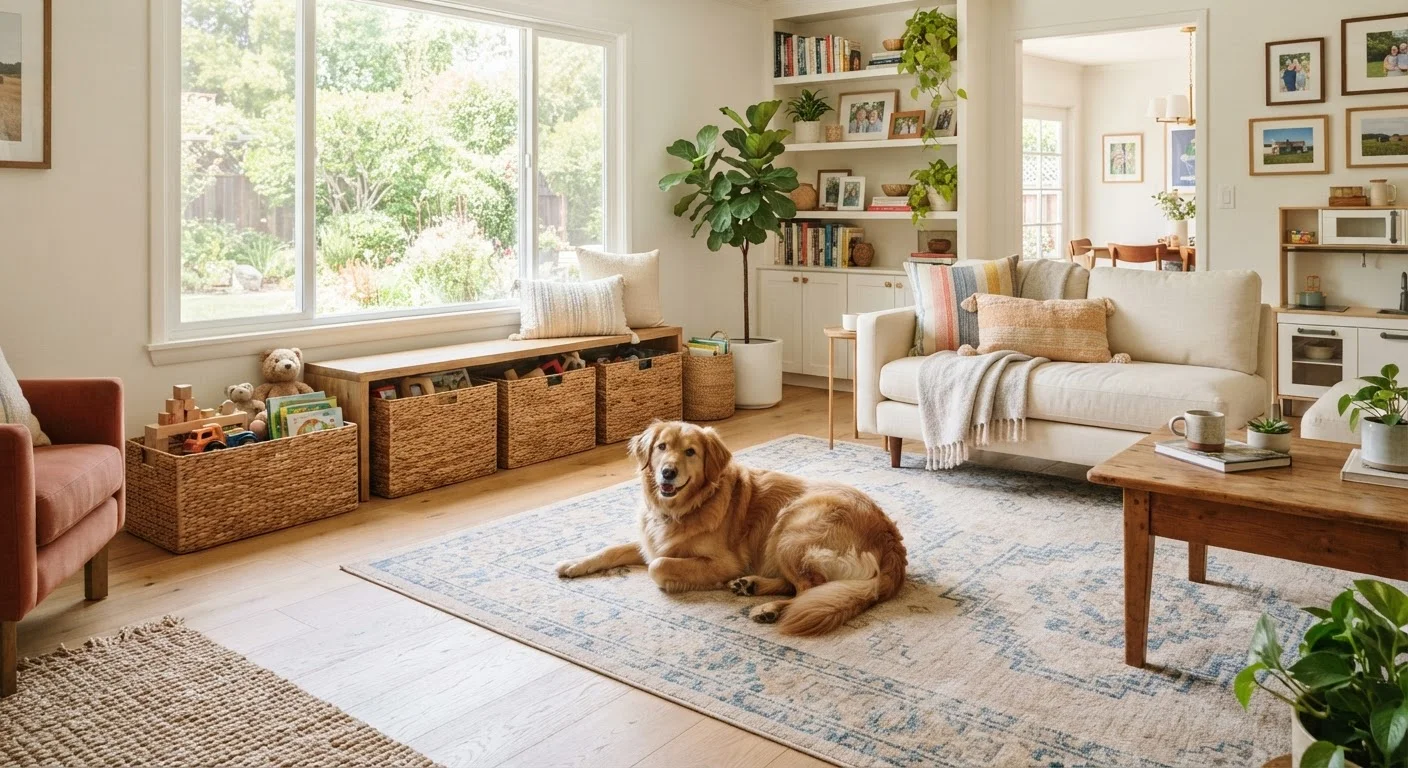
Keeping a Clean Home With Kids and Pets: Strategies That Actually Hold Up

Photo: ConfiReads.com | Blogs For Inquisitive Minds editorial

Realistic cleaning routines and material choices for households where mess is constant—without making home life feel like a chore marathon.

Key Takeaways

  • Choose hard-surface flooring or washable rugs to make daily cleanup dramatically faster.
  • Small, consistent daily habits prevent mess from compounding into overwhelming weekend projects.
  • Strategically placed storage containers reduce the time kids and adults spend tidying up.
  • Pet grooming done regularly at home cuts down significantly on shedding and tracked-in dirt.
  • Zone-based cleaning keeps effort focused and prevents the whole house from feeling unmanageable.

Why Standard Cleaning Advice Often Fails Busy Family Households

Most cleaning guides are written for homes without small children or animals—spaces where mess accumulates slowly and predictably. Add a toddler, a dog, or both, and that model collapses fast. The problem isn't effort; it's applying the wrong framework to a fundamentally different environment.

Households with kids and pets deal with a different kind of disorder: high-frequency, low-predictability mess. Muddy paw prints appear without warning. Snacks migrate to the couch. A freshly cleaned floor can look undone within the hour. Strategies that actually hold up in these conditions are built around short feedback loops, forgiving materials, and realistic expectations—not perfection.

For broader home upkeep planning, our seasonal maintenance guide helps identify which deeper tasks to schedule quarterly so daily cleaning stays lighter.

Best Practices for a Cleaner, More Manageable Home

The following practices are drawn from what consistently works in real family households—not idealized ones. Implement even a few of these and you'll notice a measurable difference within a week.

1

Establish a daily 10-minute reset instead of marathon cleaning sessions

Large, infrequent cleaning sessions are mentally exhausting and easy to skip. Short daily resets keep mess from compounding and make the home feel manageable without consuming evenings or weekends.
Example: Set a timer after dinner: kids return toys to bins, dishes go in the dishwasher, and pet food bowls get rinsed. The whole household is done in under ten minutes.
2

Place dedicated entry-zone stations at every door pets and kids use

Most household dirt and pet mess enters through just a few transition points. Intercepting it at the door—before it spreads—dramatically reduces the cleaning load for the rest of the home.
Example: A boot tray, a hook for leashes, a small basket for shoes, and a stack of old towels near the back door makes wiping paws and feet a reflexive two-second habit.
3

Use open-top bins and labeled containers for child-accessible toy and pet toy storage

Lids and complex storage systems create friction that means things don't get put away—especially by kids. Easy, obvious storage that requires no effort to open dramatically increases the likelihood items actually get returned to their place.
Example: A row of large canvas bins in the living room labeled by category (blocks, stuffed animals, art supplies) lets even a four-year-old clean up independently.
4

Brush and groom pets on a regular schedule to reduce shedding at the source

Pet hair on furniture, floors, and clothing is one of the top sources of mess in animal-owning households. Regular brushing removes loose fur before it migrates throughout the home, cutting vacuuming needs substantially.
Example: A short weekly brushing session outdoors or on an easy-to-clean surface can reduce visible fur accumulation by a noticeable margin for moderate-shedding breeds.
5

Assign cleaning zones so no single person carries the whole burden

When cleaning responsibility is vague, it tends to fall unevenly or not get done at all. Assigning specific zones to specific people—including age-appropriate tasks for children—distributes effort and builds household habits over time.
Example: An eight-year-old can be responsible for wiping down the bathroom sink and mirror each morning; a twelve-year-old can manage vacuuming a shared space twice a week.
6

Keep a stain kit stocked and within reach in main living areas

Speed is the single most important factor in stain removal. A kit that requires a trip to the laundry room or a search through cabinets introduces enough delay that stains set—especially on upholstery and carpet.
Example: A small caddy under the couch or in a side table drawer—holding a clean cloth, a spray bottle with diluted dish soap solution, and paper towels—puts treatment within arm's reach the moment a spill happens.

Quick Wins You Can Put in Place Today

You don't need a full system overhaul to start seeing results. The actions below are immediately doable and deliver a noticeable payoff without requiring a single trip to a store.

medium Put a laundry basket in every room where clothes or pet bedding accumulate, so nothing ends up on the floor waiting for a trip to the hamper.
high Move your cleaning supplies to the rooms where you use them most—bathroom cleaner under the bathroom sink, kitchen spray in the kitchen—so cleaning takes seconds, not a supply run.
high Wash your pet's bedding this week and establish a bi-weekly schedule going forward to reduce odors and allergen buildup throughout the home.
medium Set a recurring phone alarm for your 10-minute nightly reset so it becomes an automatic habit rather than a decision you have to make each evening.

If your home feels chronically short on storage space, the organizing strategies for compact homes guide offers layout-specific solutions worth pairing with these habits.

Materials and Surfaces Worth Prioritizing

Surface Choices Have Long-Term Payoffs

When replacing or choosing flooring, upholstery, or rugs, prioritize cleanability and durability over aesthetics alone. Families who select materials with pets and kids in mind typically spend significantly less time on maintenance over a five-year period than those who choose purely for looks. This is especially relevant for high-traffic areas like entryways, living rooms, and kitchens.

Flooring is one of the highest-impact decisions in a pet-and-kid household. Hard surfaces—luxury vinyl plank, tile, or laminate—are far easier to wipe down than carpet, which traps dander, odors, and stains. Our laminate vs. hardwood comparison walks through how these options compare on durability, moisture resistance, and cost for everyday families.

Where soft surfaces are unavoidable, choose machine-washable rugs and slipcovers. For upholstery, tightly woven microfiber and outdoor-grade fabrics resist both pet hair and spills better than loosely woven or velvet alternatives. These aren't luxury choices—they're practical ones that reduce cleaning frequency over the long run.

Pet owners should also pair smart material choices with regular grooming. Less shedding at the source means less cleanup everywhere else. See our guide to responsible pet ownership for grooming and daily care routines that support a cleaner home environment.

Washable Slipcovers Are a Practical Investment

Couch slipcovers designed for machine washing are widely available and far less expensive than reupholstering or replacing furniture. Running them through the wash every two to three weeks eliminates pet odors and visible hair without the need for repeated spot-cleaning. Look for options with a snug fit so they don't shift during daily use.

Home & Pets Editorial Team

ConfiReads.com | Blogs For Inquisitive Minds

Home & Pets Editorial Team is the collective byline for our editorial team and contributor network. Articles published under this byline or an editorial pen name are researched, written, and reviewed according to our editorial standards for clarity, consistency, and independence before publication.

Pet Care BasicsHome Living Tips
View author profile

The content on this site is for informational purposes only and is not a substitute for professional advice. Always consult a qualified professional for guidance specific to your situation.