
Laminate vs. Hardwood Flooring: A Practical Breakdown for Everyday Homeowners

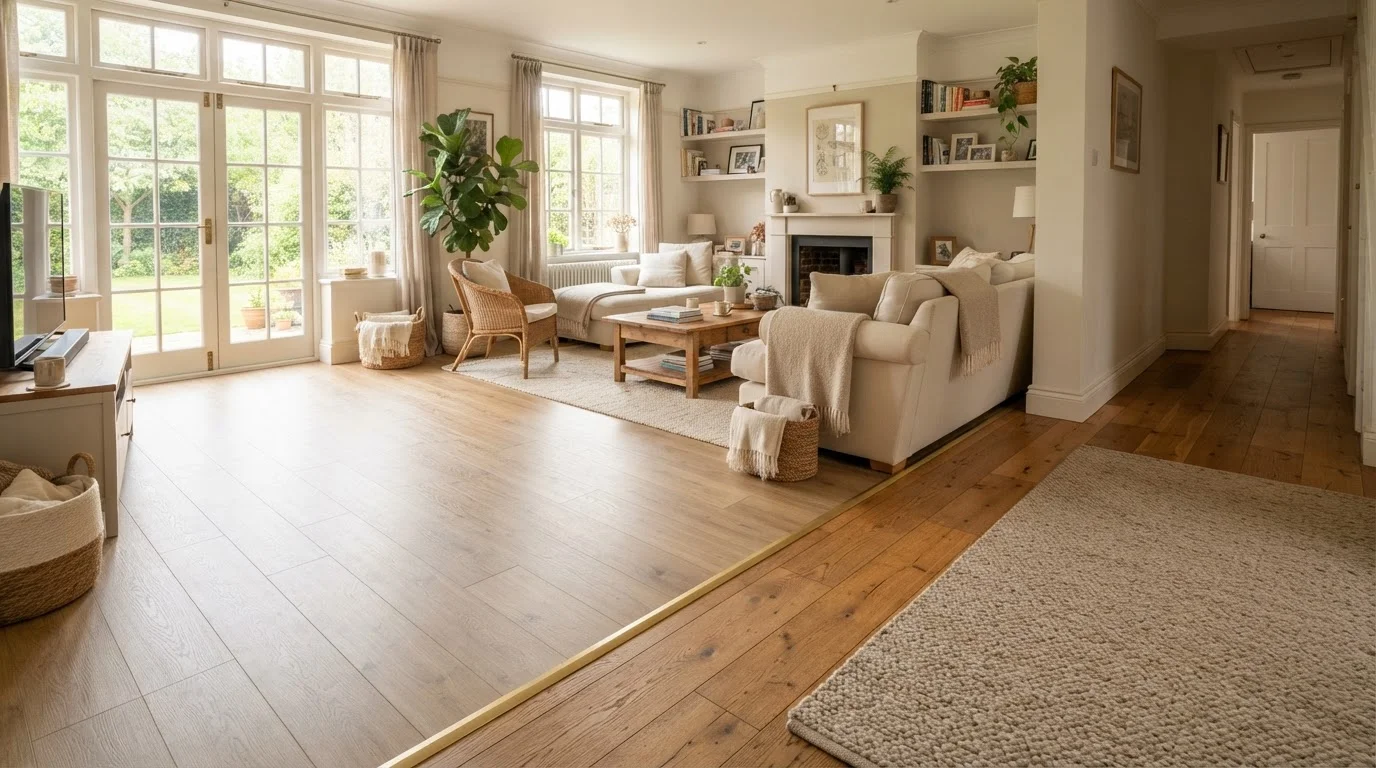
Photo: ConfiReads.com | Blogs For Inquisitive Minds editorial
Key Takeaways
- Hardwood flooring costs significantly more upfront but can be refinished multiple times, extending its lifespan for decades.
- Laminate resists moisture and scratches better than hardwood, making it more practical for high-traffic family areas.
- Hardwood generally adds more resale value to a home than laminate flooring.
- Neither flooring type is universally superior - the right choice depends on your budget, lifestyle, and room location.
- Installation costs differ meaningfully, with laminate being a more DIY-accessible option for budget-conscious homeowners.
The Core Difference Between Laminate and Hardwood
Hardwood flooring is milled from solid timber - species like oak, maple, and hickory are common - giving each plank a natural grain that's consistent from top to bottom. Laminate, by contrast, is an engineered product: a high-density fiberboard (HDF) core topped with a photographic layer that mimics wood grain, sealed under a protective wear layer.
That structural difference drives almost every practical tradeoff between the two. Hardwood can be sanded and refinished when it shows wear; laminate cannot be refinished and must be replaced when the surface layer is damaged. On the other hand, laminate's wear layer is typically more resistant to everyday surface scratches and moisture exposure than raw hardwood.
For families thinking about flooring as part of a broader home upkeep plan, it's worth reading our seasonal home maintenance checklist alongside this comparison - flooring care fits naturally into a room-by-room routine.
| Laminate | Hardwood | |
|---|---|---|
| Typical material cost | $1-$5 per sq ft | $6-$12 per sq ft |
| Installation difficulty | DIY-friendly click-lock | Professional install recommended |
| Lifespan | 15-25 years | 50-100 years with refinishing |
| Scratch resistance | High (AC3-AC4 rated) | Moderate; varies by species |
| Moisture resistance | Moderate to good | Low; prone to warping |
| Refinishable | No | Yes, multiple times |
| Resale value impact | Neutral to modest | Strong positive |
| Best room fit | Basements, playrooms, kitchens | Living rooms, bedrooms, offices |
Cost: Upfront Price vs. Long-Term Value
Hardwood flooring typically runs $6-$12 per square foot for materials, with professional installation adding another $3-$5 per square foot. Laminate materials generally cost $1-$5 per square foot, and because it uses a floating-floor click-lock system, many homeowners install it themselves, cutting labor costs significantly.
However, cost comparisons get more nuanced over time. A well-maintained hardwood floor can last 50-100 years with periodic refinishing. Laminate typically lasts 15-25 years before needing full replacement. If you're weighing flooring as part of a larger home budget, the Budgeting Basics hub has practical tools for thinking through major home improvement spending.
Get Quotes Before Deciding
Durability, Moisture, and Family Life
This is where laminate often outperforms its price point. Most laminate products carry an AC3 or AC4 rating (the industry's Abrasion Criteria scale), meaning they hold up well against furniture legs, pet claws, and dropped objects without showing damage as readily as hardwood.
Moisture is hardwood's biggest vulnerability. Solid hardwood expands and contracts with humidity changes, and standing water - think splashed dog bowls or a leaky dishwasher - can cause warping and cupping that requires professional repair. Laminate is more forgiving of moderate moisture, though it's still not appropriate for rooms with heavy, sustained water exposure like bathrooms without waterproof-rated products.
If pets and kids are in the picture regularly, our guide on keeping a clean home with kids and pets addresses which material choices reduce daily cleaning effort.
15-25 yrs
Typical laminate flooring lifespan
Industry estimates place quality laminate's functional life at 15-25 years before replacement is needed, compared to 50+ years for maintained hardwood.
$3-$5
Per sq ft for hardwood refinishing
Professional sanding and recoating of existing hardwood floors typically costs $3-$5 per square foot, often less than full replacement.
Resale Value and What Buyers Expect
Real estate professionals generally agree that hardwood flooring is a stronger selling point than laminate when a home goes to market. Buyers tend to perceive solid hardwood as a premium feature, and it often appears on listing descriptions as a highlight. Laminate, even high-quality laminate, is typically viewed as a practical but neutral feature.
That said, laminate installed in a move-in-ready condition is far preferable to worn or dated hardwood that needs immediate refinishing. If your hardwood floors have significant scratches, gaps, or dullness, refinishing them before listing is generally worth the investment - often running $3-$5 per square foot for professional sanding and recoating.
Homeowners carrying renovation costs through credit should review options carefully. The Debt & Credit hub offers straightforward guidance on managing home improvement financing responsibly. Also consider that flooring choices interact with other finish decisions - just as our article on paint finish types illustrates, matching materials to room function makes a real difference.
Which Rooms Suit Each Flooring Type
Rather than choosing one flooring type for an entire home, many households use both strategically:
- Hardwood works best in: living rooms, dining rooms, home offices, bedrooms, and hallways with low moisture exposure.
- Laminate works best in: basements, playrooms, mudrooms, kitchens (with waterproof-rated products), and any space that sees heavy foot traffic or frequent spills.
Avoid installing standard (non-waterproof) laminate in bathrooms or laundry rooms. Similarly, solid hardwood is generally not recommended below grade (basements) because of ground moisture and humidity fluctuations.
Check Moisture Levels Before Installing Either
The content on this site is for informational purposes only and is not a substitute for professional advice. Always consult a qualified professional for guidance specific to your situation.