
The Case For and Against Meal Planning

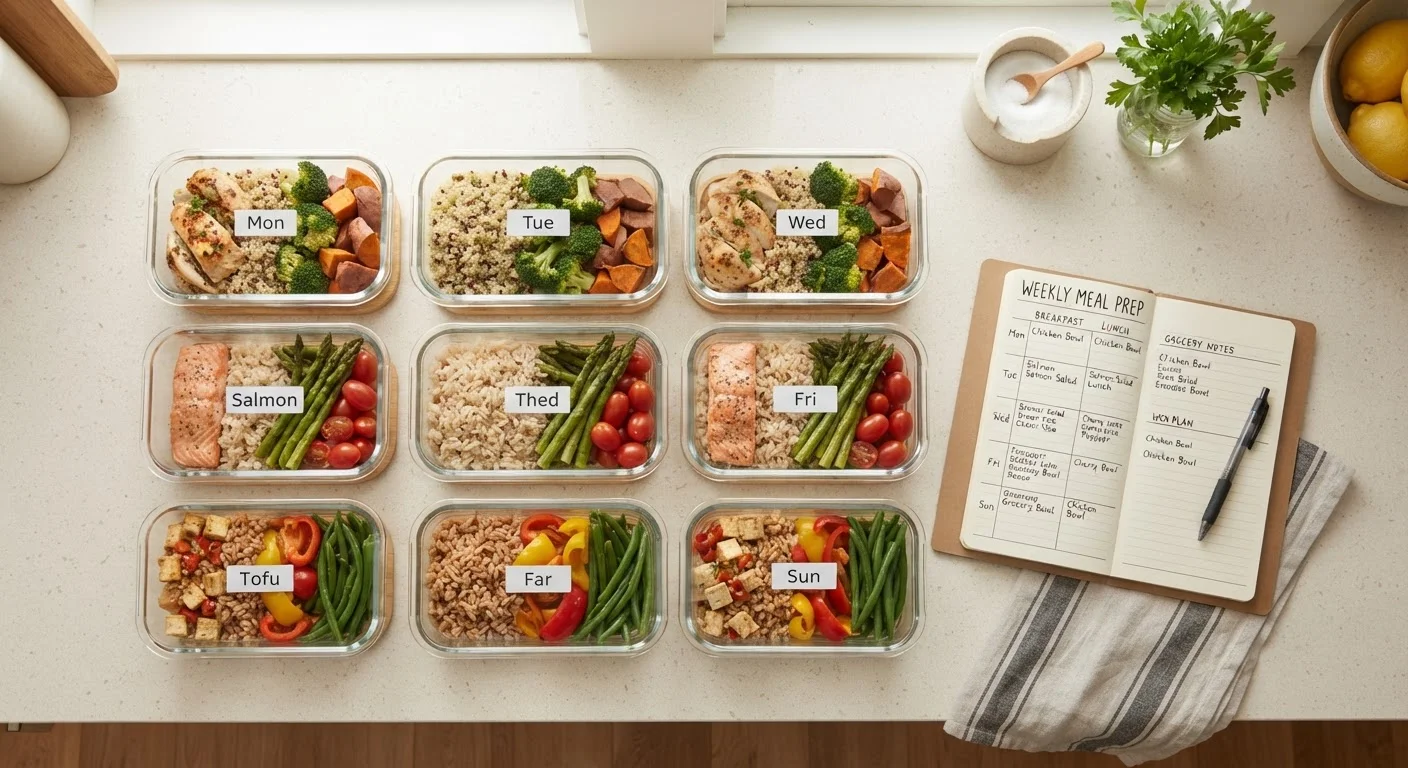
Photo: ConfiReads.com | Blogs For Inquisitive Minds editorial
Key Takeaways
- Meal planning can reduce food waste, lower grocery costs, and support more consistent nutritional intake.
- Rigid plans can backfire for people with unpredictable schedules or a history of disordered eating.
- A flexible, light-touch version of meal planning works better for many people than a strict daily script.
- The best approach is the one you can actually sustain - structure should serve your life, not complicate it.
Reduces daily decision fatigue around food choices
Having meals decided in advance removes the daily cognitive burden of figuring out what to eat, which research on decision fatigue suggests can lead to better choices overall.
Supports more consistent nutritional intake
Planned meals are more likely to include a variety of food groups and adequate nutrients than last-minute choices, which tend to default to convenience options.
Reduces food waste and grocery costs
Buying ingredients with a specific purpose reduces the chance of produce spoiling unused. Studies on household food waste consistently identify unplanned purchasing as a major contributor.
Makes it easier to manage dietary health goals
For people managing conditions like diabetes, hypertension, or high cholesterol through diet, planning meals in advance allows for more deliberate macronutrient and sodium management.
Lowers reliance on takeout and processed convenience foods
When there's a clear plan and ingredients in the fridge, the barrier to cooking at home drops - making it less likely that convenience food becomes the default.
Rigid plans break down with unpredictable schedules
Work demands, social invitations, and fatigue all disrupt even well-made plans. A missed day can create a cascade of off-script eating that makes the whole framework feel useless.
Can foster an unhealthy relationship with food
Strict adherence to a food plan can reinforce black-and-white thinking - where any deviation feels like failure. This pattern is particularly risky for individuals prone to restrictive or anxious eating behaviors.
Time investment is significant upfront
Effective meal planning requires planning time, a grocery run, and often batch cooking - a real cost for people already stretched thin on time and energy.
Doesn't account well for changing appetites or preferences
Planned meals don't adapt to how you actually feel on a given day. Eating food you don't want, or skipping food you do, can undermine the intuitive eating cues that support long-term healthy habits.
What Meal Planning Actually Means
Meal planning exists on a spectrum. At one end is full weekly scripting - every breakfast, lunch, and dinner mapped out in advance, with coordinated grocery lists and batch-cooking sessions. At the other is simply deciding tonight's dinner by noon. Most people land somewhere in the middle.
The appeal is intuitive: planning ahead reduces the daily cognitive load of deciding what to eat, makes grocery shopping more efficient, and can make it easier to stick to nutritional goals. But the practice isn't without real limitations, and it doesn't suit every lifestyle or personality equally. For a deeper look at how structure interacts with healthy eating principles, see evidence-informed meal structure guidance.
Reduces daily decision fatigue around food choices
Having meals decided in advance removes the daily cognitive burden of figuring out what to eat, which research on decision fatigue suggests can lead to better choices overall.
Supports more consistent nutritional intake
Planned meals are more likely to include a variety of food groups and adequate nutrients than last-minute choices, which tend to default to convenience options.
Reduces food waste and grocery costs
Buying ingredients with a specific purpose reduces the chance of produce spoiling unused. Studies on household food waste consistently identify unplanned purchasing as a major contributor.
Makes it easier to manage dietary health goals
For people managing conditions like diabetes, hypertension, or high cholesterol through diet, planning meals in advance allows for more deliberate macronutrient and sodium management.
Lowers reliance on takeout and processed convenience foods
When there's a clear plan and ingredients in the fridge, the barrier to cooking at home drops - making it less likely that convenience food becomes the default.
The Real Downsides Worth Knowing
Meal planning's weaknesses are less often discussed but genuinely matter. Life is unpredictable - a late work meeting, a spontaneous dinner invitation, or simply not wanting Tuesday's planned salmon can make a rigid plan feel like a liability rather than a resource.
Rigid plans break down with unpredictable schedules
Work demands, social invitations, and fatigue all disrupt even well-made plans. A missed day can create a cascade of off-script eating that makes the whole framework feel useless.
Can foster an unhealthy relationship with food
Strict adherence to a food plan can reinforce black-and-white thinking - where any deviation feels like failure. This pattern is particularly risky for individuals prone to restrictive or anxious eating behaviors.
Time investment is significant upfront
Effective meal planning requires planning time, a grocery run, and often batch cooking - a real cost for people already stretched thin on time and energy.
Doesn't account well for changing appetites or preferences
Planned meals don't adapt to how you actually feel on a given day. Eating food you don't want, or skipping food you do, can undermine the intuitive eating cues that support long-term healthy habits.
There's also a psychological risk. For people who already struggle with all-or-nothing thinking around food, a broken plan - skipping one planned meal or eating something off-script - can trigger a sense of failure that derails broader healthy eating efforts. The common pitfalls that undermine healthy eating often involve exactly this kind of over-structuring. Anyone with a history of disordered eating should approach rigid meal planning cautiously and consult a registered dietitian for personalized guidance.
Meal Planning and Disordered Eating
Finding the Version That Actually Works for You
The evidence most consistently supports a middle-ground approach: planning broadly rather than prescriptively. That might mean choosing four or five dinners for the week without assigning them to specific days, or stocking reliable staple ingredients that allow flexible, low-effort meals rather than scripting every bite.
~$1,500
Average annual household food waste cost
The USDA estimates the average American household wastes between $1,300 and $1,800 in food annually - a figure that meal planning is consistently cited as helping to reduce.
~35%
Adults who regularly plan weekly meals
Survey data from the International Food Information Council suggests roughly one-third of Americans report regularly planning their meals ahead of time.
This kind of light-touch planning captures most of the grocery-efficiency and decision-fatigue benefits while preserving the flexibility that makes eating sustainable. It also integrates naturally with the evidence base around dietary patterns - the kind explored in our comparison of Mediterranean, DASH, and plant-based diets, none of which require day-by-day meal scripts to be effective.
Meal planning is a means to an end, not a virtue in itself. If it reduces stress and supports better eating habits, use it. If it adds anxiety or feels punishing, scale it back. For anyone building eating habits from scratch, a grounded introduction to long-term healthy eating may be a more useful starting point than a rigid weekly plan.
This article is for general informational and educational purposes only and does not constitute medical or nutritional advice. Consult a qualified healthcare professional or registered dietitian for guidance tailored to your individual health needs.
The content on this site is for informational purposes only and is not a substitute for professional advice. Always consult a qualified professional for guidance specific to your situation.