
Popular Diet Patterns Side by Side: Mediterranean, DASH, and Plant-Based

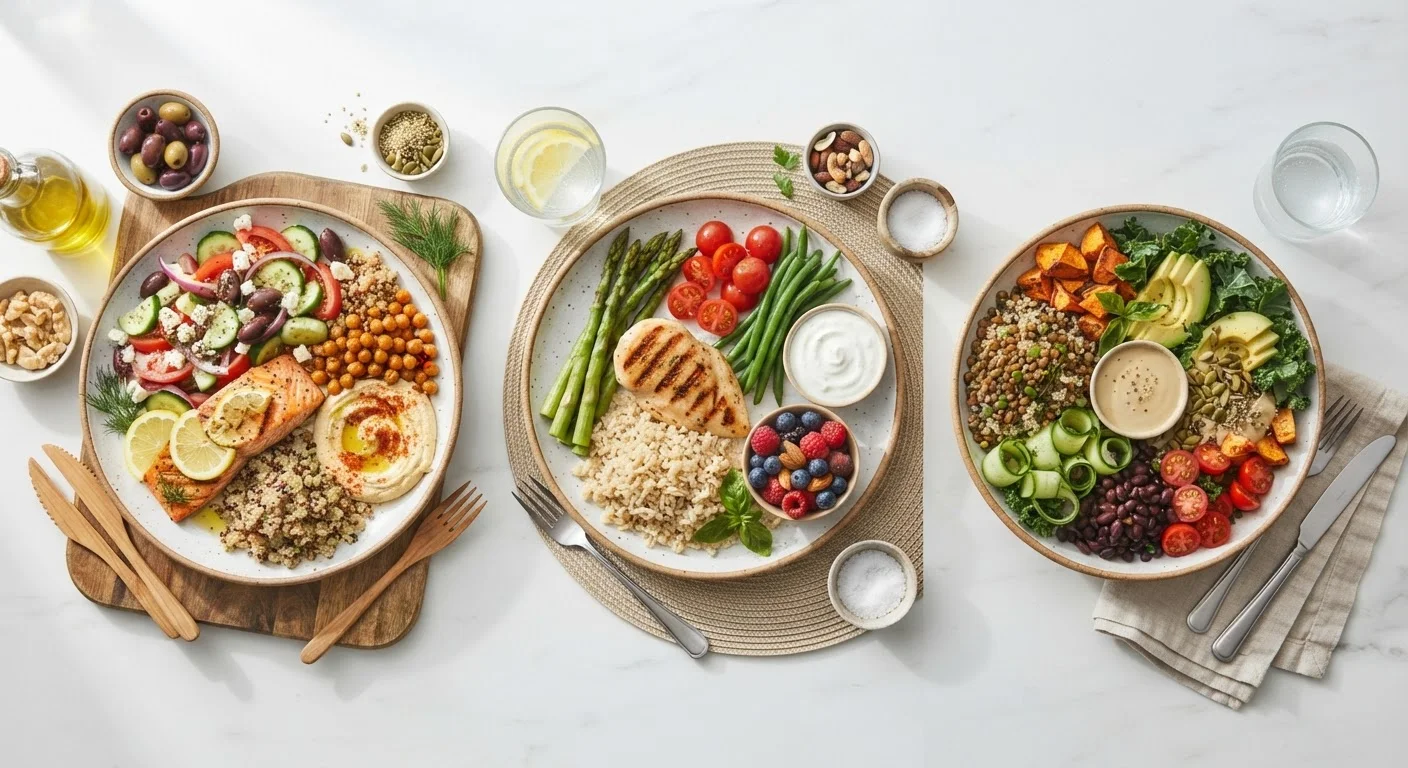
Photo: ConfiReads.com | Blogs For Inquisitive Minds editorial
Key Takeaways
- All three patterns emphasize whole foods, vegetables, and limiting highly processed items.
- The Mediterranean and DASH diets have the strongest long-term clinical evidence bases.
- Plant-based eating spans a wide spectrum from flexitarian to fully vegan approaches.
- No single pattern is universally superior - the best fit depends on individual health goals and lifestyle.
- Consult a registered dietitian or healthcare provider before making significant dietary changes.
Why These Three Patterns Stand Out
Hundreds of named diets compete for attention, but three stand apart in the nutrition research literature: the Mediterranean diet, the DASH (Dietary Approaches to Stop Hypertension) diet, and plant-based eating. Each has been studied across large populations and over meaningful time spans, giving researchers and clinicians more confidence in their findings than is typical for short-term weight-loss programs.
What unites all three is a shift away from ultra-processed foods toward vegetables, fruits, whole grains, and legumes. Where they differ is in their specific emphasis, flexibility, and the health outcomes they were most directly designed - or found - to support. For a foundational look at balanced eating principles, see A Grounded Introduction to Eating Well for the Long Term.
This comparison focuses on what each pattern actually involves, what the evidence shows, and where the practical tradeoffs lie - not on ranking them as good or bad.
Breaking Down Each Pattern
Mediterranean Diet
Rooted in the traditional eating habits of countries bordering the Mediterranean Sea, this pattern centers on olive oil as the primary fat source, abundant vegetables, legumes, whole grains, fish and seafood at least twice weekly, moderate dairy and poultry, and limited red meat. Moderate wine consumption is sometimes included in research descriptions, though it is not a recommended feature of the diet from a public health standpoint.
The PREDIMED trial - a large Spanish randomized study - found the Mediterranean diet associated with significantly reduced major cardiovascular events compared to a low-fat control diet. Evidence also links it to reduced risk of type 2 diabetes, cognitive decline, and all-cause mortality, though study designs vary.
DASH Diet
Developed specifically to address high blood pressure, DASH emphasizes fruits, vegetables, whole grains, low-fat dairy, lean proteins, nuts, and seeds while limiting sodium, saturated fat, and added sugars. It was designed with specific sodium targets, making it more prescriptive than the Mediterranean approach.
Clinical trials show DASH can meaningfully reduce systolic blood pressure - particularly at lower sodium levels - within weeks. It is consistently recommended by major cardiology and nutrition bodies in the United States.
Plant-Based Eating
This is a spectrum rather than a single protocol. At its broadest, plant-based simply means centering meals on plants while reducing animal products - it includes flexitarian, vegetarian, and vegan approaches. Whole-food plant-based eating (WFPB) specifically excludes or sharply limits refined foods and animal products.
Research associates plant-forward eating with lower body weight, reduced LDL cholesterol, and decreased risk of type 2 diabetes. Nutrient planning - particularly for vitamin B12, iron, calcium, zinc, and omega-3s - becomes more important as animal products are reduced. See our Nutrients Worth Knowing glossary for definitions of key terms.
| Mediterranean | DASH | Plant-Based | |
|---|---|---|---|
| Primary health focus | Cardiovascular health, longevity | Blood pressure reduction | Metabolic health, weight management |
| Animal products allowed | Yes - fish, poultry, dairy in moderation | Yes - lean protein, low-fat dairy | Reduced to eliminated depending on approach |
| Sodium guidance | No specific target | Explicit low-sodium targets | Varies; naturally lower with whole foods |
| Flexibility / adaptability | High | Moderate | Wide spectrum - low to high restriction |
| Nutrient planning required | Low to moderate | Moderate | Moderate to high (especially vegan) |
| Strength of clinical evidence | Very strong | Very strong | Strong, more variable by subtype |
| Environmental impact | Low to moderate | Low to moderate | Generally lowest |
Practical Considerations and Common Pitfalls
Understanding a dietary pattern on paper and applying it consistently are different challenges. Cost, cultural food traditions, cooking skills, and schedule all affect whether any eating pattern is sustainable for a given person.
Start With What You Already Eat
The Mediterranean and DASH diets tend to be easier to adapt to existing American eating habits because they don't eliminate any major food group. Plant-based eating, especially at the more restrictive end, may require more deliberate meal planning and label reading - skills worth building regardless of dietary pattern. Our guide to common pitfalls that make eating healthier harder covers frequent mistakes that apply across all three approaches.
It's also worth checking whether a food marketed as fitting these patterns actually does. Many products labeled "Mediterranean-inspired" or "plant-based" are still highly processed. Diet myths that nutrition research has moved past addresses some of the framing that makes evaluating these claims harder.
For people with specific health conditions - including hypertension, kidney disease, diabetes, or cardiovascular disease - the choice of eating pattern matters more and the details matter even more. In those cases, working with a registered dietitian is strongly advisable rather than self-directing based on general information.
This article is for general informational and educational purposes only and is not a substitute for personalized medical or nutritional advice. Consult a qualified healthcare professional or registered dietitian before making significant changes to your diet, particularly if you have an existing health condition.
The content on this site is for informational purposes only and is not a substitute for professional advice. Always consult a qualified professional for guidance specific to your situation.