
Building a Balanced Plate: Practical Principles Backed by Dietary Science

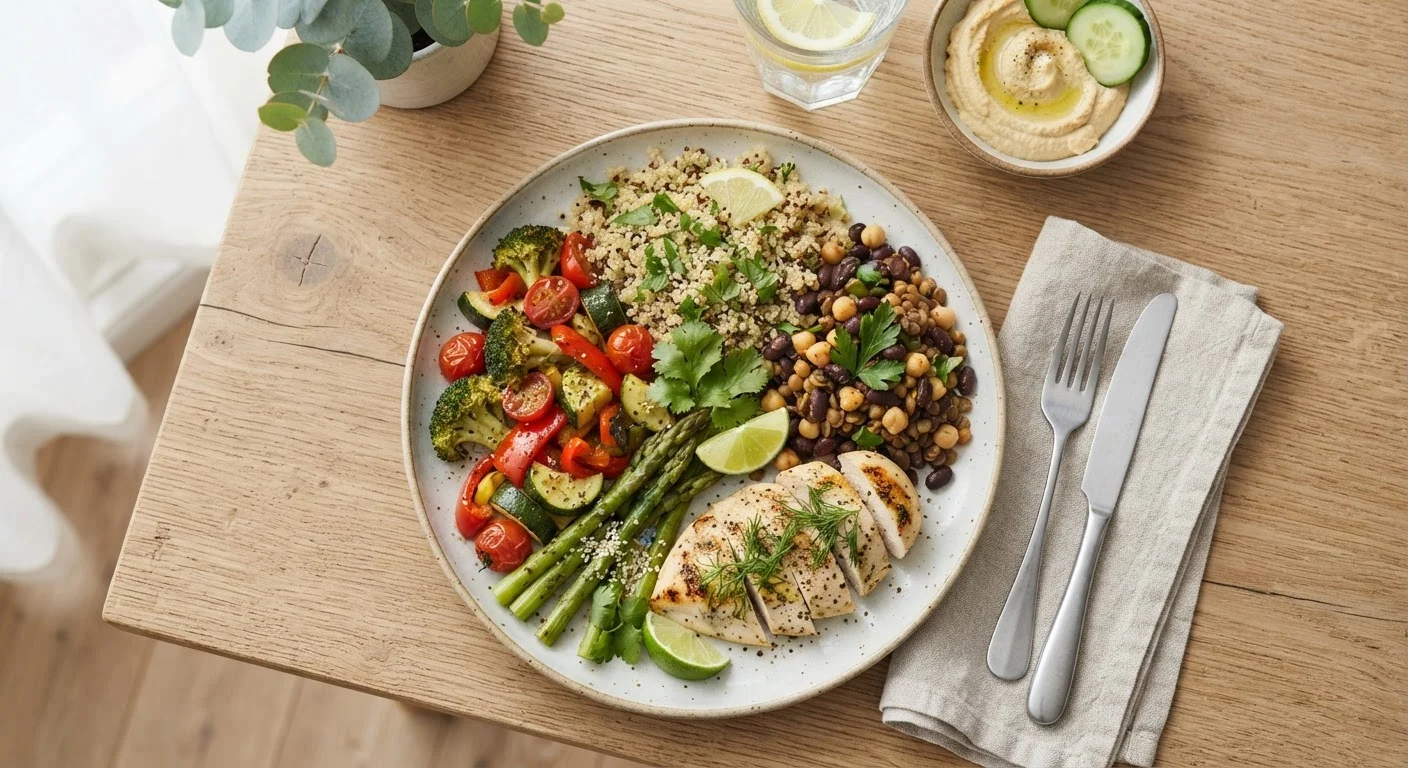
Photo: ConfiReads.com | Blogs For Inquisitive Minds editorial
Key Takeaways
- No single diet pattern works for everyone, but core principles of balance, variety, and proportion are broadly supported by evidence.
- Filling roughly half your plate with vegetables and fruits at most meals is one of the most consistently recommended dietary habits.
- Highly processed foods drive most excess sodium, added sugar, and unhealthy fats in the average American diet.
- Sustainable eating patterns focus on overall dietary quality over time, not individual meal perfection.
- Consulting a registered dietitian is the most reliable path to personalized nutrition guidance.
Why Dietary Advice Feels So Contradictory
Nutrition science is genuinely complex, and media coverage often amplifies single studies out of context - making evidence-based eating feel like a moving target. One week fat is the enemy; the next it's carbohydrates. In reality, most long-term nutrition research converges on a set of durable principles that hold up across dietary patterns, cultures, and decades of study.
Understanding those principles - rather than chasing the latest trend - is what actually moves the needle on long-term health. If you've ever wondered whether everything you've been told about eating is wrong, our guide on common nutrition myths is a useful companion to this article.
Individual Needs Genuinely Vary
The Core Framework: Proportion, Variety, and Quality
The most durable guidance from nutrition research can be organized around three concepts: proportion (how much of each food type you eat), variety (how diverse your food sources are), and quality (how minimally processed those foods are).
Fill roughly half your plate with vegetables and fruit at most meals.
Choose whole or minimally processed grains over refined versions most of the time.
Vary your protein sources and include plant-based options regularly.
Limit foods with high levels of added sugars, sodium, and industrially processed fats.
Drink water as your primary beverage and be mindful of liquid calories.
These principles align closely with well-studied dietary patterns like the Mediterranean and DASH approaches. For a deeper comparison, see our side-by-side look at those dietary patterns.
Quick Wins You Can Start Today
Improving dietary quality doesn't require a complete overhaul. Small, consistent changes - applied to real meals you already eat - tend to produce more lasting results than dramatic restrictions. The following starting points are grounded in what the research shows is practical and meaningful.
57%
Of U.S. calories from ultra-processed foods
A study published in BMJ Open estimated that ultra-processed foods account for approximately 57% of daily energy intake among U.S. adults.
1 in 10
U.S. adults meet vegetable intake recommendations
CDC data consistently show that only about one in ten American adults consumes the recommended daily amounts of vegetables.
Be aware that some of the most common efforts to "eat healthier" can backfire. Our piece on pitfalls that make healthy eating harder covers the traps worth knowing about.
Structure, Flexibility, and the Long Game
Consistent meal structure - eating at predictable times, building meals around recognizable components - supports both appetite regulation and dietary quality without requiring rigid rule-following. Research consistently shows that overall dietary patterns matter far more than any single food choice.
“The best diet is one you can maintain long term. Adherence matters more than perfection - a moderately good diet followed consistently outperforms an optimal diet followed sporadically.”
— Walter Willett, Professor of Epidemiology and Nutrition, Harvard T.H. Chan School of Public Health
That said, structure isn't equally useful for everyone. Meal planning can be a powerful tool for some, but it requires an honest assessment of your schedule, cooking skills, and lifestyle. Pairing good nutrition habits with regular physical activity compounds the benefit - the Fitness & Exercise hub offers practical starting points.
This article is for general informational and educational purposes only and is not a substitute for personalized medical or nutritional advice. Individual needs vary. Please consult a registered dietitian or qualified healthcare professional before making significant changes to your diet, especially if you have a health condition or are taking medication.
The content on this site is for informational purposes only and is not a substitute for professional advice. Always consult a qualified professional for guidance specific to your situation.