
Fitness Tracking: What Wearable Data Can Tell You - and Where It Falls Short

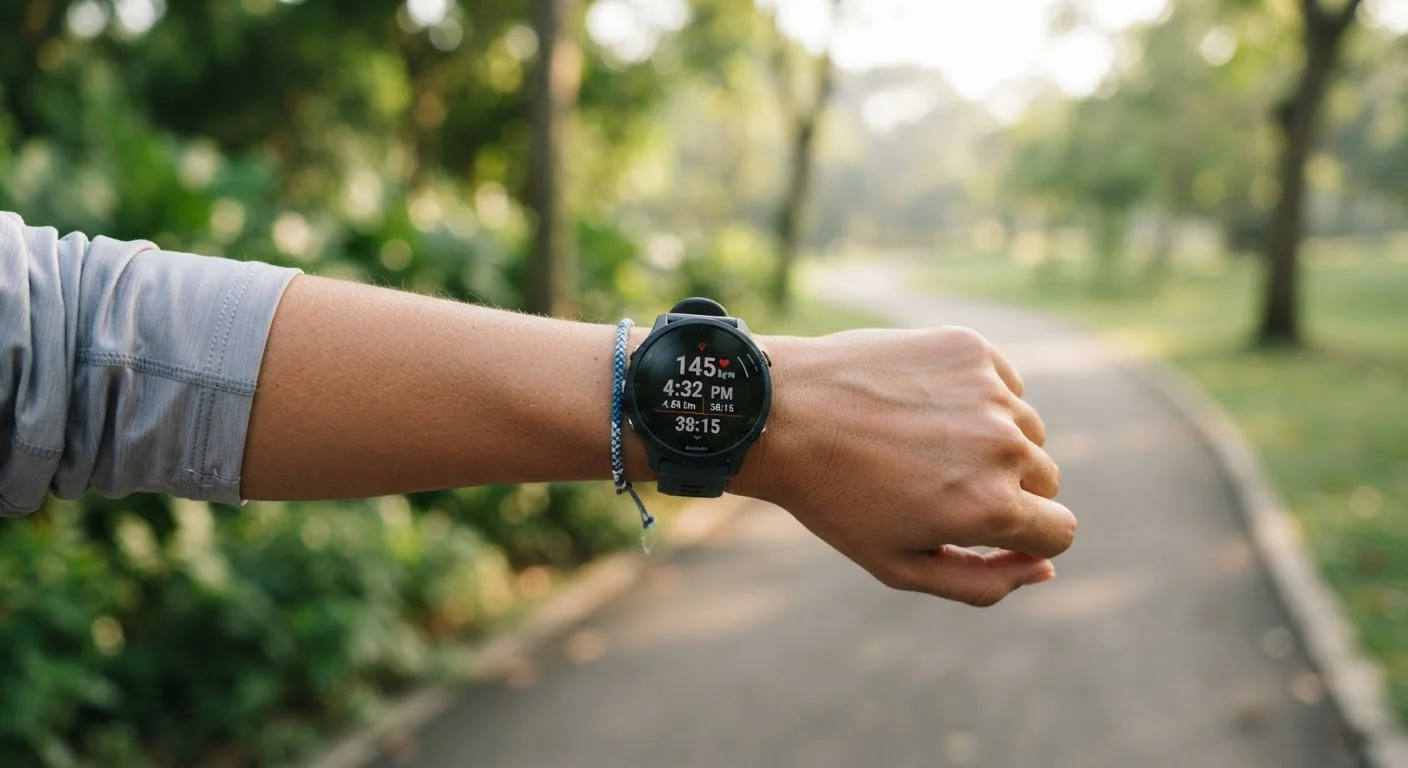
Photo: ConfiReads.com | Blogs For Inquisitive Minds editorial
Key Takeaways
- Fitness trackers are useful motivational tools but are not medical-grade diagnostic devices.
- Step counts and heart rate trends are generally reliable; calorie burn and VO2 max estimates are less so.
- Wearables work best as behavioral nudges, not precise performance benchmarks.
- Over-reliance on device data can undermine listening to your body's real signals.
- Consult a healthcare professional before making significant health decisions based on wearable metrics.
Boosts daily movement through passive accountability
Seeing real-time step counts and activity reminders motivates many people to move more without requiring deliberate planning. This nudge effect is one of the most consistently supported benefits in wearable research.
Tracks resting heart rate trends reliably
Resting heart rate, measured over days and weeks, is one of the more dependable wearable metrics. A sustained downward trend often reflects improving cardiovascular fitness; a spike can signal illness or overtraining.
Helps structure heart rate zone training
For aerobic workouts, keeping intensity within a target heart rate range is easier with real-time feedback. Even with some measurement error, wearables give exercisers a practical way to pace themselves.
Surfaces sleep pattern trends worth exploring
While sleep stage accuracy is limited, wearables can flag consistently short sleep duration or erratic schedules - useful starting points for a conversation with a healthcare provider.
Builds long-term habit through streaks and visualisation
Activity history and streak features tap into behavioral reinforcement principles. For users building new routines, this visual feedback can support consistency over weeks and months.
Calorie burn estimates carry large error margins
Independent studies have found wrist-worn trackers can overestimate calorie expenditure by 15-40% depending on device and activity type. Relying on these numbers to guide food intake can quietly undermine health goals.
VO2 max estimates are approximations, not clinical readings
Consumer wearables calculate aerobic capacity estimates using heart rate proxies rather than controlled testing. Stress, caffeine, and a loose wrist fit can all skew the result significantly.
Can encourage ignoring genuine body signals
When hitting a step goal or maintaining a streak takes priority, users may push through fatigue, soreness, or illness rather than resting - the opposite of what good training requires.
Sleep stage tracking accuracy remains limited
Wearables infer sleep stages from movement and heart rate, not brain activity. Research comparing consumer devices to clinical polysomnography shows meaningful discrepancies, particularly for light and REM stage detection.
Data anxiety and over-monitoring are real risks
For some users, constant metric tracking creates stress or obsessive behavior around numbers. This can erode the psychological enjoyment of exercise and create an unhealthy relationship with physical activity.
What Fitness Trackers Actually Measure
Modern wearables - from budget step counters to advanced smartwatches - collect data through a combination of accelerometers, optical heart rate sensors, GPS, and skin temperature readers. What they measure directly is actually quite narrow: movement patterns and changes in light absorbed by blood vessels. Everything else - calories burned, sleep stages, stress scores, VO2 max estimates - is derived through algorithms that translate raw signals into meaningful-sounding numbers.
That distinction matters. Step counting tends to be reasonably reliable on flat surfaces, though it can over- or undercount depending on wrist position, gait, and activity type. Resting heart rate trends, tracked consistently over time, are among the more dependable outputs a wearable provides. Metrics like "calories burned" and estimated aerobic capacity involve significant extrapolation - and that's where the limitations begin to accumulate.
For a broader look at how this category of device has evolved, see how fitness trackers have transformed over the past decade.
The Real Advantages of Wearing One
The strongest case for fitness trackers is behavioral, not clinical. Research consistently shows that self-monitoring increases physical activity - and wearables make self-monitoring nearly effortless. Seeing a step count nudges many people to take the stairs or walk an extra block in ways that abstract advice rarely does.
Boosts daily movement through passive accountability
Seeing real-time step counts and activity reminders motivates many people to move more without requiring deliberate planning. This nudge effect is one of the most consistently supported benefits in wearable research.
Tracks resting heart rate trends reliably
Resting heart rate, measured over days and weeks, is one of the more dependable wearable metrics. A sustained downward trend often reflects improving cardiovascular fitness; a spike can signal illness or overtraining.
Helps structure heart rate zone training
For aerobic workouts, keeping intensity within a target heart rate range is easier with real-time feedback. Even with some measurement error, wearables give exercisers a practical way to pace themselves.
Surfaces sleep pattern trends worth exploring
While sleep stage accuracy is limited, wearables can flag consistently short sleep duration or erratic schedules - useful starting points for a conversation with a healthcare provider.
Builds long-term habit through streaks and visualisation
Activity history and streak features tap into behavioral reinforcement principles. For users building new routines, this visual feedback can support consistency over weeks and months.
Heart rate zone tracking is another genuine benefit for people who want to exercise more purposefully. If you've been curious about Zone 2 cardio and why endurance coaches emphasize it, a wearable gives you a practical way to stay within a target range during workouts - even if the exact numbers carry some margin of error.
Sleep tracking, while imperfect, can surface broad patterns worth discussing with a doctor: consistently shortened sleep, erratic schedules, or elevated resting heart rate at night. Used that way, a wearable becomes a conversation starter rather than a self-diagnosis tool.
Where the Data Falls Short
Calorie burn estimates are among the least reliable outputs a fitness tracker produces. Independent studies have found that wrist-worn devices can overestimate energy expenditure by 15-40%, depending on the device and the activity. That margin is large enough to meaningfully distort decisions about food intake - a real concern for anyone trying to manage their weight through tracked numbers alone. For context on how fitness metrics can be misread, our piece on common fitness myths the evidence doesn't support covers related pitfalls.
Calorie burn estimates carry large error margins
Independent studies have found wrist-worn trackers can overestimate calorie expenditure by 15-40% depending on device and activity type. Relying on these numbers to guide food intake can quietly undermine health goals.
VO2 max estimates are approximations, not clinical readings
Consumer wearables calculate aerobic capacity estimates using heart rate proxies rather than controlled testing. Stress, caffeine, and a loose wrist fit can all skew the result significantly.
Can encourage ignoring genuine body signals
When hitting a step goal or maintaining a streak takes priority, users may push through fatigue, soreness, or illness rather than resting - the opposite of what good training requires.
Sleep stage tracking accuracy remains limited
Wearables infer sleep stages from movement and heart rate, not brain activity. Research comparing consumer devices to clinical polysomnography shows meaningful discrepancies, particularly for light and REM stage detection.
Data anxiety and over-monitoring are real risks
For some users, constant metric tracking creates stress or obsessive behavior around numbers. This can erode the psychological enjoyment of exercise and create an unhealthy relationship with physical activity.
VO2 max estimates - a measure of cardiovascular fitness - are another area where consumer wearables stretch their credibility. True VO2 max testing requires controlled lab conditions. Wearable estimates use heart rate variability and exercise data as proxies, which can be thrown off by caffeine, stress, or a poor wrist seal. Treat these numbers as rough benchmarks, not clinical assessments.
There's also a subtler risk: over-tracking can shift attention away from genuine body awareness toward chasing numbers. If you find yourself pushing through pain to hit a daily goal, or feeling anxious when you forget your device, the tracker may be doing more harm than good. See our guide to what's actually happening when progress stalls for perspective on interpreting fitness feedback honestly.
Using Wearable Data Wisely
The most useful frame for fitness tracker data is trends over time, not single-day snapshots. A resting heart rate that's crept up over two weeks, or a consistent drop in active minutes, is more meaningful than any individual reading. Use the data directionally.
When to Share Your Data With a Doctor
If your goal is simply to move more, you may not need sophisticated metrics at all. Adding movement to an ordinary day doesn't require a wearable - and for many people, simpler cues work just as well. Similarly, walking as a daily practice is one of the most evidence-backed forms of activity, and requires no device to implement.
15-40%
Typical calorie overestimation range for wrist wearables
Multiple independent validation studies comparing wrist-worn trackers to indirect calorimetry have found energy expenditure estimates frequently exceed measured values by this margin.
~30%
Increase in physical activity linked to self-monitoring
A review published in the British Journal of Sports Medicine found that self-monitoring interventions, including wearable devices, were associated with meaningful increases in daily step counts.
If you do use a wearable, treat its outputs as one input among several - alongside how you feel, how you're recovering, and what a healthcare provider or certified fitness professional tells you. That combination is far more reliable than any algorithm alone.
This article is for general informational purposes only and does not constitute medical or fitness advice. Consult a qualified healthcare professional before making decisions about your health or fitness regimen based on wearable device data.
The content on this site is for informational purposes only and is not a substitute for professional advice. Always consult a qualified professional for guidance specific to your situation.