
Aggressive Driving vs. Road Rage: Where One Ends and the Other Begins

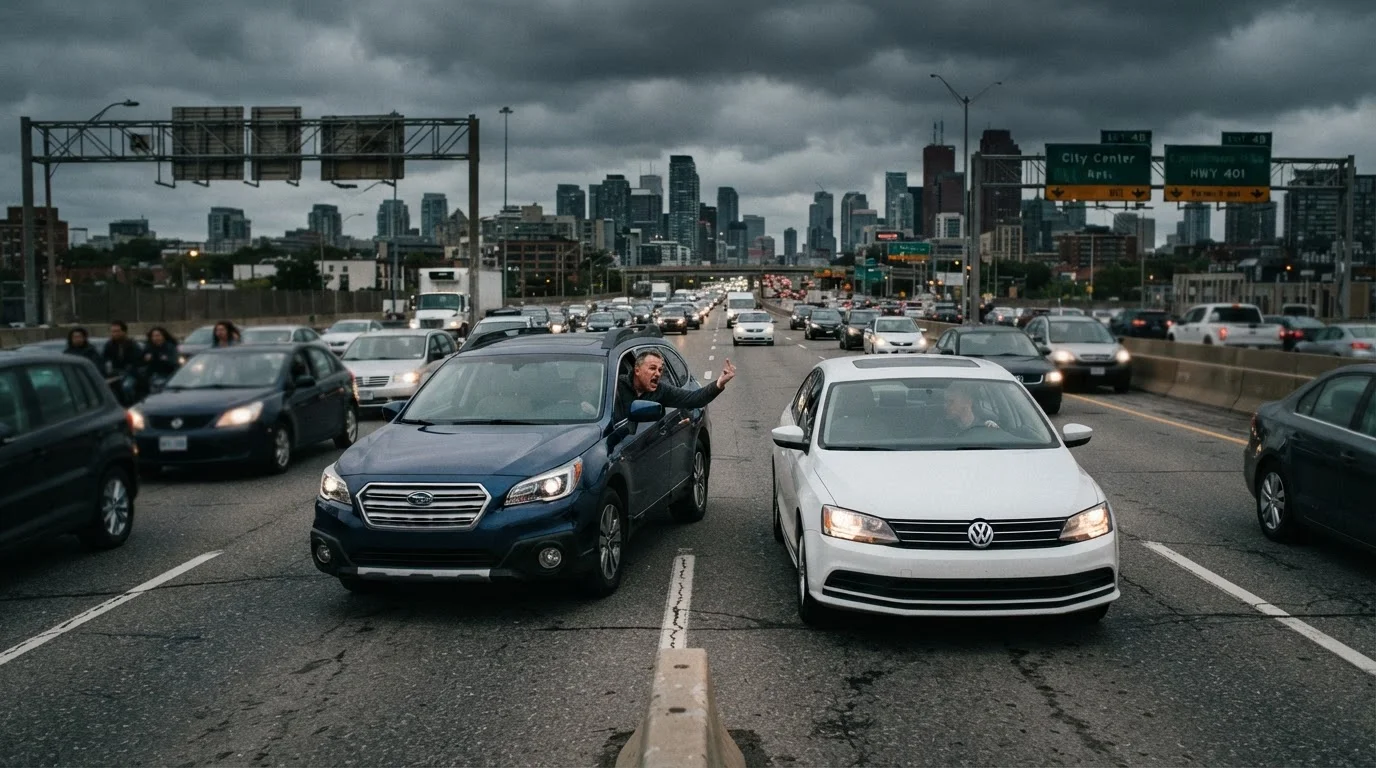
Photo: ConfiReads.com | Blogs For Inquisitive Minds editorial
Key Takeaways
- Aggressive driving is a traffic offense; road rage is a criminal act - the legal distinction is significant.
- Aggressive driving involves risky behaviors like tailgating or running red lights; road rage involves intentional threats or physical acts.
- Emotional escalation is the bridge between the two - recognizing it early is the key to staying safe.
- De-escalation strategies like avoiding eye contact and creating space can defuse dangerous encounters.
- Drivers who feel threatened should not stop or confront the other driver - call 911 when safe to do so.
Defining the Two: Legal and Behavioral Differences
The terms aggressive driving and road rage are often used interchangeably, but they represent meaningfully different behaviors - legally and psychologically. Understanding the distinction matters for both your safety and your awareness of potential consequences.
Aggressive driving is generally defined under traffic law as operating a vehicle in a way that endangers people or property. The National Highway Traffic Safety Administration (NHTSA) classifies it as a traffic offense, typically involving combinations of speeding, following too closely (tailgating), making unsafe lane changes, running red lights, and failing to yield. Most states codify these as moving violations that can result in fines, points on a license, or license suspension.
Road rage, by contrast, is a criminal behavior. It occurs when a driver deliberately uses their vehicle or another means to threaten, intimidate, or harm another person. Examples include brake-checking with intent to cause a collision, exiting a vehicle to confront another driver, or using a weapon. Road rage incidents can result in assault, reckless endangerment, or even vehicular homicide charges - these are not traffic matters.
| Criterion | Aggressive Driving | Road Rage |
|---|---|---|
| Legal classification | Traffic offense | Criminal act |
| Intent | Reckless or impatient | Deliberate threat or harm |
| Common behaviors | Tailgating, speeding, unsafe lane changes | Brake-checking, physical confrontation, weapons |
| Typical consequences | Fines, license points, suspension | Assault charges, criminal prosecution |
| Trigger | Impatience, distraction, habit | Emotional escalation, perceived disrespect |
| Can escalate to the other? | Yes - if intent shifts to threat | Starts where aggressive driving leaves off |
The legal boundary is important: aggressive driving can become road rage when intent shifts from reckless disregard to deliberate threat. That shift can happen quickly under emotional pressure.
How Escalation Happens - and How to Stop It
Most road rage incidents don't start as rage. They begin with an aggressive driving act - a cut-off, a horn blast, a close tailgate - and escalate through a cycle of perceived disrespect and emotional reaction. The driver who was cut off speeds up to return the slight. The other driver responds. Within seconds, what was a traffic nuisance has become a mutual confrontation.
80%
Drivers who experienced road rage
According to AAA Foundation for Traffic Safety research, roughly 80% of drivers reported experiencing significant anger or aggression from other drivers in the prior year.
~30
Deaths annually linked to road rage
The AAA Foundation has estimated that aggressive driving and road rage contribute to dozens of fatal incidents each year in the United States.
Recognizing your own emotional triggers while driving is the first line of defense. If you find yourself speeding up to "teach someone a lesson," or fixating on another driver's behavior, you are in the escalation zone. The same defensive driving principles that reduce crash risk also reduce conflict: scan ahead, anticipate errors, and give other drivers the benefit of the doubt.
When another driver is behaving aggressively toward you, the response that saves lives is consistent: do not engage. Avoid eye contact, do not respond to gestures, and create physical distance between vehicles. If the behavior continues or escalates toward threats, drive to a public, populated location - not your home - and call 911. Never stop on the side of a highway to confront another driver.
If You Feel Followed or Threatened
Practical Steps for Safer Encounters
Understanding the legal line between aggressive driving and road rage helps you calibrate your response - and your own behavior. Here's what every driver should keep in mind:
- Self-audit your habits: Tailgating, cutting lanes without signaling, and prolonged horn use are aggressive driving behaviors that provoke others. Correcting them reduces your legal exposure and your likelihood of triggering another driver. See our guide to safe lane changes and merging for practical technique.
- Don't escalate: If someone acts aggressively toward you, yielding space is not weakness - it's risk management. A confrontation is never worth the physical or legal outcome.
- Know when it's criminal: If another driver exits their vehicle, follows you, or brandishes anything as a weapon, this is no longer a traffic situation. It is a criminal emergency. Call 911.
- Manage stress before you drive: Fatigue, time pressure, and pre-existing frustration are the fuel for aggressive behavior. Allow extra travel time and treat any driving session as a low-stress task when possible.
The broader picture is covered in our complete road safety guide for American drivers, which addresses everything from traffic laws to situational hazard awareness.
This article is for general informational and educational purposes only. For questions about specific traffic laws or criminal statutes in your state, consult a licensed legal professional or your state's department of motor vehicles.
The content on this site is for informational purposes only and is not a substitute for professional advice. Always consult a qualified professional for guidance specific to your situation.