
Index Funds and ETFs: The Case for Passive Investing

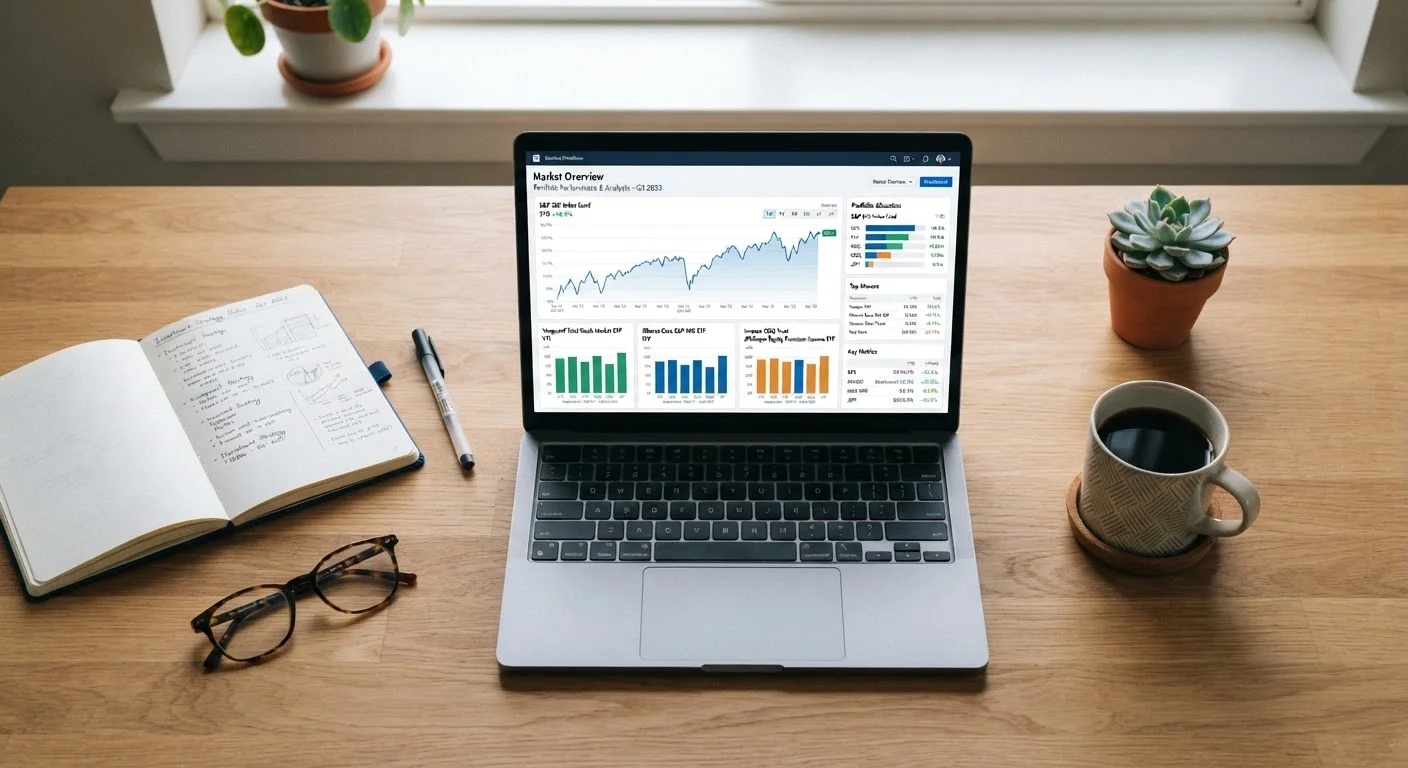
Photo: ConfiReads.com | Blogs For Inquisitive Minds editorial
Key Takeaways
- Index funds and ETFs track a market index, giving investors broad diversification in a single holding.
- Both typically carry lower fees than actively managed funds, which can significantly improve long-term returns.
- ETFs trade like stocks throughout the day; traditional index mutual funds price once daily.
- Passive investing generally outperforms most actively managed funds over long time horizons.
- Either vehicle can be held inside tax-advantaged accounts like IRAs and 401(k)s.
What Passive Investing Actually Means
Most investment funds fall into one of two camps: active or passive. Actively managed funds employ professional managers who research and select individual stocks or bonds, aiming to beat the market. Passive funds, by contrast, simply mirror an index - a predefined list of securities, such as all companies in the S&P 500 - without trying to outsmart it.
The passive approach is grounded in a well-established body of research suggesting that, over long periods, most actively managed funds fail to consistently outperform their benchmark indexes after fees are factored in. Rather than trying to pick winners, passive investors accept market returns and focus on minimizing costs.
~$13T
Assets in U.S. index mutual funds and ETFs
According to Investment Company Institute data, index fund and ETF assets in the U.S. have grown dramatically over the past two decades as passive investing gained mainstream acceptance.
~90%
Active large-cap funds underperforming the S&P 500 over 20 years
S&P Dow Jones Indices' SPIVA U.S. Scorecard has repeatedly shown that the vast majority of actively managed large-cap funds trail the S&P 500 over 20-year periods after fees.
<0.10%
Typical annual expense ratio for many broad-market index ETFs
Many of the largest index ETFs charge annual fees well below 0.10%, compared to average actively managed equity fund expense ratios that can exceed 0.60%-1.00% per year.
If you're building a foundation in investing, our article Your First Year of Investing explains the core concepts worth understanding before you begin.
How Index Funds and ETFs Work
Both index funds and ETFs are pooled investment vehicles - they collect money from many investors and use it to buy a basket of securities that mirrors an index. A fund tracking the S&P 500, for example, holds shares in all 500 companies weighted by their market size.
The practical difference lies in how they're bought and sold. Traditional index mutual funds are purchased directly through a fund company or brokerage at a price calculated once at the end of each trading day. ETFs trade on exchanges just like individual stocks, so their price fluctuates throughout the day and investors can buy or sell shares at any moment during market hours.
Watch Your Expense Ratio Before You Buy
Both structures expose investors to broad market segments - domestic stocks, international equities, bonds, and more - through a single purchase. For definitions of key terms like expense ratio and diversification, see our personal finance glossary.
The Cost Advantage: Why Fees Matter So Much
One of the most compelling arguments for index funds and ETFs is cost. Because passive funds don't require a team of analysts making constant trading decisions, their expense ratios - the annual fees charged as a percentage of assets - tend to be a fraction of those charged by actively managed funds.
This might seem like a minor detail, but compounded over decades, even a 1% annual fee difference can translate into tens of thousands of dollars in lost returns on a long-term portfolio. Lower costs mean more of the market's returns stay with you rather than flowing to the fund company.
Understanding how fees compound over time is especially important as you think about investing across different life stages, when time horizons and goals shift.
Putting It Into Practice
Index funds and ETFs can be held in virtually any investment account - taxable brokerage accounts, traditional and Roth IRAs, and in many cases employer-sponsored 401(k) plans. This flexibility makes them accessible to a wide range of investors at different stages of their financial lives.
Many investors combine passive funds with automated contribution strategies to reduce emotional decision-making and maintain consistent habits. Our article on automating your investments examines the trade-offs of that approach in more detail.
ETFs and Tax Efficiency
This article is for general informational and educational purposes only and does not constitute personalised financial, investment, tax, or legal advice. All investing involves risk, including the possible loss of principal. Past performance does not guarantee future results. Consult a qualified, licensed financial adviser before making investment decisions.
Frequently Asked Questions
The content on this site is for informational purposes only and is not a substitute for professional advice. Always consult a qualified professional for guidance specific to your situation.