
High-Deductible Plans and Low-Deductible Plans: How the Trade-Off Really Works

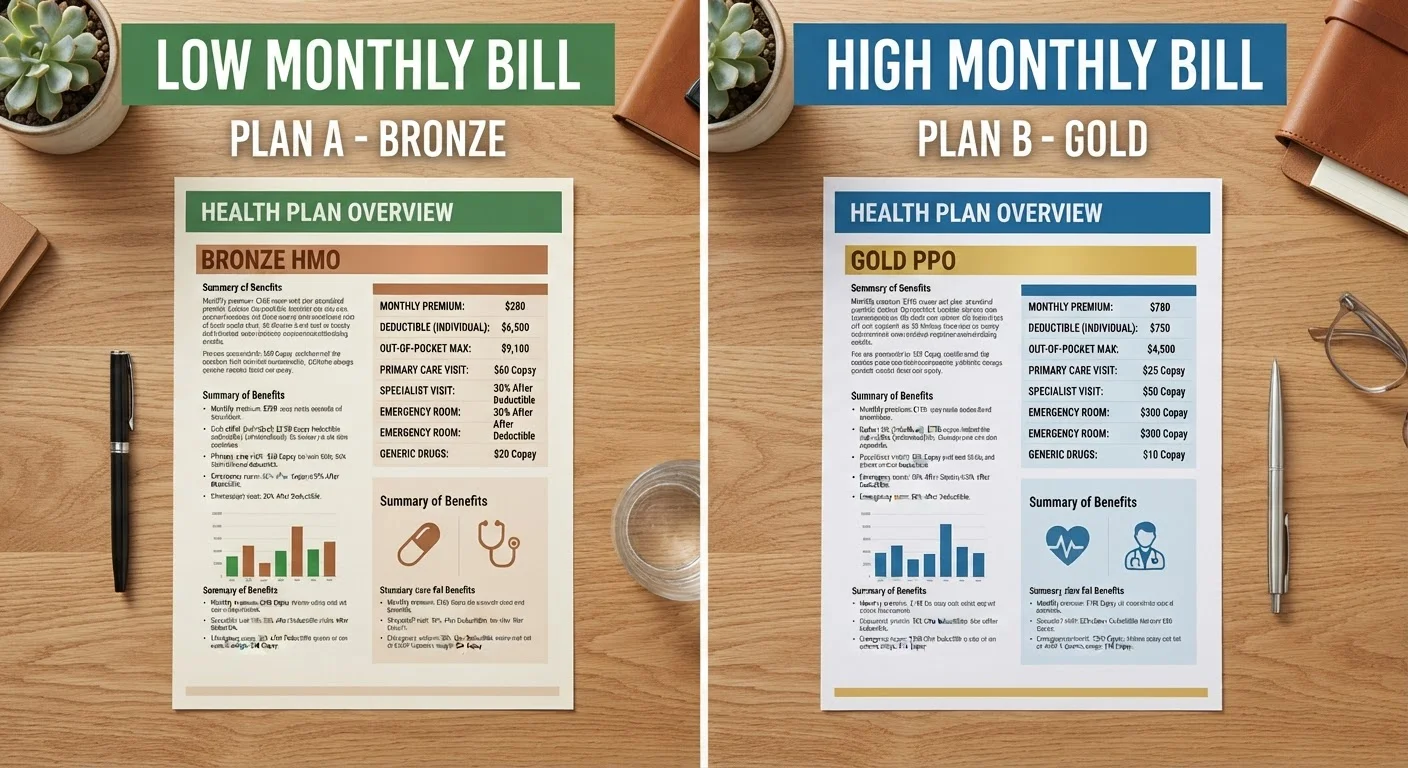
Photo: ConfiReads.com | Blogs For Inquisitive Minds editorial
Key Takeaways
- A higher deductible typically means lower monthly premiums, but more out-of-pocket cost when you use care.
- High-deductible health plans (HDHPs) paired with an HSA can offer meaningful tax savings for eligible enrollees.
- Low-deductible plans suit people with predictable, frequent healthcare needs who want cost certainty.
- Your expected annual healthcare use is the most important factor when weighing these two plan types.
- Neither plan type is universally better - the right choice depends on your health, finances, and risk tolerance.
The Basic Trade-Off Explained
Every health insurance plan forces a choice: pay more each month in premiums, or pay more when you actually receive care. The deductible - the amount you pay out of pocket before your insurer starts sharing costs - sits at the center of that trade-off. For a plain-English breakdown of how deductibles interact with premiums, copays, and other cost terms, see our guide Inside a Health Insurance Plan.
A low-deductible plan charges a higher monthly premium but limits what you pay before coverage kicks in - often $500 to $1,500 for an individual. A high-deductible health plan (HDHP) keeps premiums lower but requires you to cover more costs upfront, with the IRS setting minimum thresholds (for 2024, $1,600 for individual coverage and $3,200 for family coverage). The insurer carries less early risk on an HDHP, and that savings is passed to you as a lower premium.
| High-Deductible Plan (HDHP) | Low-Deductible Plan | |
|---|---|---|
| Monthly Premium | Lower | Higher |
| Deductible Amount | Higher ($1,600+ individual, 2024) | Lower ($500-$1,500 typical) |
| HSA Eligibility | Yes - if plan qualifies | No |
| Cost When You Use Care | More out of pocket early | Less out of pocket early |
| Best For | Healthy, infrequent users | Frequent or chronic care users |
| Financial Risk Exposure | Higher if unexpected illness occurs | Lower, more predictable |
When a High-Deductible Plan Works in Your Favor
If you're generally healthy and rarely use medical services beyond preventive care - which federal law requires most plans to cover at no cost before the deductible - an HDHP can save you real money over the course of a year. The lower premiums mean you're spending less every month regardless of whether you need care.
The other major advantage is Health Savings Account (HSA) eligibility. Only enrollees in a qualifying HDHP can open an HSA, which lets you set aside pre-tax dollars to pay for qualified medical expenses. Contributions reduce your taxable income, growth is tax-free, and withdrawals for eligible costs are also tax-free - a rare triple tax advantage. For context on how tax-advantaged accounts work more broadly, see our article on IRA tax trade-offs.
Maximize Your HSA Before Spending It
The risk: if something unexpected happens - an accident, a sudden illness - you could face a large bill before your deductible is met. Without savings to cover that gap, an HDHP can quickly become a financial strain rather than a bargain.
When a Low-Deductible Plan Makes More Sense
For people who use healthcare regularly - whether managing a chronic condition, taking multiple prescriptions, or anticipating a planned procedure - a low-deductible plan often costs less in total over the year, even with the higher premium. The math matters: if you routinely spend several thousand dollars on care, having insurance share costs from the first few hundred dollars can offset months of higher premiums.
Low-deductible plans also provide cost predictability. Knowing your insurer starts contributing sooner gives you a clearer picture of your annual exposure, which can be especially important for families or anyone living on a tight budget. That said, the out-of-pocket maximum on any plan is the real ceiling on your annual exposure - a number that deserves just as much attention as the deductible itself. Our article on out-of-pocket maximum vs. deductible explains why both numbers matter together.
Don't Ignore the Full Out-of-Pocket Picture
How to Run the Numbers for Your Situation
Start with your actual healthcare usage from the past one to two years: number of doctor visits, prescriptions, any specialist care or procedures. Then compare total annual cost under each option using this approach:
- Annual premium cost: Multiply the monthly premium by 12.
- Expected out-of-pocket costs: Estimate what you'd pay under each plan's deductible and cost-sharing structure given your typical usage.
- Add them together: The plan with the lower combined total is often the better financial fit - all else being equal.
Also factor in your financial cushion. An HDHP only makes practical sense if you have savings - or can build them via an HSA - to cover the deductible if something goes wrong. If a $1,600 to $3,000 unexpected bill would create serious hardship, the lower premium may not be worth the risk.
Plan structure also plays a role. HDHPs are their own category in the health plan landscape - to understand how they fit alongside HMOs, PPOs, and EPOs, see HMO, PPO, EPO, and HDHP: Mapping the Health Plan Alphabet. For a broader look at coverage categories, the Coverage Types hub is a useful starting point.
This article is for general informational purposes only and does not constitute personalized insurance, financial, or legal advice. Coverage terms, deductible thresholds, and HSA rules vary by plan and may change. Consult a licensed insurance agent or qualified financial adviser for guidance specific to your situation.
The content on this site is for informational purposes only and is not a substitute for professional advice. Always consult a qualified professional for guidance specific to your situation.