
Actual Cash Value vs. Replacement Cost Value: The Payout Gap You Need to Know About

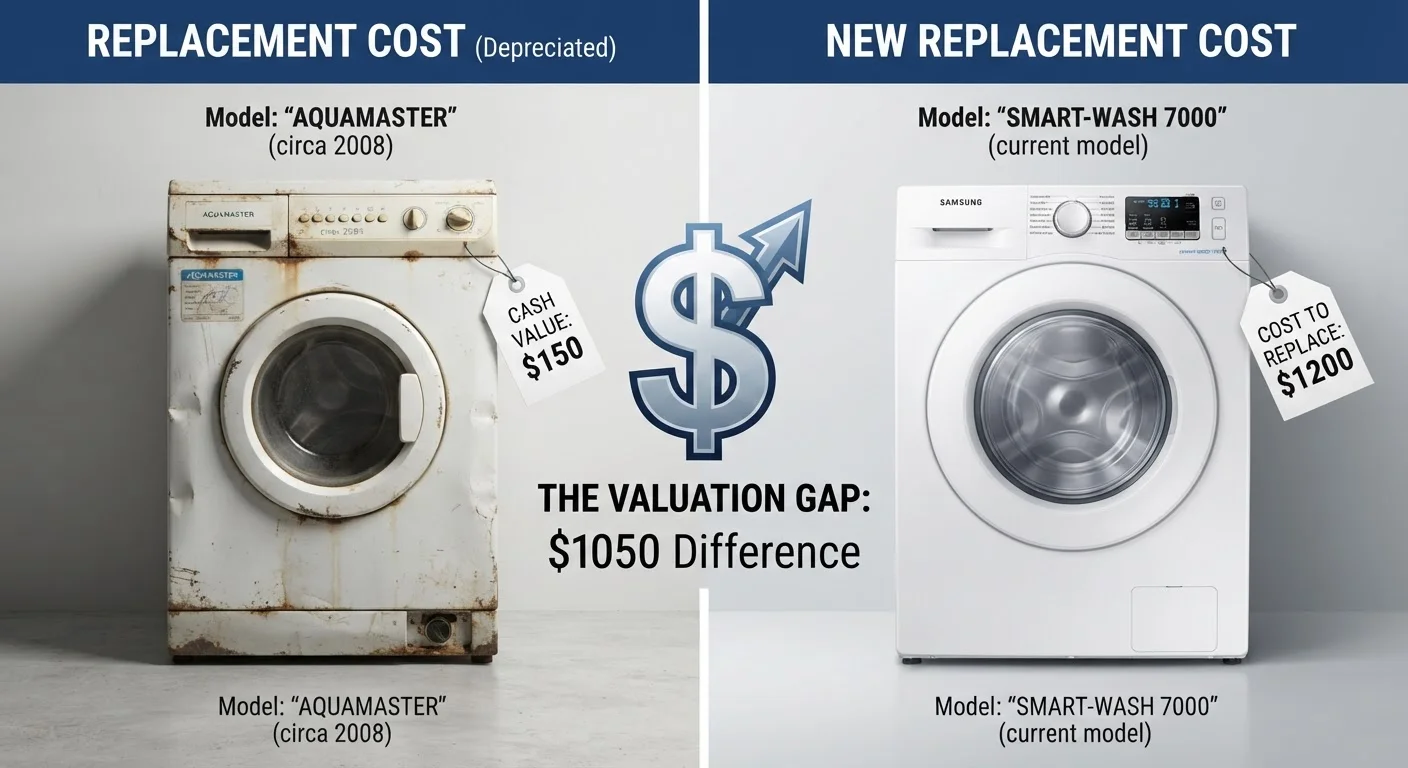
Photo: ConfiReads.com | Blogs For Inquisitive Minds editorial
Key Takeaways
- Actual Cash Value pays what your property was worth at the time of loss - after depreciation is subtracted.
- Replacement Cost Value pays what it actually costs to buy a comparable new item today.
- The gap between the two can be thousands of dollars on a single claim.
- RCV policies carry higher premiums, but leave you with far less out-of-pocket after a loss.
- Your policy documents will specify which method applies - check the declarations page and definitions section.
- Some policies offer a hybrid approach, paying ACV upfront and releasing the depreciation holdback once repairs are completed.
What These Two Terms Actually Mean
When you file a property insurance claim, your insurer doesn't simply hand over whatever you think the damaged item is worth. Instead, the payout is calculated using a valuation method written into your policy - and that method makes an enormous difference.
Actual Cash Value (ACV) is the item's fair market value at the moment it was lost or damaged. The insurer determines what the item would have sold for in its pre-loss condition, accounting for age and wear. That means depreciation is subtracted before you receive a dime.
Replacement Cost Value (RCV), by contrast, is what it costs to buy a comparable new item at today's prices - no depreciation taken out. If your five-year-old refrigerator is destroyed in a kitchen fire, RCV covers a new equivalent model; ACV covers what that five-year-old refrigerator was worth on the used market.
This distinction is not a technicality. It determines real dollars in your pocket after a real loss. For a deeper look at how insurers run these calculations, see how insurers calculate claim payouts.
Side-by-Side: How the Numbers Compare
To make this concrete, consider a scenario: a burst pipe damages your roof and destroys furniture in two rooms. The furniture originally cost $6,000 and is eight years old. A contractor quotes $15,000 to repair the roof.
| Criterion | Actual Cash Value (ACV) | Replacement Cost Value (RCV) |
|---|---|---|
| Payout basis | Depreciated market value at loss date | Cost to buy comparable new item today |
| Depreciation deducted | Yes - reduces payout significantly | No - full replacement cost covered |
| Premium cost | Lower | Higher (typically 10-20% more) |
| Out-of-pocket after a claim | Higher - you cover the gap | Lower - insurer covers more |
| Best for older property | Risky - depreciation gap widens with age | Stronger protection as items age |
| Hybrid option available | Sometimes (recoverable depreciation) | N/A - full RCV paid on completion |
Under ACV, the insurer applies a depreciation schedule - perhaps 10% per year for furniture - and pays accordingly. Under RCV, you receive enough to actually replace what was lost. The difference can easily reach several thousand dollars on a single incident.
Depreciation schedules vary by insurer and item category, so two companies can produce different ACV payouts for the identical loss. Always ask your insurer or agent how depreciation is calculated for specific property types before a claim occurs.
Where to Find This Information in Your Policy
Your policy's declarations page is the fastest place to check. Look for language like "loss settlement" or "valuation" - it will typically state ACV or replacement cost explicitly. If it's ambiguous, flip to the definitions or conditions section, where the terms are spelled out.
Check for Recoverable Depreciation Language
Some policies use a hybrid structure: they pay ACV upfront and hold back the depreciation amount. Once you complete repairs or replacement and submit receipts, the insurer releases the withheld funds. This is called a recoverable depreciation provision. If you never complete the repairs, you keep only the ACV payout. Miss that step and you leave money on the table.
Valuation method also interacts with your deductible. A higher deductible on an ACV policy can result in a very small net payout - or even none at all - on modest claims. For more on how those numbers interact, see how deductibles, premiums, and out-of-pocket maximums work together.
What It Costs to Upgrade - and Whether It's Worth It
RCV coverage typically adds 10-20% to a homeowner's or renter's insurance premium, though the exact amount varies by insurer, location, and the property being covered. That's a real cost - but weigh it against what an ACV payout might leave you responsible for after a significant loss.
~10-20%
Typical premium increase for RCV over ACV
Industry estimates commonly cite this range, though actual differences vary by insurer, property type, and location.
$1,000s
Potential depreciation gap on a single claim
On older, high-value items like HVAC systems, roofs, or furniture sets, the difference between ACV and RCV payouts can reach several thousand dollars.
If budget is the primary concern, ACV coverage still provides meaningful protection. The key is going in with eyes open: know what depreciation will likely take off a payout, and have a plan to cover the gap. Policies that seem identical in premium can differ substantially in what they actually pay. This is one of the most common insurance coverage gaps most people don't realize they have.
Once a claim is paid, other costs can follow too. Understand what to expect by reviewing the hidden costs that catch people off guard after a claim.
This article is for general informational purposes only and does not constitute personalized insurance, financial, or legal advice. Coverage terms, exclusions, and payout calculations vary by insurer and policy. Always read your actual policy documents and consult a licensed insurance agent or adviser for guidance specific to your situation.
The content on this site is for informational purposes only and is not a substitute for professional advice. Always consult a qualified professional for guidance specific to your situation.