
Why Your Auto Policy Has Six Different Coverage Lines

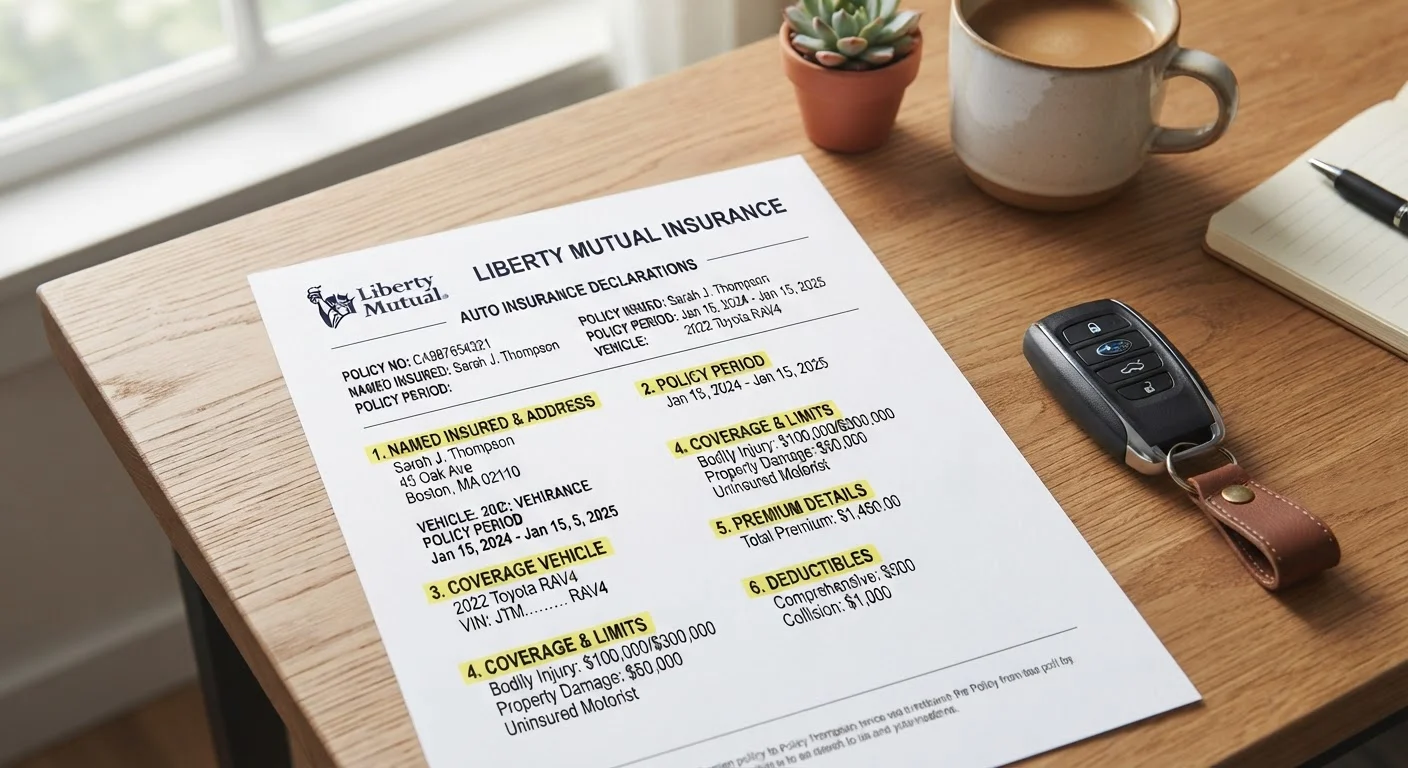
Photo: ConfiReads.com | Blogs For Inquisitive Minds editorial
Key Takeaways
- Most auto policies include six separate coverage lines, each protecting against a different type of loss.
- Liability coverage is required in nearly every state; other lines may be optional depending on your situation.
- Collision and comprehensive cover your own vehicle's physical damage through two distinct triggers.
- PIP and medical payments coverage both pay medical bills, but they work differently depending on your state.
- Uninsured/underinsured motorist coverage steps in when the at-fault driver lacks sufficient insurance.
- Each coverage line carries its own limit - raising one does not automatically raise the others.
The Six Lines at a Glance
Open any standard auto policy and you'll find six distinct coverage types listed on the declarations page. They exist separately because each one is designed to respond to a different event. Lumping them together would make it impossible to set accurate limits or price each risk correctly. Here's a quick map before we go deeper:
- Bodily Injury Liability - pays for injuries you cause to others
- Property Damage Liability - pays for damage you cause to others' vehicles or property
- Collision - pays to repair your vehicle after a crash
- Comprehensive - pays for non-crash damage to your vehicle
- Personal Injury Protection (PIP) - pays medical and related costs for you and passengers
- Uninsured/Underinsured Motorist (UM/UIM) - pays when the other driver can't
For a broader look at how these fit alongside home and life coverage, see The Major Insurance Coverage Types Every American Should Know.
Liability: The Coverage the Law Requires
Bodily injury liability and property damage liability are almost always bundled together and are required in nearly every U.S. state. They protect other people - not you - when you're at fault in an accident.
Bodily injury liability pays for the medical bills, lost wages, and legal costs of people you injure. Property damage liability pays to repair or replace the other driver's car, a fence, a mailbox, or any other property you damage.
Liability limits are typically written as three numbers, such as 25/50/25, representing per-person injury limits, per-accident injury limits, and property damage limits - all in thousands of dollars. State minimums are often low; many financial professionals suggest carrying higher limits to avoid personal exposure. What Liability Coverage Actually Pays For explains this in full detail.
Check Your Liability Limits Against Your Assets
Collision and Comprehensive: Your Vehicle's Physical Protection
These two lines both pay to repair or replace your own vehicle, but they respond to completely different triggers.
Collision coverage applies when your car is damaged in a crash - whether you hit another car, a guardrail, or a tree. It pays regardless of fault, minus your deductible.
Comprehensive coverage handles everything else: theft, fire, hail, flooding, a falling branch, or hitting an animal. If you're financing or leasing your vehicle, your lender will almost certainly require both.
Choosing the right deductible on each line is one of the most practical premium levers available to you. A higher deductible lowers your premium but raises what you pay out of pocket after a claim. For a side-by-side breakdown, see Collision and Comprehensive Auto Coverage: When You Need Both.
~14%
U.S. drivers estimated to be uninsured
The Insurance Research Council has periodically estimated that roughly one in eight drivers on American roads carries no auto insurance.
49 of 50
States requiring liability insurance
Nearly every U.S. state mandates minimum liability coverage; New Hampshire is the primary exception, though it requires drivers to demonstrate financial responsibility.
12 states
No-fault states requiring PIP
Approximately a dozen states operate under a no-fault system where PIP is mandatory, meaning each driver's own policy pays their initial medical costs regardless of fault.
PIP, Medical Payments, and Uninsured Motorist: Protecting People
Personal Injury Protection (PIP) is mandatory in no-fault states and covers medical bills, lost wages, and sometimes household services for you and your passengers - regardless of who caused the accident. In fault-based states, it may be optional.
Medical payments coverage (MedPay) is a narrower alternative available in most states. It pays medical and funeral expenses for you and your passengers after an accident, but it doesn't cover lost wages or other expenses the way PIP can. Both PIP and MedPay can coordinate with your health insurance, though the rules vary - see how multiple policies coordinate benefits for more context.
Uninsured/Underinsured Motorist coverage (UM/UIM) fills the gap when the at-fault driver has no insurance or not enough of it. The Insurance Research Council has consistently found that a significant share of drivers on American roads carry no auto insurance at all, making this line more valuable than many drivers realize. Some states require it; others make it optional. Either way, coverage gaps like this catch people off guard at the worst possible time.
Coverage Terms Vary by State and Insurer
This article provides general educational information about auto insurance coverage and is not a substitute for personalized advice. Coverage requirements, availability, and terms vary by state and insurer. Read your actual policy documents carefully and consult a licensed insurance agent for guidance specific to your situation.
Frequently Asked Questions
The content on this site is for informational purposes only and is not a substitute for professional advice. Always consult a qualified professional for guidance specific to your situation.