
Understanding Your Home's Electrical Panel

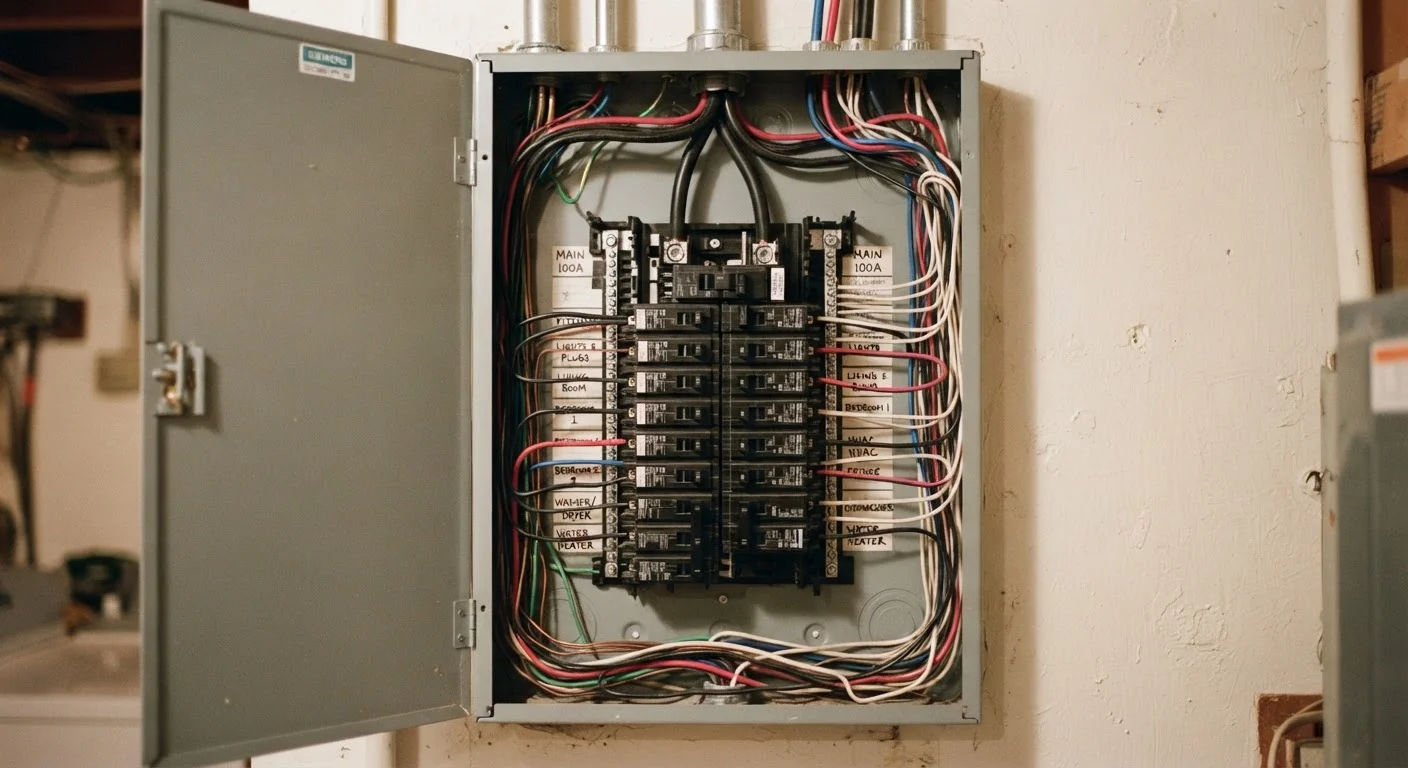
Photo: ConfiReads.com | Blogs For Inquisitive Minds editorial
Key Takeaways
- Your electrical panel distributes power from the utility line to every circuit in your home.
- Circuit breakers protect wiring by automatically shutting off when current exceeds safe limits.
- A repeatedly tripping breaker signals an underlying problem - not just an inconvenience to reset.
- Burning smells, buzzing sounds, or warm breakers are serious warning signs requiring professional evaluation.
- DIY work inside an electrical panel is dangerous; most repairs require a licensed electrician.
What Is an Electrical Panel?
Your home's electrical panel - also called a breaker box, load center, or service panel - is the metal enclosure, usually mounted in a basement, garage, utility room, or hallway, where power from your utility company enters the house and gets divided into individual circuits. Think of it as a traffic hub: utility power arrives on two large wires called service conductors, passes through a main breaker that controls everything at once, and then splits into smaller branch circuits that feed your lights, outlets, appliances, and HVAC equipment.
Inside the panel you'll find rows of circuit breakers - each one protecting a specific area or appliance. A typical modern home might have 20 to 40 breaker slots. The panel door usually has a legend listing which breaker covers which room or load. If yours is blank, mapping it out and labeling it is a worthwhile home maintenance task worth adding to your seasonal home maintenance checklist.
How Circuit Breakers Work
A circuit breaker is essentially an automatic switch with a built-in safety mechanism. Under normal conditions it stays closed, allowing current to flow freely. When the current on that circuit exceeds the breaker's rated limit - say, 15 or 20 amps for a standard household circuit - a bimetallic strip inside the breaker heats up, bends, and mechanically trips the switch to the OFF position, cutting power before the wiring can overheat.
Breakers are sized to match the wiring they protect. A 15-amp breaker guards 14-gauge wire; a 20-amp breaker guards 12-gauge wire. This pairing is deliberate: the breaker should always fail before the wire does. That's why swapping in a higher-rated breaker to "fix" frequent trips is a serious hazard - it defeats the protection the system was designed to provide.
Most panels also include a main breaker - typically rated 100, 150, or 200 amps - that can shut off all power to the house at once. Knowing where this is matters during emergencies and when you need to describe your panel's capacity to a contractor.
Why Breakers Trip - and What to Do
Breakers trip for three main reasons:
- Overloaded circuit: Too many devices drawing power simultaneously exceed the breaker's limit. Running a space heater and microwave on the same 15-amp circuit is a classic culprit.
- Short circuit: A hot wire accidentally contacts a neutral or ground wire - often inside a damaged outlet, appliance cord, or switch - causing a sudden surge of current.
- Ground fault: Current takes an unintended path to ground, sometimes through a person. GFCI (ground-fault circuit interrupter) outlets and breakers are designed specifically to catch these faults faster than a standard breaker can.
When a breaker trips, locate your panel and look for the switch that's in the middle or OFF position. Before resetting it, unplug or turn off devices on that circuit to reduce load. Switch the breaker firmly to OFF first, then back to ON. If it holds, gradually restore devices one at a time to identify what overloaded the circuit.
Label Your Breakers Before You Need Them
Warning Signs You Should Never Ignore
Some electrical panel problems go beyond a simple trip. Pay attention to these signals, which indicate conditions that can cause electrical fires or shock hazards:
- Burning smell or scorch marks near the panel or any outlet - treat this as urgent.
- Buzzing or crackling sounds from inside the panel when breakers are on.
- Warm or hot breakers to the touch under normal load.
- Flickering or dimming lights throughout the house, not just one room.
- Breakers that trip repeatedly on the same circuit with no obvious overload.
- Rust, moisture, or corrosion inside the panel enclosure.
These issues are also a reminder that electrical hazards often go unnoticed. Our guide to home safety hazards that hide in plain sight covers other overlooked risks throughout the house worth reviewing.
Never Ignore a Burning Smell Near Your Panel
When to Call a Licensed Electrician
Homeowners can reasonably handle resetting a tripped breaker and labeling circuits. Almost everything else inside the panel - replacing a breaker, adding a circuit, upgrading panel capacity - should be done by a licensed electrician. Working inside a panel exposes you to the main service conductors, which remain energized even when the main breaker is off. Only the utility company can de-energize those lines.
Call a licensed electrician if you observe any of the warning signs listed above, if your panel is over 25-30 years old and has never been inspected, if you're planning a home addition or major appliance upgrade, or if a breaker won't reset at all. An electrician can also tell you whether your panel's total amperage capacity is adequate for your home's current needs.
Electrical permits are required for most panel work in U.S. jurisdictions. A licensed contractor will know local code requirements and ensure the work is inspected - protecting both your safety and your homeowner's insurance coverage.
This article is for general informational purposes only and is not a substitute for advice from a licensed electrician. Electrical work involves serious safety risks; always consult a qualified professional before performing any work on your home's electrical system.
Frequently Asked Questions
The content on this site is for informational purposes only and is not a substitute for professional advice. Always consult a qualified professional for guidance specific to your situation.