
What the Nutrition Facts Label Is Actually Telling You

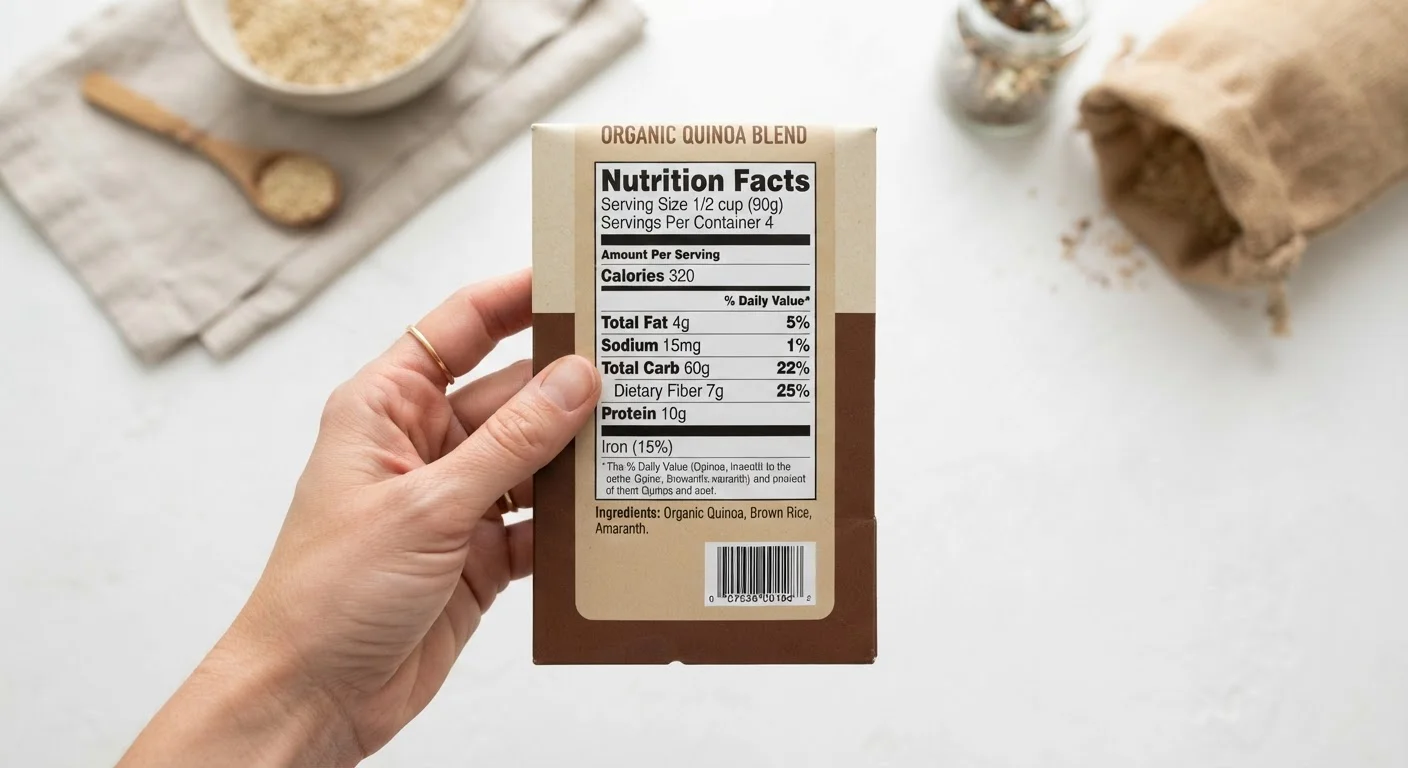
Photo: ConfiReads.com | Blogs For Inquisitive Minds editorial
Key Takeaways
- Serving size is a reference amount set by the FDA - it reflects how much people typically eat, not a recommendation.
- % Daily Value (% DV) is based on a 2,000-calorie diet; 5% or less is considered low, 20% or more is considered high.
- Added sugars and total sugars are listed separately - the distinction matters for understanding processed vs. naturally occurring sweeteners.
- Sodium, saturated fat, and added sugars are nutrients most Americans consume too much of; fiber and vitamin D too little.
- The label reflects nutrients per serving, not per package - always check how many servings are in the container.
Start at the Top: Serving Size and Calories
The first thing to read on any Nutrition Facts label is the serving size - and it's easy to overlook why it matters so much. Every number on the rest of the label is calculated per serving, so if you eat two servings, you double every value shown. The FDA sets serving sizes based on amounts people typically eat, not on nutritional recommendations.
Directly below serving size is the calorie count. The 2016 label redesign made this number significantly larger and bolder - a deliberate choice to make it harder to miss. Calories measure the energy a food provides. Neither high nor low calorie counts make a food automatically good or bad; context - the rest of the nutrients - matters just as much.
Always Check How Many Servings Are in the Container
Nutrients to Limit and Nutrients to Get Enough Of
The middle of the label divides nutrients into two informal groups. The first - total fat, saturated fat, trans fat, cholesterol, and sodium - are nutrients most Americans already consume in excess. The second group - dietary fiber, vitamin D, calcium, iron, and potassium - are nutrients many Americans fall short on. The FDA structured the label this way intentionally to guide attention.
A few specifics worth understanding:
- Saturated fat is listed separately from total fat because dietary guidelines specifically recommend limiting it. Trans fat has no safe level and should be minimized.
- Sodium is measured in milligrams. A single serving of some processed foods can contain a substantial share of the daily reference value of 2,300 mg.
- Dietary fiber supports digestive health and is associated with reduced risk of several chronic conditions. Most Americans fall well below recommended intake levels.
For a plain-language explanation of these and other nutrient terms, see our nutrient glossary.
70%+
Americans exceed recommended sodium intake
According to the CDC, more than 70% of Americans consume more than the 2,300 mg daily sodium reference value, largely from packaged and restaurant foods.
< 10%
Adults meeting fiber recommendations
Research published in the American Journal of Lifestyle Medicine estimates that fewer than 10% of Americans meet recommended dietary fiber intake levels.
17 tsp
Average daily added sugar intake in the U.S.
The CDC reports that American adults consume an average of around 17 teaspoons of added sugar daily - more than double the American Heart Association's recommended limit for men and triple that for women.
Understanding Added Sugars - and Why the Distinction Matters
One of the most meaningful additions to the updated label is the separate line for added sugars, listed beneath total sugars. Total sugars includes naturally occurring sugars - the lactose in yogurt, for example, or the fructose in a piece of fruit - alongside whatever was added during manufacturing. Added sugars are the ones most closely linked to concerns about excess intake, because they provide calories without additional nutritional benefit.
The FDA's daily reference value for added sugars is 50 grams per day, based on a 2,000-calorie diet. Many packaged foods - flavored yogurts, breakfast cereals, condiments, and beverages - contribute added sugars in amounts that may surprise readers who haven't checked the label. Seeing 12 grams of added sugars on a single serving of flavored oatmeal, for instance, puts that product in a different category than plain oats with the same total calorie count.
If you're trying to make sense of the full ingredient picture alongside the label, our guide to reading an ingredient list explains how ingredient ordering and labeling conventions work.
Using % Daily Value as a Quick Comparison Tool
The right-hand column of the label shows % Daily Value (% DV) for most nutrients. This figure tells you what percentage of a nutrient's daily reference amount one serving provides, based on a 2,000-calorie diet. The FDA's quick rule of thumb: 5% DV or less is low; 20% DV or more is high.
% DV is most useful as a relative comparison tool. When you're choosing between two similar products - two brands of canned soup, for example - scanning the % DV column lets you compare sodium or fiber content at a glance without doing any arithmetic. It doesn't replace reading the actual gram amounts, but it speeds up the process considerably.
Keep in mind that % DV is calibrated to a 2,000-calorie benchmark. Individual needs vary, and a registered dietitian can help you determine reference targets appropriate for your health context. Misreading labels - or over-relying on front-of-package claims instead of the Nutrition Facts panel - is one of the patterns explored in our article on common healthy-eating pitfalls.
Front-of-Package Claims Are Not the Label
This article provides general nutrition education and is not a substitute for advice from a qualified healthcare provider or registered dietitian. Individual dietary needs vary.
Frequently Asked Questions
The content on this site is for informational purposes only and is not a substitute for professional advice. Always consult a qualified professional for guidance specific to your situation.