
Nutrients Worth Knowing: A Quick-Reference Glossary

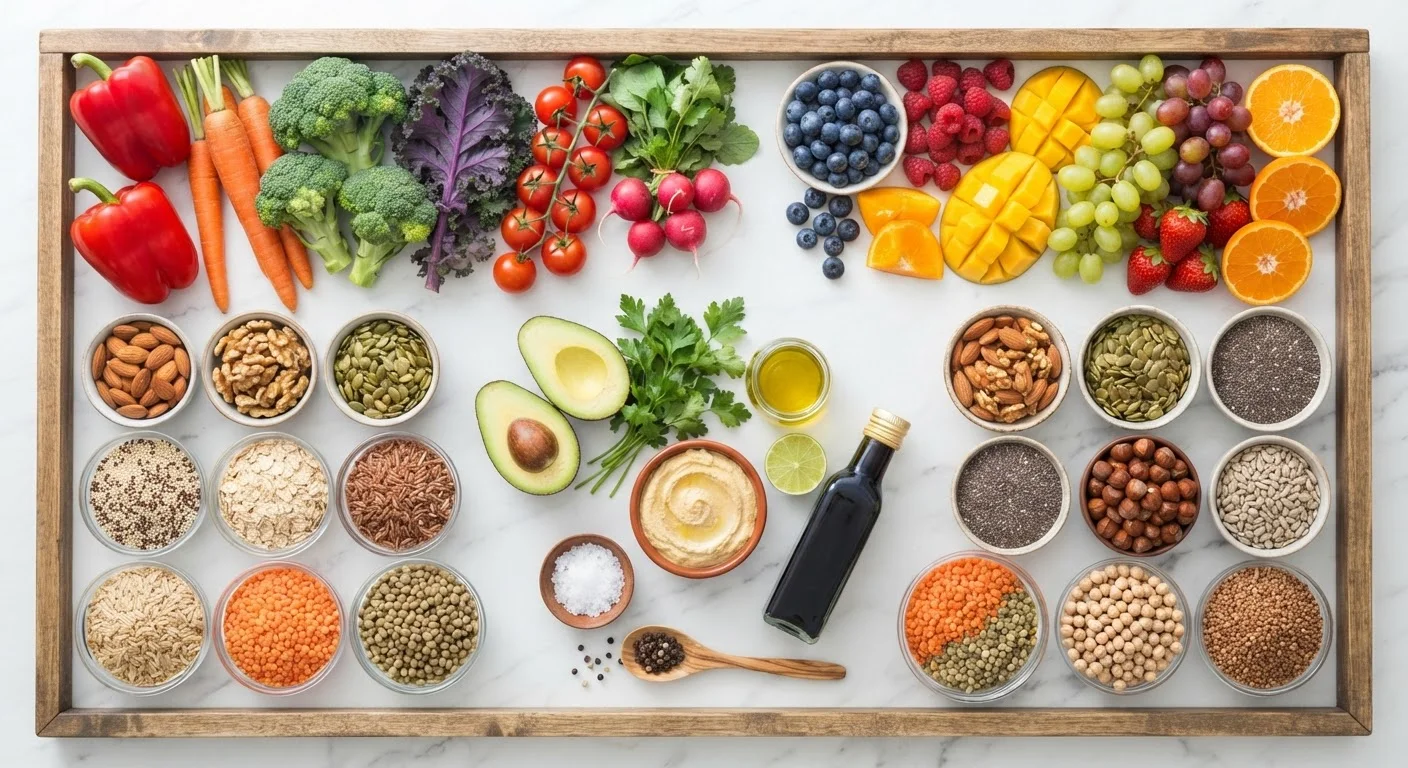
Photo: ConfiReads.com | Blogs For Inquisitive Minds editorial
Why Nutrition Language Matters
Nutrition labels, health headlines, and wellness advice throw around terms like antioxidant, prebiotic, and bioavailability as if everyone already knows what they mean. Most of us don't - and that gap makes it easy to be misled by marketing or to dismiss genuinely useful science. This glossary exists to close that gap.
The terms defined here are among the most commonly used in everyday nutrition conversations. Understanding them won't tell you exactly what to eat, but it will help you ask better questions, read labels more critically, and recognize when a health claim is grounded versus when it's stretching the evidence. For a broader introduction to eating well, see our guide A Grounded Introduction to Eating Well for the Long Term.
This Is Education, Not Medical Advice
Labels Can Be Misleading
Core Terms Defined
The glossary below covers twelve of the most important nutrition terms - from broad categories like macronutrients and micronutrients to more specific concepts like the glycemic index and bioavailability. Each definition is written to be accurate and plain, without oversimplifying the science.
Antioxidants
Compounds that neutralize unstable molecules called free radicals, which can damage cells over time. Found naturally in many fruits, vegetables, and whole grains. Vitamins C and E, as well as beta-carotene, are well-known examples.
Electrolytes
Minerals - primarily sodium, potassium, magnesium, and calcium - that carry an electrical charge and help regulate fluid balance, nerve signaling, and muscle function. They are lost through sweat and must be replenished through food and fluids.
Probiotics
Live microorganisms that, when consumed in adequate amounts, may confer a health benefit on the host. They are found in fermented foods like yogurt, kefir, and sauerkraut, and are associated with supporting gut microbiome balance.
Omega-3 Fatty Acids
A family of polyunsaturated fats essential to human health that the body cannot produce on its own. The main dietary forms are ALA (from plants like flaxseed), and EPA and DHA (from fatty fish and algae). Research consistently associates adequate intake with cardiovascular and brain health.
Macronutrients
The three major nutrient categories - carbohydrates, proteins, and fats - that provide the body with energy (measured in calories). All three are needed in relatively large quantities compared to micronutrients.
Micronutrients
Vitamins and minerals required by the body in small amounts to support growth, metabolism, and overall health. Unlike macronutrients, they provide no calories but are critical for hundreds of biological processes.
Dietary Fiber
The indigestible portion of plant foods that passes through the digestive system largely intact. Soluble fiber dissolves in water and may help lower blood cholesterol and glucose levels; insoluble fiber adds bulk to stool and supports digestive regularity.
Glycemic Index (GI)
A scale from 0 to 100 that ranks how quickly a carbohydrate-containing food raises blood glucose levels compared to pure glucose. High-GI foods cause rapid spikes; low-GI foods produce a slower, more gradual rise.
Prebiotics
Non-digestible food components - primarily specific types of fiber - that selectively feed beneficial bacteria in the gut. Common sources include onions, garlic, bananas, and oats.
Phytonutrients
Naturally occurring compounds produced by plants that may support human health, though most are not classified as essential nutrients. Examples include flavonoids in berries and lycopene in tomatoes.
Bioavailability
The proportion of a nutrient that is actually absorbed and used by the body. A food can be rich in a nutrient on paper but have low bioavailability due to the form it is in or what it is eaten alongside.
Daily Value (DV)
A reference amount set by the U.S. Food and Drug Administration (FDA) used on Nutrition Facts labels to indicate how much of a nutrient a serving of food contributes relative to a general daily target. Based on a 2,000-calorie diet.
One distinction worth highlighting: probiotics and prebiotics are often confused. Probiotics are the live bacteria themselves; prebiotics are the food that nourishes them. Both matter for gut health, but they work differently. Similarly, phytonutrients and antioxidants overlap - many phytonutrients act as antioxidants, but not all antioxidants are phytonutrients.
For a closer look at how vitamins behave differently depending on whether they dissolve in water or fat, the article The Difference Between Water-Soluble and Fat-Soluble Vitamins goes deeper on absorption, storage, and daily needs.
Putting These Terms in Context
Knowing definitions is a starting point, not an endpoint. A few practical points worth keeping in mind:
- No single nutrient works in isolation. Bioavailability, for example, depends on what else is in a meal. Iron from plant foods is absorbed better when consumed with vitamin C. Fat-soluble vitamins require dietary fat to be absorbed at all.
- More is not always better. Some nutrients have upper tolerable intake levels beyond which they can cause harm. This is especially true for fat-soluble vitamins and certain minerals.
- Whole foods deliver nutrients in combination. The interaction between fiber, phytonutrients, and micronutrients in a piece of fruit is more complex - and often more beneficial - than what any supplement can replicate.
| Number of essential nutrients | ~40 (vitamins, minerals, amino acids, fatty acids) (National Institutes of Health Office of Dietary Supplements) |
| Fiber intake gap | Only ~7% of U.S. adults meet recommended fiber intake (American Journal of Lifestyle Medicine, 2017) |
| Fat-soluble vitamins | A, D, E, K |
| Water-soluble vitamins | B vitamins and vitamin C |
| Omega-3s from plants vs. fish | Plant ALA converts to EPA/DHA at low efficiency (~5-15%) (National Institutes of Health, Office of Dietary Supplements) |
| Probiotic evidence strength | Strong for certain GI conditions; variable for other claimed benefits (World Gastroenterology Organisation Global Guidelines, 2023) |
Fitness and physical activity also affect nutrient needs - particularly for electrolytes, protein, and certain micronutrients. Our Fitness & Exercise hub covers how activity and nutrition intersect in practical terms.
This article is for general informational purposes only and does not constitute medical or dietary advice. Consult a qualified healthcare provider or registered dietitian for guidance specific to your health needs.
The content on this site is for informational purposes only and is not a substitute for professional advice. Always consult a qualified professional for guidance specific to your situation.